From Field to Form: Deconstructing the Wheellock Sporting Rifle as Couture Artifact
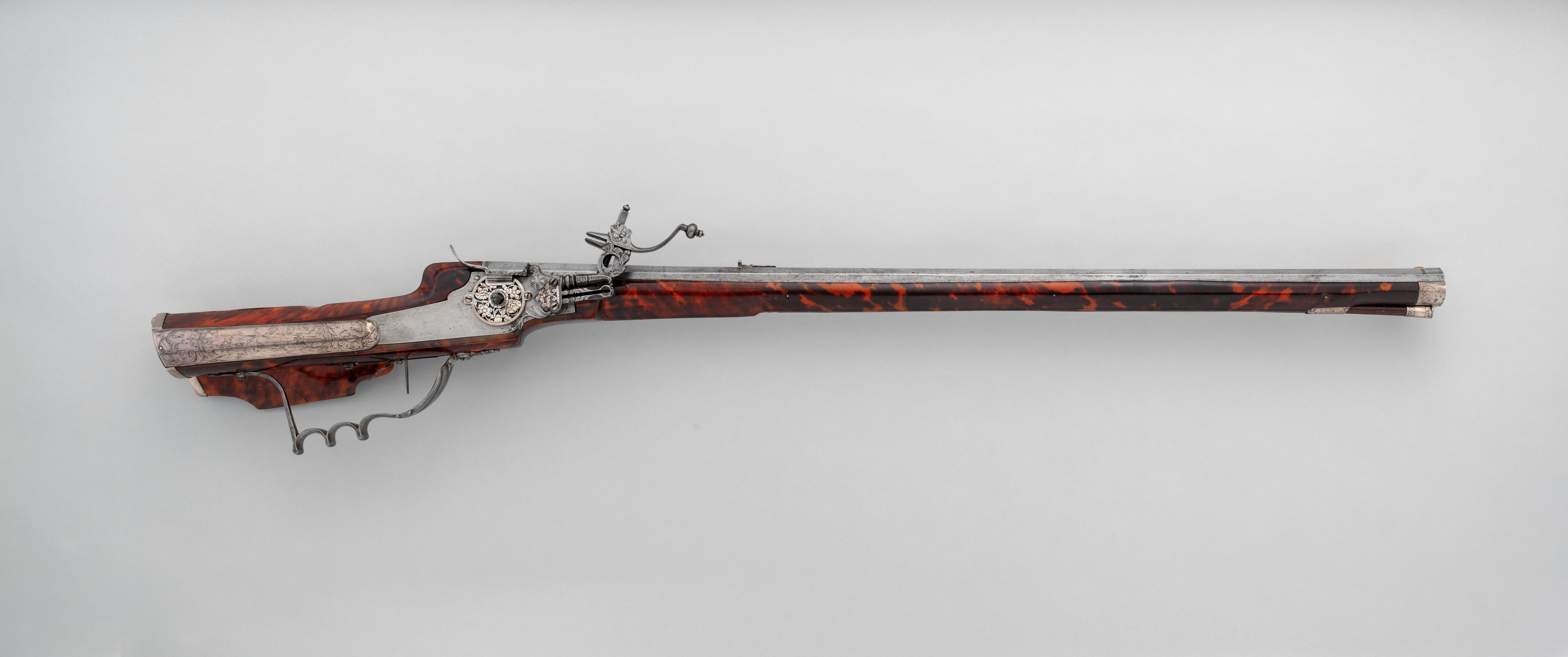
The Wheellock Sporting Rifle, crafted in Augsburg, Germany, represents a pivotal intersection of mechanical innovation and artistic expression. At first glance, it is a weapon of the hunt—a tool designed for precision and performance. Yet, within the context of Katherine Fashion Lab’s curatorial lens, this object transcends its utilitarian origins to emerge as a profound study in material storytelling, structural elegance, and the silent language of status. To analyze this rifle as couture is to recognize that fashion is not confined to fabric; it is the deliberate orchestration of form, material, and context to communicate identity. Here, the wheellock mechanism, the interplay of steel and tortoiseshell, and the meticulous craftsmanship of Augsburg’s gunsmiths converge to create a wearable narrative of power, sophistication, and technical mastery.
The Wheellock Mechanism: Engineering as Embodiment
The wheellock’s defining feature—its complex, spring-loaded ignition system—is not merely a functional component but a signature of innovation that parallels the haute couture atelier’s obsession with bespoke engineering. Unlike the simpler matchlock, the wheellock required precise assembly of interlocking gears, a rotating steel wheel, and a pyrite-holding cock. This mechanism demanded the expertise of a master smith, akin to a couturier who drafts a pattern from scratch. In the context of the rifle, the wheellock is the silhouette of the piece—it dictates the balance, the weight distribution, and the visual rhythm. The intricate wheel, often visible through cutouts in the lock plate, becomes a decorative motif, a mechanical embroidery that invites the eye to trace its movement. For the 17th-century nobleman who commissioned this rifle, the wheellock was not just a tool for hunting; it was a statement of intellectual capital, a wearable testament to one’s ability to command the latest in technology. In fashion terms, it is the equivalent of a perfectly engineered corset or a revolutionary fabric weave—an invisible structure that defines the visible form.
Material Lexicon: Steel, Wood, and the Alchemy of Tortoiseshell
The materials of the Wheellock Sporting Rifle are a lexicon of luxury, each chosen for its symbolic weight and tactile resonance. The steel barrel, forged and polished to a mirror finish, speaks to durability and refinement. Its blued surface, achieved through controlled oxidation, creates a deep, gunmetal sheen that catches light like a silk moiré. This is not a raw metal; it is a finished textile of the forge, requiring hours of labor to achieve its luster. The wood stock, likely walnut, is carved with a flowing, ergonomic curve that mirrors the human hand. Its grain is selected for both strength and beauty, often inlaid with silver wire or plaques that depict hunting scenes or heraldic crests. Silver, in this context, is the metallic thread that ties the piece together—it appears on the trigger guard, the butt plate, and the patch box, offering contrast against the dark wood and steel.
Yet, the most arresting material is the tortoiseshell, used for decorative inlays on the stock or the cheekpiece. Derived from the hawksbill sea turtle, tortoiseshell was a prized material in Augsburg’s workshops, valued for its translucent, amber hues and its ability to be heated and molded into intricate shapes. In fashion, tortoiseshell is the ultimate accent—a material that bridges the organic and the crafted. Its mottled pattern, reminiscent of marble or aged honey, adds depth and warmth to the rifle’s otherwise metallic palette. The use of tortoiseshell here is not arbitrary; it signals the owner’s access to global trade networks and the artisan’s skill in working with a material that is both fragile and resilient. This is the couture equivalent of using rare, endangered feathers or hand-dyed silks—a deliberate choice to elevate the object from tool to treasure.
Augsburg: The Atelier of the Gun
Augsburg, in the 16th and 17th centuries, was a fashion capital of the firearm world. Its gunsmiths were not mere technicians; they were artists who collaborated with goldsmiths, engravers, and carvers to produce objects of courtly splendor. The Wheellock Sporting Rifle from this region embodies a workshop ethos that mirrors the modern couture house. Each component—the lock, the stock, the barrel, the mounts—was often crafted by different specialists, then assembled into a cohesive whole. This division of labor required a director of vision, a master smith who orchestrated the design like a creative director overseeing a collection. The result is a piece that feels both unified and layered, with each detail contributing to a larger narrative of prestige.
Consider the engraving on the lock plate or the barrel: scrollwork, foliage, and mythological figures executed with a burin. These motifs are not decorative afterthoughts; they are narrative embellishments that communicate the owner’s education, taste, and allegiances. In the same way that a Dior gown might feature hand-embroidered bees or a Chanel jacket might incorporate lion’s heads, these engravings serve as signature motifs that personalize the object. The rifle becomes a portable identity, a piece of armor for the hunt that declares: I am a man of culture, wealth, and power.
The Hunting Context: Performance as Presentation
To understand the rifle as couture, one must consider its intended performance space: the hunt. In the courts of Europe, hunting was not merely a sport; it was a theatrical display of nobility, a choreographed event where dress, weaponry, and etiquette converged. The Wheellock Sporting Rifle was the centerpiece of this performance. Its weight, balance, and mechanism were designed for the swift, graceful movements of the hunt—raising, aiming, and firing in a fluid motion. The ergonomics of the stock, with its cheekpiece and pistol grip, are akin to the cut of a tailored jacket; they must fit the body perfectly to allow for ease of movement. A poorly fitted rifle, like an ill-fitting gown, would disrupt the harmony of the performance.
Moreover, the rifle’s acoustic presence—the sharp crack of the wheellock, the hiss of the pyrite striking steel—added an auditory dimension to its couture. This was not a silent accessory; it was a soundmark that announced the hunter’s presence and skill. In fashion, we speak of the rustle of silk or the click of heels; here, the rifle’s report is its own signature, a momentary but powerful declaration of agency.
Conclusion: The Rifle as a Study in Material Identity
The Wheellock Sporting Rifle from Augsburg offers a masterclass in how objects can embody the principles of couture: innovation, materiality, craftsmanship, and narrative. Its steel and tortoiseshell are not just substances but symbols of status and global reach. Its wheellock mechanism is a feat of engineering that mirrors the structural ingenuity of a couture gown. And its hunting context transforms it into a performative object, a tool for the projection of identity. As a standalone study, this rifle challenges us to expand our definition of fashion, to see the artistry in the functional and the luxury in the mechanical. In the hands of a noble hunter, the Wheellock Sporting Rifle was more than a weapon—it was a garment of power, a masterpiece of material culture that continues to speak across centuries.