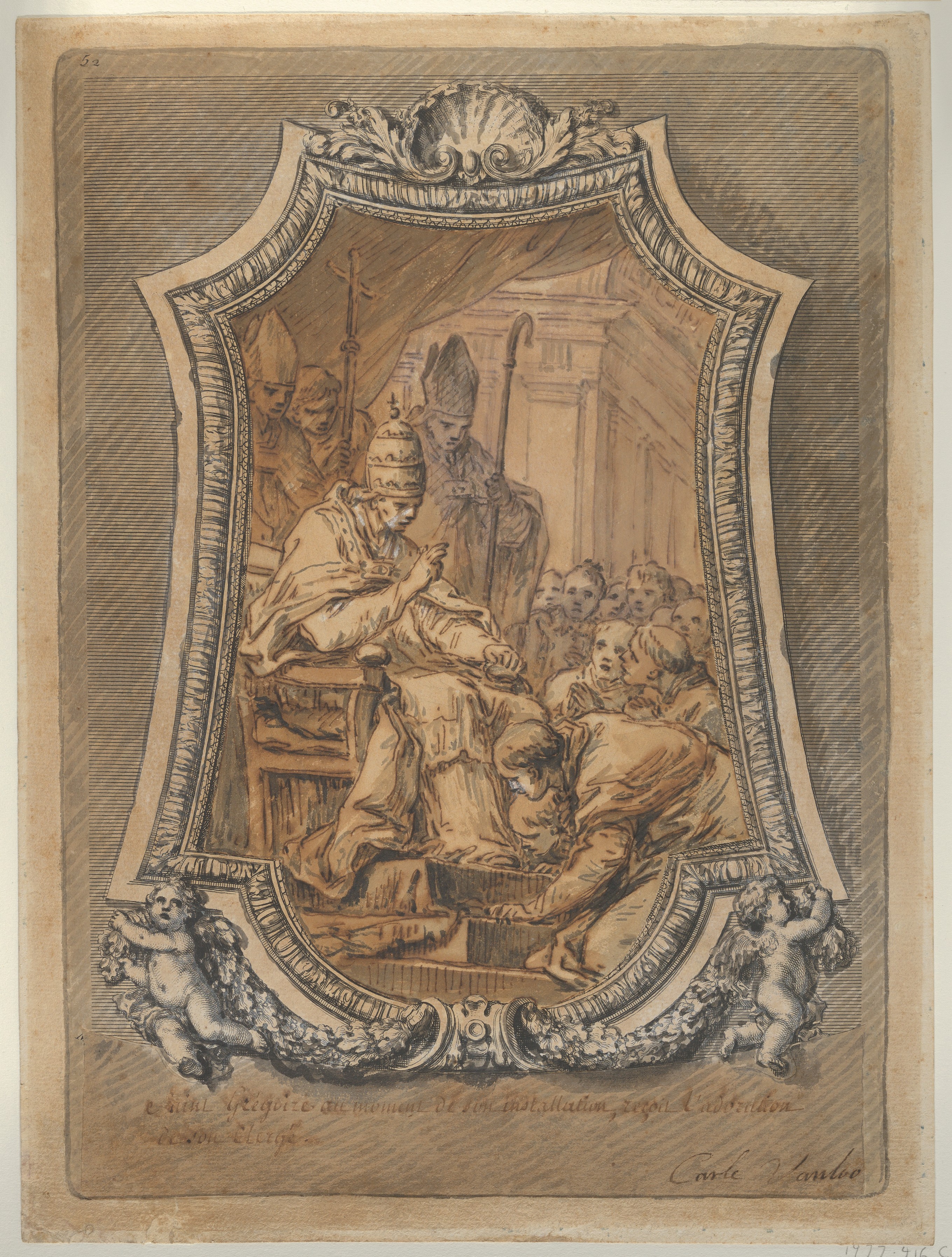
Heritage Analysis: The Clergy of Rome Paying Homage to St. Gregory after His Investiture
Introduction: The Intersection of Sacred Adornment and Temporal Authority
This heritage analysis examines the artwork The Clergy of Rome Paying Homage to St. Gregory after His Investiture, executed in pen and brown ink, brush and brown and gray wash, heightened with white, over traces of graphite. Originating from an ancient civilization context—likely late medieval or early Renaissance Italy, given the subject’s ecclesiastical focus—this piece serves as a strategic standalone research document for Katherine Fashion Lab. The analysis explores symbolic power, historical adornment, spiritual meaning, and their implications for a 2026 high-end luxury strategy. By deconstructing the visual language of clerical investiture, we uncover timeless principles of authority, materiality, and ritual that can inform a luxury brand’s narrative of exclusivity, heritage, and transcendence.
Symbolic Power: The Investiture as a Visual Manifesto of Authority
The scene depicts a pivotal moment in ecclesiastical history: the investiture of St. Gregory, likely Pope Gregory I (c. 540–604), a figure synonymous with liturgical reform, pastoral care, and the consolidation of papal authority. The clergy’s homage is not merely a ceremonial act but a visual assertion of hierarchical power. In the drawing, the composition centers on St. Gregory, elevated physically and symbolically, with clergy arrayed in descending order of proximity. This spatial hierarchy mirrors the Church’s structure, where proximity to the sacred figure denotes rank and spiritual favor.
For luxury brand strategy, the concept of proximity as power is directly translatable. In 2026, high-end brands can create exclusive “investiture” experiences—limited collections, private viewings, or membership tiers that grant clients proximity to creative directors or heritage artifacts. The drawing’s use of light and shadow, heightened by white wash, emphasizes Gregory’s figure as a luminous focal point. This technique parallels luxury marketing’s use of spotlighting to elevate a product or individual, suggesting that illumination equals prestige. Brands can adopt this visual strategy in flagship stores or digital campaigns, where selective lighting draws the eye to hero products, reinforcing their symbolic weight.
Furthermore, the act of homage—the clergy bowing, presenting gifts, or offering gestures of fealty—implies a transfer of legitimacy. In luxury, this translates to endorsement by cultural gatekeepers. A 2026 strategy could involve collaborations with spiritual or artistic institutions, where the brand is “invested” with authority through ritualized partnerships, such as limited-edition pieces blessed or curated by renowned figures. The drawing’s brown and gray washes evoke sobriety and gravitas, reminding us that power is often best expressed through restraint rather than ostentation—a key principle for ultra-high-net-worth clients who value quiet luxury.
Historical Adornment: Vestments as Carriers of Status and Narrative
The clergy’s attire in this drawing is meticulously rendered, reflecting the historical adornment of ecclesiastical garments. St. Gregory likely wears a pallium—a woolen band symbolizing papal authority—and a chasuble, the outermost liturgical vestment. These items are not mere clothing; they are material repositories of theology and history. The pallium, for instance, originates from the apostolic tradition, linking the wearer to St. Peter. The clergy’s vestments include albs, stoles, and copes, each with specific colors, fabrics, and embroidery that denote rank, season, and ritual function.
For luxury brands, historical adornment offers a blueprint for storytelling through materials. In 2026, Katherine Fashion Lab could develop a collection inspired by liturgical textiles, using techniques like brocade, damask, or orphrey bands (embroidered strips) to create garments that carry narrative weight. The drawing’s use of white heightening suggests a focus on luminosity, which can be replicated with metallic threads, pearl embellishments, or polished leathers. The clergy’s layered garments—each layer visible and meaningful—echo the concept of luxury as depth: a product that reveals new details upon closer inspection, rewarding the connoisseur.
Moreover, the medium itself—pen and ink with wash—implies a handcrafted, artisanal quality. Luxury brands in 2026 should emphasize artisanal provenance, from hand-stitching to bespoke tailoring, mirroring the clergy’s custom-made vestments. The drawing’s traces of graphite remind us that even the most refined products begin with a sketch—a narrative of creation that resonates with clients who value authenticity. By adopting ecclesiastical adornment principles, a brand can position its products as modern-day “vestments” for secular rituals, such as galas, board meetings, or personal milestones.
Spiritual Meaning: Transcendence Through Materiality
At its core, this artwork conveys spiritual meaning through the fusion of the divine and the material. St. Gregory’s investiture is a sacrament—a visible sign of invisible grace. The clergy’s homage acknowledges that his authority is not self-derived but bestowed by a higher power. This tension between earthly adornment and heavenly purpose is central to understanding how luxury can operate in a spiritually resonant way. The brown and gray washes evoke humility and penance, while the white highlights suggest purity and transcendence—a duality that luxury brands can harness to communicate both groundedness and aspiration.
For 2026 high-end strategy, spiritual meaning can be translated into brand philosophy that emphasizes purpose over consumption. A luxury house might adopt a “patronage” model, where clients invest in pieces that support cultural preservation, similar to the Church’s role in commissioning art. The drawing’s ritualistic quality—the formalized gestures, the collective gaze toward Gregory—offers a template for brand rituals: annual ceremonies, product launches as “investitures,” or client loyalty programs that feel like spiritual orders. The white heightening, symbolizing divine light, can inspire a color story or packaging that evokes purity and rarity, appealing to clients seeking meaning beyond status.
Additionally, the concept of homage as reciprocity is powerful. In the drawing, the clergy give their allegiance; in return, they receive spiritual guidance and protection. Luxury brands can create reciprocal relationships with clients, offering not just products but access to wisdom, community, and legacy. For example, a brand could host retreats or masterclasses led by artisans, akin to spiritual mentorship. The medium’s delicate, almost ethereal quality—achieved through wash and pen—suggests that true luxury is intangible, an experience that lingers beyond the object. This aligns with the 2026 trend toward experiential luxury, where memory and emotion hold greater value than possession.
2026 High-End Luxury Strategy: Synthesis and Application
For Katherine Fashion Lab, this heritage analysis informs a three-pillar strategy for 2026: Authority, Artisanship, and Transcendence. First, Authority: leverage symbolic power by creating exclusive “investiture” events, where clients are inducted into a brand lineage through curated experiences and limited-edition pieces. The drawing’s hierarchical composition suggests that brands should control access—only the most discerning clients receive the full narrative, mirroring the clergy’s proximity to St. Gregory. Second, Artisanship: historical adornment dictates that materials must carry meaning. Invest in handcrafted textiles, traditional embroidery, and bespoke tailoring, with each piece documented like a liturgical artifact. The medium’s pen-and-ink precision inspires a focus on meticulous detailing, from stitching to hardware. Third, Transcendence: spiritual meaning requires that the brand’s purpose extends beyond profit. Adopt a patronage model, funding art preservation or cultural initiatives, and frame product launches as “sacred” moments—complete with ritual, silence, and reverence. The drawing’s white highlights serve as a metaphor for the brand’s aspiration to illuminate the client’s identity, not overshadow it.
In conclusion, The Clergy of Rome Paying Homage to St. Gregory after His Investiture is not merely a historical document but a strategic artifact for luxury brand development. Its interplay of power, adornment, and spirituality offers timeless lessons for creating a brand that commands respect, rewards discernment, and inspires devotion. As Katherine Fashion Lab prepares for 2026, this analysis provides a foundation for a heritage-driven, spiritually resonant, and commercially astute luxury strategy that honors the past while defining the future.