Beyond Containment: The Jewelry Casket as a Nexus of Art, Power, and Personal Legacy
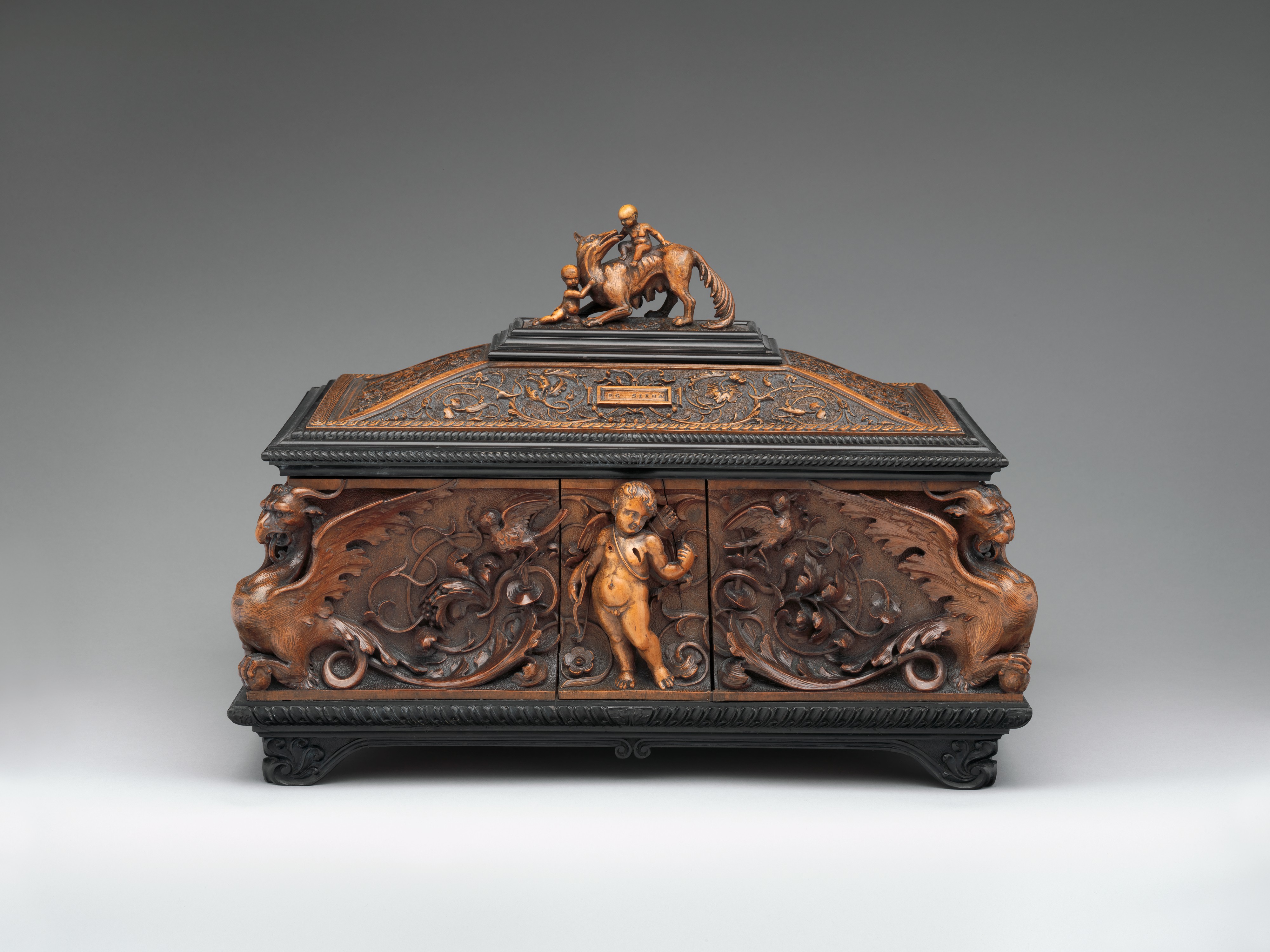
Within the curated silence of the Fashion Lab, the jewelry casket presented for study—a formidable object of carved walnut and ebony, lined with the deepest red velvet—transcends its primary function. It is not merely a box but a hermetic theater of value, a standalone artifact whose materiality and construction narrate a complex story of global exchange, artisanal hierarchy, and the intimate performance of identity. To analyze this piece is to decode the silent language of luxury that precedes the adornment itself, understanding the casket as the critical prologue to the sartorial statement.
Material Semiotics: Walnut, Ebony, and the Velvet Interior
The material selection is a deliberate discourse on provenance and contrast. The primary structure of carved walnut speaks of the European atelier, a wood prized since the Renaissance for its fine, stable grain, ideal for intricate narrative or arabesque carving. It represents a cultivated, terrestrial luxury, drawn from managed estates. Its partner, ebony, immediately shifts the geographical and symbolic axis. Ebony, a wood of profound density and a mirror-like finish when polished, has historically been sourced from Africa, Southeast Asia, and the Indian subcontinent. Its incorporation—likely as veneer, inlay, or structural accent—signals a conscious engagement with global material networks. The contrast between the warm, honeyed tones of walnut and the severe, authoritative black of ebony creates a visual tension that is both aesthetic and economic, a tangible manifestation of colonial trade routes and the allure of the exotic, mastered and framed by European craftsmanship.
This dialogue is internalized by the crimson velvet lining. More than a protective layer, the velvet performs three crucial roles. First, as a tactile experience, it offers a sensuous, forgiving bed that cradles and highlights the hard, brilliant facets of jewels. Second, its color—a deep, saturated red—is historically associated with royalty, power, and the sacred. It provides a dramaturgical stage, elevating each piece of jewelry to the status of a protagonist. Third, from a conservation perspective, the velvet’s pile creates a microclimate of reduced friction and abrasion, indicating an inherent understanding of preserving not just objects, but value across generations.
Form and Function: The Architecture of Intimacy and Security
As a standalone study, the casket’s form factor is paramount. Unlike a traveling case, it is designed for a fixed, ceremonial location: a dressing room, a private cabinet, or a boudoir. Its architecture, therefore, balances monumental presence with intimate revelation. The carved exterior—perhaps featuring allegorical scenes of the arts, mythological figures, or intricate geometric patterns—serves as a public-facing testament to the owner’s discernment, meant to be admired by privileged guests during private showings. The act of opening the casket becomes a ritual, transitioning from a public display of wealth (the fine cabinet-making) to a private revelation of personal treasure.
The internal configuration is a study in organizational logic. We can infer compartments: shallow trays for rings, fitted slots for brooches, dedicated cavities for tiaras, and perhaps a hidden *secretaire* for the most personal of items, such as love tokens or mourning jewelry. This spatial organization codifies the social and emotional life of the owner. The hierarchy of compartments mirrors the hierarchy of occasions—state functions, social evenings, private family gatherings. The casket does not simply store; it curates a collection, imposing order on the potentially chaotic symbolism of jewels, thereby allowing the owner to navigate her social world with precision.
Global Heritage as a Design Imperative
The designation "Origin: Global Heritage" is not incidental but central to the object’s essence. This casket is a syncretic artifact. The walnut carving technique may reference Italian *intarsia* or French *boiserie*. The use of ebony points to Portuguese trade hubs in Goa or Dutch engagements in Sri Lanka. The very concept of a luxurious, furniture-grade casket finds parallels in Mughal India’s elaborate jewel chests (*pandan*) or Chinese lacquer cabinets. This object sits at a confluence, embodying what scholar Arjun Appadurai would term the "social life of things," where materials and ideas circulate, are transformed by local artisanship, and are re-contextualized within a new cultural framework.
It represents a pre-industrial, yet globally connected, luxury supply chain. The value is accretive: the raw material value of exotic woods, the skilled labor value of the master carver and cabinetmaker, the symbolic value of the protective form, and finally, the transcendent value of the contents it safeguards. The casket is the stable, enduring counterpart to the mobile, dazzling jewels within; one is fixed legacy, the other is performative capital.
Conclusion: The Casket as Curatorial Framework
For Katherine Fashion Lab, this jewelry casket provides an indispensable lens through which to re-examine the history of adornment. It argues that luxury is a systemic environment, not a series of isolated objects. The casket is the first and most critical piece in the ensemble—the silent curator of a personal museum. Its carved walls whisper of global exploration and artisan guilds, its velvet interior sighs with the memory of intimate nightly rituals, and its very presence declares that true value requires a worthy sanctuary. In studying this casket, we understand that fashion’s power has always resided not just in what is worn, but in the carefully constructed world from which it emerges—a world of order, narrative, and profound material intelligence. It challenges us to consider: what are the contemporary vessels that perform this same complex curatorial role for today’s most prized possessions?