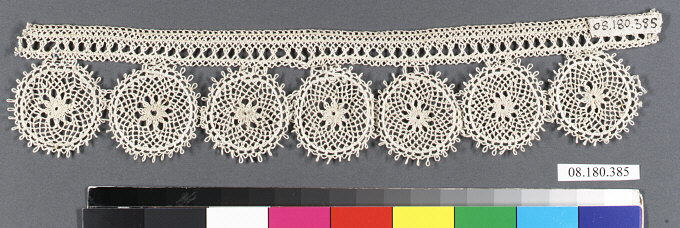
Deconstructing the Fragment: A Couture Analysis of Katherine Fashion Lab’s Embroidered Net
In the rarefied echelons of haute couture, where garments transcend mere clothing to become artifacts of cultural conversation, Katherine Fashion Lab presents a singular study: “Fragment.” This piece, rooted in the expansive lexicon of Global Heritage and executed in the delicate yet formidable medium of embroidered net, stands as a masterclass in the art of the incomplete. It is not a dress that seeks to clothe the body in totality, but rather a standalone thesis on memory, migration, and the power of the partial. To analyze “Fragment” is to engage with a sophisticated paradox: a garment that is both structurally fragile and conceptually monumental.
The Philosophical Underpinning: The Fragment as a Complete Statement
The title “Fragment” is not an admission of incompleteness but a deliberate curatorial choice. In the context of Global Heritage, the fragment is a potent symbol. It represents the surviving shard of a lost civilization, a torn corner of a family heirloom, or a single stitch from a grandmother’s dowry. Katherine Fashion Lab leverages this archetype to challenge the Western couture tradition of the “perfect finish.” Instead of presenting a seamless, fully realized silhouette, the Lab offers a narrative of diaspora and preservation. The “Fragment” becomes a vessel for stories that cannot be told in full—only suggested, glimpsed, and honored in their partiality.
This philosophical stance is executed with remarkable precision. The garment’s silhouette is intentionally asymmetrical, with a single, sweeping shoulder line that dissolves into raw, unfinished edges on the opposite side. The hem is not hemmed; it is a deliberate fraying of the embroidered net, suggesting a garment that was once whole but has been subjected to time, travel, or upheaval. This is not a sign of decay, but of authenticity. For the discerning collector, this intellectual weight elevates the piece from a dress to a conversation piece—a standalone artifact that demands contemplation rather than mere admiration.
The Material Dialogue: Embroidered Net as a Canvas of Contradiction
The choice of embroidered net is the technical cornerstone of this analysis. Netting, by its nature, is a material of absence—a structure defined by its holes, its negative space. It is transparent, airy, and inherently ephemeral. To embroider upon it is to wage a war of substance against void. Katherine Fashion Lab does not shy away from this tension. The embroidery is dense in some areas—a cascade of metallic threads, seed pearls, and silk floss that forms a topographic map of an imagined homeland—and sparse in others, where the bare net is left to whisper against the skin.
The pattern of the embroidery is a direct homage to Global Heritage, drawing from a lexicon of motifs that span continents. One can discern the geometric precision of North African Berber symbols in the shoulder, the floral scrollwork of Mughal India along the waist, and the abstracted animal forms of pre-Columbian textiles near the hem. Yet, these are not reproduced faithfully; they are fragmented themselves. A thread of a Persian paisley cuts abruptly into a Celtic knot, only to dissolve into a single, lonely sequin. This is not cultural appropriation but cultural translation—a dialogue between heritages that acknowledges the impossibility of pure origins in a globalized world.
The technical execution of this embroidery is extraordinary. Each stitch is hand-placed, with the netting stretched taut on a frame to prevent distortion. The artisans at the Lab have employed a technique known as broderie anglaise for the floral elements, where the fabric is cut away to create eyelets, then reinforced with satin stitch. This creates a literal “fragment” within the fragment—a hole that is simultaneously a decorative element. The interplay of light through these apertures transforms the garment into a living shadow-play, shifting with every movement of the wearer.
Structural Integrity: The Architecture of the Incomplete
One might question how a garment made of net—a material prone to snagging and distortion—can achieve the structural integrity required for standalone couture. Katherine Fashion Lab answers this with an invisible scaffolding. The embroidered net is mounted over a second skin of nude tulle, which provides tensile strength without compromising transparency. The embroidery itself acts as a structural grid, with denser areas of stitching creating boning-like support. The result is a piece that holds its shape—a defined bust, a cinched waist, a dramatic flare at the hip—while retaining the illusion of weightlessness.
The absence of a full lining is a deliberate choice. The wearer’s skin becomes part of the design, a living canvas that completes the fragment. This is a bold move in couture, where modesty and structure often reign. Here, the Lab trusts the wearer to embody the missing pieces of the narrative. The garment is not a shell but a co-author of the story, with the body providing the warmth and context that the net alone cannot hold.
Contextualizing the Standalone Study: The Fragment in the Modern Wardrobe
As a “standalone study,” “Fragment” is not intended for the runway or the red carpet in the traditional sense. It is a collector’s piece, a work of art that exists outside the seasonal cycle of fashion. This positioning is strategic. In an industry saturated with fast-moving trends, Katherine Fashion Lab offers permanence through impermanence. The fragment is eternal precisely because it is incomplete—it invites endless reinterpretation.
For the wearer, this garment demands a new kind of engagement. It cannot be accessorized in the conventional way; any jewelry or belt would disrupt the dialogue of the net. Instead, the wearer must curate their own presence—the way they move, the lighting they stand in, the silence they bring. This is couture as performance art, where the fragment is the script and the body is the stage. The Lab has thus redefined the concept of “wearability.” It is not about comfort or convenience, but about the responsibility of carrying a cultural artifact.
Conclusion: The Future of Heritage in a Fragmented World
Katherine Fashion Lab’s “Fragment” is more than a garment; it is a manifesto for a new kind of couture that honors the past while embracing the fractured nature of contemporary identity. By choosing embroidered net as the medium, the Lab has created a piece that is both delicate and resilient, transparent and dense, global and deeply personal. The fragment is not a weakness—it is a strength, a declaration that beauty can exist in the broken, and that heritage is not a fixed inheritance but a living, evolving mosaic. In this standalone study, the Lab has achieved what few designers dare: the creation of a garment that is complete in its incompleteness, and timeless in its acknowledgment of time’s passage.