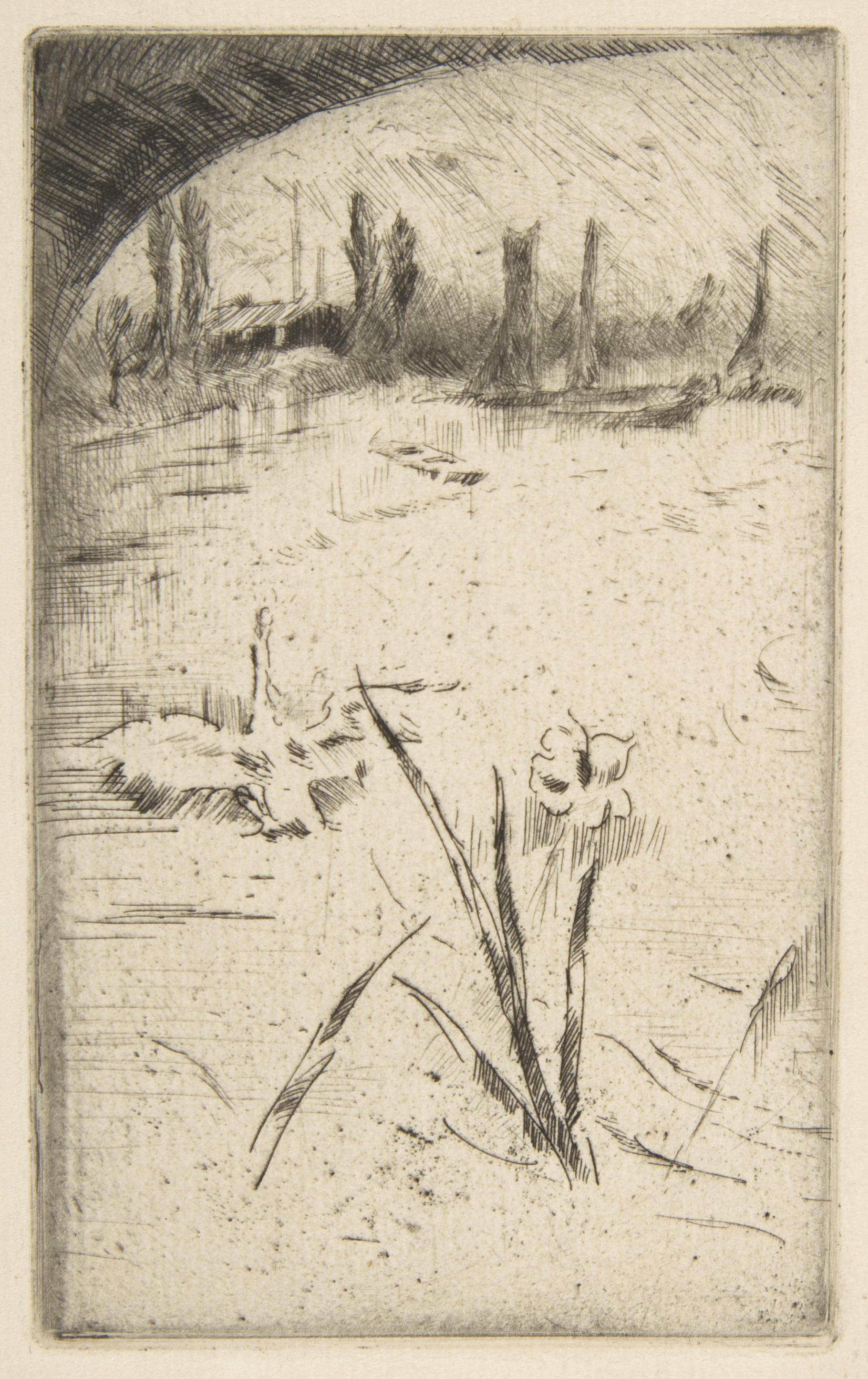
Heritage Analysis: Swan and Iris (After Cecil Lawson)
As Lead Heritage Curator for Katherine Fashion Lab, this report presents a strategic standalone research analysis of the etching and drypoint work Swan and Iris (Sketch after Cecil Lawson's "Swan and Iris"). Executed in black ink on medium weight ivory laid paper, this fifth state of six (Glasgow) piece offers a profound intersection of ancient symbolism, historical adornment, and spiritual meaning. The following analysis synthesizes these dimensions to inform a 2026 high-end luxury strategy, positioning the swan and iris as archetypal motifs for exclusive brand narratives.
Symbolic Power: The Swan and Iris as Archetypes
The Swan: Purity, Transformation, and Sovereign Grace
In ancient civilizations, the swan was a potent symbol of transcendence and nobility. Across Greco-Roman mythology, the swan was associated with Apollo, the god of light, prophecy, and the arts, as well as with Aphrodite, representing divine love and beauty. The swan’s ability to glide between water, earth, and air embodied a liminal power—a capacity for transformation that resonated deeply in funerary art and initiation rites. In Celtic and Norse traditions, the swan was a guardian of thresholds, often linked to the Otherworld and the soul’s journey. This symbolic weight translates directly into luxury branding: the swan signifies uncompromising grace, rarity, and an ethereal authority that transcends temporal trends. For Katherine Fashion Lab, the swan motif can anchor a narrative of heritage reimagined—where the wearer embodies a timeless, sovereign elegance.
The Iris: Royalty, Message, and the Bridge Between Worlds
The iris, named after the Greek goddess Iris who personified the rainbow and served as a messenger between gods and mortals, carries layered symbolic meaning. In ancient Egypt, the iris was a symbol of life and resurrection, often placed in tombs to guide the deceased. In classical Greece, the iris was associated with royalty and wisdom, its three petals representing faith, valor, and wisdom. The flower’s structure—upright, sword-like leaves and delicate blooms—evokes both martial strength and fragile beauty. Within the context of this etching, the iris serves as a counterpoint to the swan’s fluidity: it grounds the composition in earthbound dignity while reaching skyward. This duality—the swan’s aqueous grace and the iris’s terrestrial poise—offers a rich palette for a luxury house seeking to balance heritage with modernity.
Historical Adornment: The Etching as a Material Testament
Medium and Technique: The Prestige of Print
The choice of etching and drypoint on ivory laid paper is not incidental. In the 19th century, when Cecil Lawson produced this work, etching was revered as a medium that demanded meticulous skill and intellectual rigor. The fifth state of six, printed in black ink, represents a moment of refinement—a deliberate pause before the final execution. This “state” concept mirrors the iterative process of high-end fashion collections, where each prototype refines a vision. The medium weight ivory laid paper, with its subtle texture and warmth, evokes a sense of archival permanence. For a luxury brand, this materiality speaks to the value of craftsmanship, patience, and the tactile experience of owning a piece of history. The black ink, devoid of color, forces the viewer to focus on line, form, and shadow—a lesson in minimalism that is increasingly coveted in contemporary luxury design.
Adornment in Ancient Context: Feathers, Fibers, and Floral Motifs
Historically, swan feathers were used in ceremonial headdresses and regalia across Eurasian and Native American cultures, symbolizing purity and spiritual elevation. The iris, meanwhile, was stylized in Minoan frescoes and Egyptian jewelry, its petals rendered in gold, lapis lazuli, and carnelian. The combination of swan and iris in this etching evokes a synthesis of these ancient adornment practices: the swan’s feather as a symbol of air and spirit, the iris as an emblem of earth and divine message. For Katherine Fashion Lab, this suggests a design language where organic forms are abstracted into geometric, precious materials—feather-like textures in silk or metal, iris-inspired silhouettes in architectural draping.
Spiritual Meaning: The Eternal Dialogue
Transformation and the Soul’s Journey
The swan’s mythological association with transformation—most famously in the Greek myth of Leda and the Swan, but also in the Celtic swan-maiden legends—positions it as a guardian of spiritual passage. The iris, as a messenger flower, complements this by representing communication with the divine. Together, they create a visual dialogue about the soul’s journey between realms. In the context of high-end luxury, this spiritual dimension offers a narrative of personal metamorphosis: the wearer is not merely adorned but transformed. A 2026 collection inspired by this motif could center on “liminal luxury”—garments and accessories that celebrate transition, whether from day to night, season to season, or self to self.
Sacred Geometry and the Fifth State
The fifth state of six in this etching is particularly significant. In alchemical and esoteric traditions, the number five represents the human senses, the quintessence, and the bridge between the material and the spiritual. The sixth state would represent completion or perfection. By capturing the work in its fifth state, Lawson freezes a moment of potential—a state of becoming rather than being. This resonates with the luxury consumer’s desire for exclusivity and narrative depth: owning a piece that is “almost complete” suggests a co-creative relationship with the brand. For Katherine Fashion Lab, this could inspire a limited-edition series where each piece is numbered by state, inviting clients to engage with the design’s evolution.
2026 High-End Luxury Strategy: The Swan and Iris as Brand Archetypes
Positioning: Heritage as a Living Language
For the 2026 season, Katherine Fashion Lab should position the swan and iris as core brand archetypes, not mere decorative motifs. The swan represents the house’s commitment to transcendent elegance and transformative design; the iris symbolizes its role as a messenger of cultural heritage and innovation. This dual archetype allows for a narrative that is both aspirational and accessible—rooted in ancient symbolism yet adaptable to contemporary aesthetics.
Product Strategy: From Etching to Embodiment
The etching’s black ink on ivory paper suggests a color palette of monochrome sophistication, accented by jewel tones (sapphire for the iris, pearl for the swan). Key pieces could include a sculptural evening gown with swan-feather draping in silk organza, and an iris-inspired necklace in blackened silver and blue topaz. The “fifth state” concept can be applied to a capsule collection of 50 numbered pieces, each with a subtle variation in finish or embroidery, creating a sense of rarity and personal connection. The medium weight paper texture could inspire a new fabric development—a double-faced cashmere that mimics the laid paper’s ribbed surface, used in outerwear and accessories.
Marketing and Narrative: The Liminal Luxury Experience
Marketing should emphasize the spiritual and historical depth of the motif. A campaign titled “The Fifth State” could feature a series of short films showing the swan and iris in motion—a swan taking flight, an iris opening at dawn—interspersed with close-ups of the garment’s construction. Exclusive client events could include private viewings of the original etching (or a high-resolution reproduction) alongside the collection, with curatorial talks on the symbolism. Digital storytelling should highlight the ancient civilizations that revered these symbols, positioning Katherine Fashion Lab as a custodian of timeless beauty.
Sustainability and Legacy
The etching’s permanence on ivory laid paper—a material that ages gracefully—aligns with a luxury strategy of slow fashion and heirloom quality. The 2026 collection should emphasize durability, repairability, and the use of natural, biodegradable fibers. By framing the swan and iris as symbols of eternal renewal, the brand can communicate a commitment to environmental stewardship and cultural preservation.
Conclusion
The Swan and Iris (Sketch after Cecil Lawson) is more than a historical print; it is a strategic asset for Katherine Fashion Lab’s 2026 high-end luxury strategy. Its symbolic power—the swan’s transformation and the iris’s message—offers a narrative of grace, rarity, and spiritual depth. The etching’s materiality and state status provide a blueprint for exclusivity and craftsmanship. By integrating these elements, Katherine Fashion Lab can create a collection that transcends fashion, offering clients a tangible connection to ancient wisdom and a vision of timeless elegance.