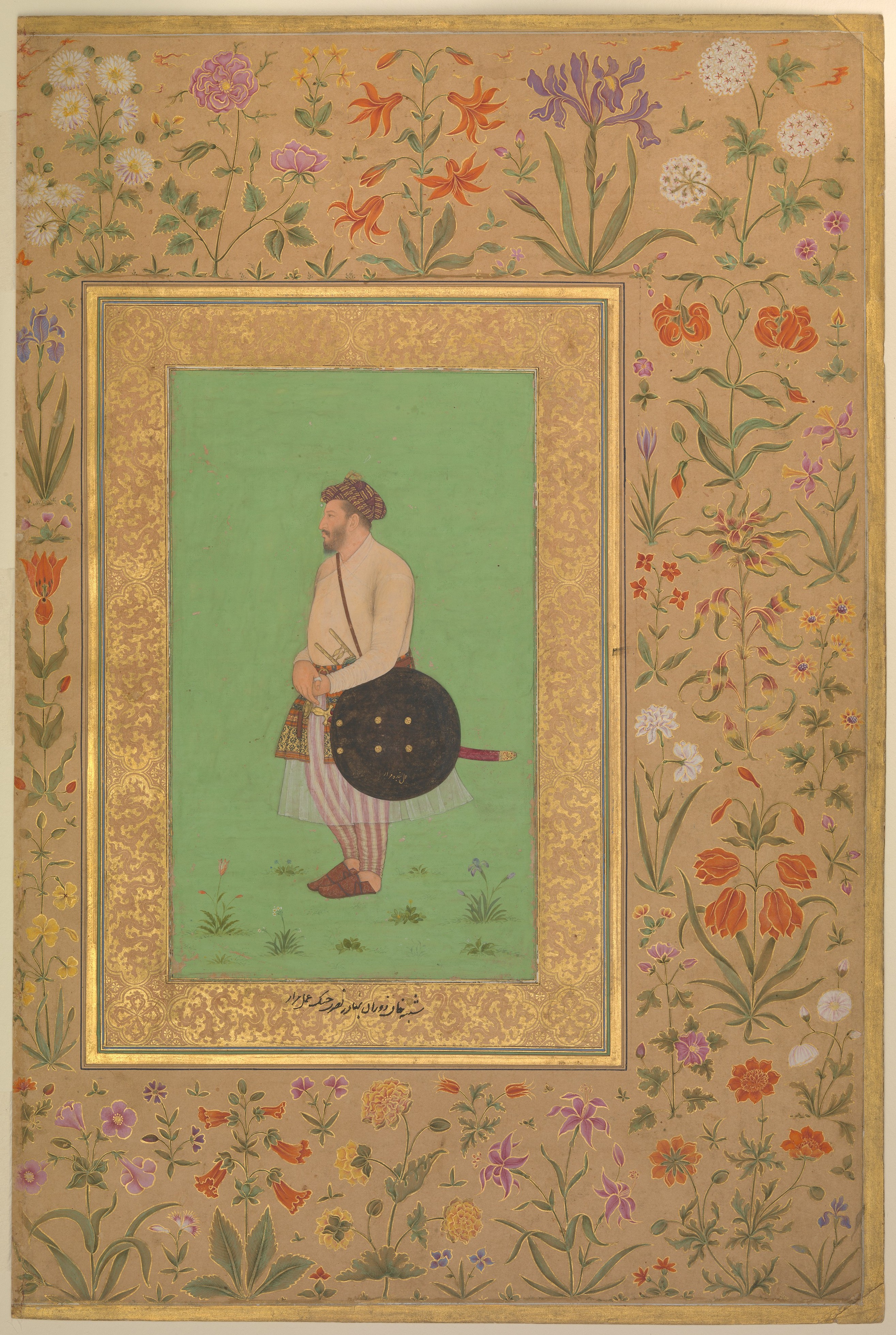
The Unseen Couture: Decoding Power and Prestige in a Mughal Masterpiece
In the hallowed archives of global heritage, where the whispers of empires are preserved in pigment and gold, the "Portrait of Khan Dauran Bahadur Nusrat Jang" from the Shah Jahan Album stands as a singular testament to the intersection of political authority and sartorial artistry. For the modern couturier, this folio is not merely a historical artifact; it is a masterclass in the semiotics of dress, a blueprint for constructing identity through fabric, color, and form. At Katherine Fashion Lab, we dissect this masterpiece not as a relic, but as a living lexicon of power dressing—a dialogue between the Mughal court’s opulence and the contemporary language of luxury.
The Architecture of Authority: Silhouette and Structure
The first and most commanding element of this portrait is the silhouette. Khan Dauran is depicted in a state of poised grandeur, his form enveloped in a jama—a traditional floor-length coat—that is both voluminous and meticulously tailored. The garment’s structure is not accidental; it is an engineered statement of dominance. The jama’s flared skirt, achieved through precise cutting and the use of stiff, high-quality cotton or silk, creates a triangular base that anchors the figure to the ground. This is a silhouette that demands space, a physical manifestation of territorial control.
From a couture perspective, the jama’s construction reveals a profound understanding of draping and weight distribution. The fabric falls in heavy, vertical folds, a technique that elongates the torso while broadening the shoulders through the use of a fitted bodice and gathered sleeves. The result is a visual paradox: a garment that is both restrictive in its formality and liberating in its grandeur. Contemporary designers can draw from this by exploring how structured silhouettes—think architectural shoulders and columnar skirts—can imbue the wearer with an aura of unassailable authority. The jama teaches us that power is not merely worn; it is constructed, layer by layer, seam by seam.
The Palette of Sovereignty: Color as Political Currency
The color palette of this folio is a carefully curated lexicon of Mughal sovereignty. The dominant hue is a deep, burnished gold, applied with opaque watercolor and actual gold leaf, which serves as both background and accent. This is not a decorative choice; gold in Mughal iconography is the color of the divine, of imperial treasury, and of eternal glory. Khan Dauran’s jama itself is rendered in a rich, vermillion red—a color reserved for the highest echelons of the nobility, symbolizing courage, passion, and martial prowess.
The interplay between these two colors—gold and red—creates a chromatic tension that is both arresting and hierarchical. The red jama commands attention, while the gold background elevates the subject to a celestial plane. This is a lesson in color psychology for the modern atelier. In luxury fashion, red remains the color of power (think of a Valentino gown or a Hermès scarf), while gold signifies exclusivity and timelessness. Katherine Fashion Lab advocates for a strategic use of such “power colors” in collections, where a single, saturated hue can define an entire look, and metallic accents can transform a garment from mere clothing into a statement of legacy.
The Language of Embellishment: Opulence as Narrative
No analysis of this portrait would be complete without a deep dive into its embellishment. The jama is not a plain surface; it is a canvas for intricate floral and geometric patterns, rendered in gold and silver paint. These motifs are not arbitrary. The lotus flower, a recurring symbol in Mughal art, represents purity and spiritual enlightenment, while the crescent moon and stars allude to celestial favor and the eternal nature of the empire. Every stitch, every brushstroke of gold, is a narrative device.
For the couturier, this is a profound reminder that embellishment is never mere decoration. It is a form of communication. The modern equivalent can be found in haute couture’s use of hand-beading, embroidery, and appliqué. A gown by Schiaparelli or a jacket by Dior often carries symbolic motifs—a bee for industry, a star for destiny. The “Portrait of Khan Dauran” teaches us that the most opulent garments are those that tell a story. At Katherine Fashion Lab, we encourage designers to embed personal or cultural iconography into their pieces, transforming a dress into a heirloom that speaks across generations.
The Accessory as Armament: The Turban and the Sword
Beyond the jama, the portrait’s accessories are equally critical to the sartorial narrative. Khan Dauran wears a turban of immense proportions, wrapped in layers of fine muslin and adorned with a sarpech (a turban ornament) featuring a feather and a jewel. The turban is not merely headwear; it is a crown, a symbol of rank and regional identity. The sword at his side, with its jeweled hilt, is both a weapon and a status symbol, signifying military command and readiness to defend the realm.
In contemporary couture, the accessory has evolved from the practical to the symbolic. A structured hat, a statement belt, or a pair of architectural earrings can serve the same function as the turban and sword: they anchor the silhouette and communicate power. The lesson here is one of proportion and intent. Just as the Mughal turban balances the volume of the jama, a modern accessory must harmonize with the garment’s scale. A bold necklace can elevate a minimalist gown; a tailored cape can transform a simple dress into regal attire.
The Materiality of Legacy: Ink, Watercolor, and Gold on Paper
Finally, we must consider the materiality of the portrait itself. The use of ink, opaque watercolor, and gold on paper is not merely a technical choice; it is a statement of permanence. Gold does not tarnish; watercolor, when properly preserved, retains its vibrancy for centuries. This medium was chosen to ensure that Khan Dauran’s image—and by extension, his power—would endure beyond his mortal life.
For the fashion industry, this is a call to rethink material longevity. In an era of fast fashion, the Mughal emphasis on precious, durable materials is a counterpoint. Couture houses like Katherine Fashion Lab are increasingly returning to hand-woven silks, organic dyes, and artisanal techniques that honor the craft. The portrait reminds us that true luxury is not about disposability but about legacy. A garment made with gold-threaded embroidery or hand-painted silk is not just clothing; it is an artifact in the making.
Conclusion: The Couture of Command
The "Portrait of Khan Dauran Bahadur Nusrat Jang" is, at its core, a study in the couture of command. Every element—from the structured silhouette and regal palette to the symbolic embellishments and strategic accessories—works in concert to project an image of absolute authority. For the modern designer, this folio offers a timeless template: clothing is never neutral. It is a tool for negotiation, a weapon of influence, and a canvas for identity.
At Katherine Fashion Lab, we do not merely analyze history; we translate its wisdom. The Mughal court’s mastery of sartorial semiotics is directly applicable to today’s luxury market, where clients seek garments that do more than fit—they must command. Whether through a crimson gown with gold embroidery or a tailored coat with architectural shoulders, the lessons of this portrait endure. In the hands of a skilled couturier, ink, watercolor, and gold on paper become silk, thread, and jewel—a living legacy of power, prestige, and the eternal art of dressing to rule.