The Ephemeral Aesthetic: Deconstructing "Beauty in Snow"
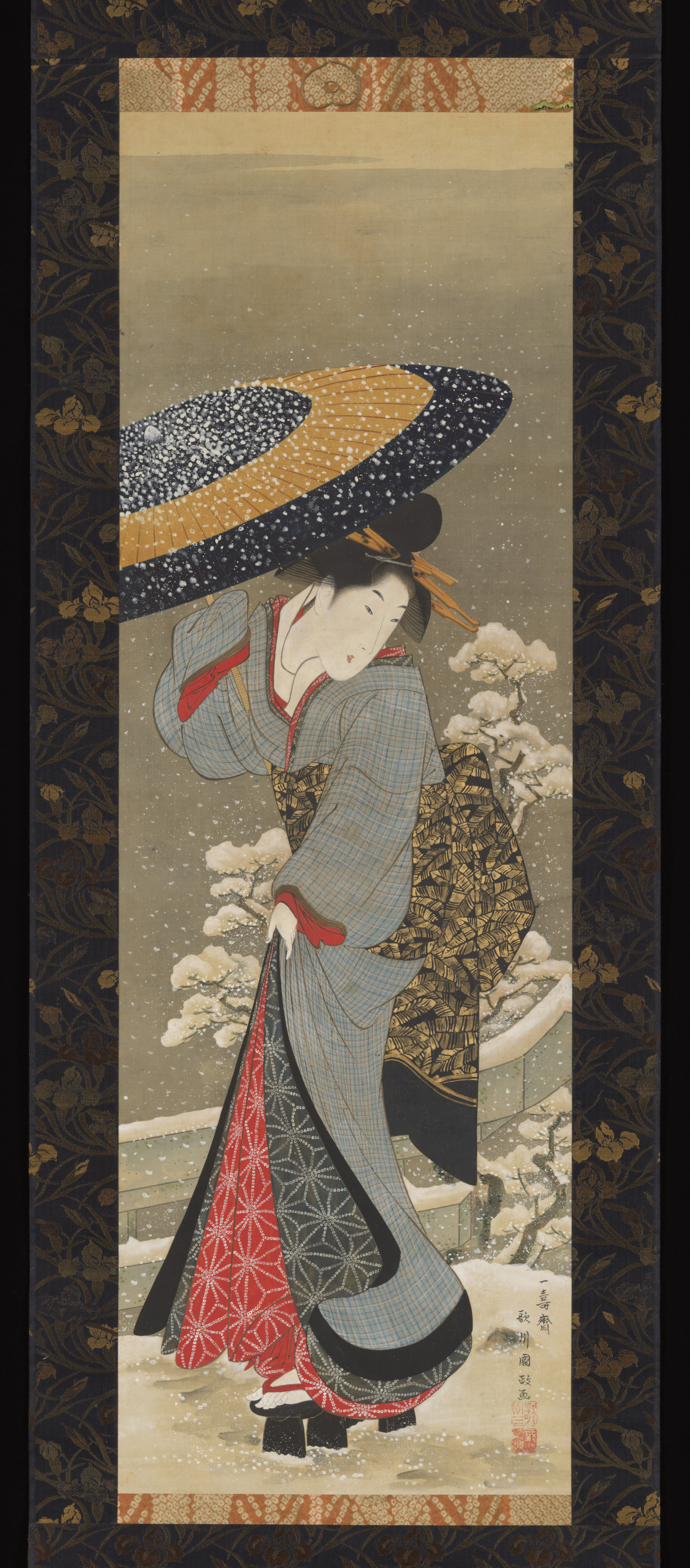
In the rarefied world of haute couture, where fabric becomes narrative and silhouette transforms into philosophy, Katherine Fashion Lab’s latest standalone study, “Beauty in Snow,” emerges as a masterclass in poetic restraint. Drawing from a Japanese hanging scroll—ink and color on silk—the collection transcends mere apparel to become a meditation on transience, purity, and the sublime. This analysis dissects the collection’s conceptual framework, material execution, and cultural resonance, revealing how a centuries-old artistic tradition is reborn through the lens of contemporary fashion.
Conceptual Foundations: Wabi-sabi and the Art of Impermanence
At its core, “Beauty in Snow” is an ode to wabi-sabi, the Japanese philosophy that finds beauty in imperfection and impermanence. The hanging scroll, a traditional medium for ink wash painting, typically depicts landscapes or seasonal scenes—here, snow-laden branches and drifting flakes. Katherine Fashion Lab translates this temporal fragility into garments that feel both deliberate and fleeting. The collection eschews rigid structure for flowing, asymmetrical lines, mimicking how snow settles unevenly on a branch. Each piece appears caught in a moment of transformation, as if the snow has just begun to melt.
The color palette is deliberately restrained: sumi black, snow white, and indigo blue—the three essential tones of Japanese ink painting. There is no vibrant crimson or gold; instead, the designer relies on subtle gradations, from the deep charcoal of a winter sky to the opalescent sheen of fresh snow under moonlight. This monochromatic discipline forces the viewer to focus on texture, movement, and the interplay of light and shadow—the very elements that define the original scroll’s ink work.
Material Alchemy: Silk, Ink, and the Illusion of Depth
The choice of silk as the primary fabric is no accident. In Japanese art, silk was the preferred medium for hanging scrolls due to its ability to hold fine brushstrokes and absorb ink in a way that paper could not. Katherine Fashion Lab honors this heritage by using hand-dyed silk charmeuse and crepe de chine, each piece treated with a proprietary ink-wash technique. The result is a fabric that appears to breathe—the ink bleeds organically along the weave, creating spontaneous patterns reminiscent of snowflakes dissolving on a warm surface.
One standout technique is shibori, the Japanese resist-dye method, used here to mimic the texture of snow-covered bark. Garments are bound, stitched, and compressed before being submerged in indigo dye, producing irregular, pleated surfaces that catch light differently from every angle. The effect is neither uniform nor predictable—each piece is a unique artifact, much like the original scroll. This deliberate embrace of imperfection elevates the collection from mere fashion to wearable art.
Silhouette and Structure: The Calligraphy of Movement
The silhouettes in “Beauty in Snow” are inspired by the brushstrokes of sumi-e (ink painting). A sweeping train on a gown mimics the bold, downward stroke of a bamboo leaf, while a narrow, high-necked jacket echoes the controlled precision of a single line. The garments are not meant to be static; they are designed to move with the wearer, creating a living calligraphy that shifts with each gesture.
A key piece is the “Flake” coat, a floor-length outerwear garment constructed from layered silk organza. Each layer is cut with irregular, jagged edges, reminiscent of a snowflake’s crystalline structure. When the wearer walks, the layers separate and flutter, creating a visual echo of falling snow. The coat is deliberately lightweight—despite its volume, it feels almost weightless, underscoring the collection’s theme of ephemerality. Similarly, the “Branch” gown features a bodice constructed from hand-stitched silk cords that twist and knot like winter branches, while the skirt cascades in a single, unbroken panel of ink-washed crepe.
Cultural Resonance: From Scroll to Runway
The hanging scroll tradition is deeply embedded in Japanese aesthetics, often used in ceremonial spaces to evoke a specific season or mood. Katherine Fashion Lab’s decision to base a standalone study on this medium is a bold statement about fashion’s capacity to function as a cultural artifact. Unlike seasonal collections that chase trends, “Beauty in Snow” exists outside the fashion calendar—it is a standalone piece, meant to be contemplated rather than consumed.
This approach aligns with the Japanese concept of mono no aware, the bittersweet awareness of impermanence. The snow in the scroll is not a static image; it is a moment captured before it vanishes. The garments, too, are designed to be worn with this awareness—they are not indestructible, but rather, they age and evolve with the wearer. The ink-washed silk will fade slightly over time; the shibori pleats will soften. This is not a flaw but a feature, a reminder that beauty is found in the passage of time.
Technical Mastery: The Craft Behind the Concept
Executing a collection of this conceptual depth requires extraordinary technical skill. Each garment undergoes a multi-stage process: first, the silk is hand-dyed using natural indigo and sumi ink, a process that can take weeks to achieve the desired depth. Then, artisans apply the ink-wash technique, using brushes and water to create controlled bleeds. Finally, the garments are assembled using traditional Japanese stitching methods, such as sashiko, which reinforces seams with decorative, geometric patterns.
The “Snowfall” cape exemplifies this mastery. It is constructed from 12 separate panels of silk, each dyed with a different concentration of ink to create a gradient from deep black to pale gray. The panels are then joined with hand-stitched seams that are intentionally visible, mimicking the brushstrokes of the original scroll. The cape is lined with a whisper-thin layer of silk habotai, dyed in a pure white that mirrors the untouched snow of a winter landscape. The contrast between the ink-dark exterior and the luminous interior is a deliberate nod to the yin-yang duality central to Japanese philosophy.
Conclusion: The Quiet Revolution of Slow Fashion
Katherine Fashion Lab’s “Beauty in Snow” is more than a couture collection—it is a manifesto for a slower, more contemplative approach to fashion. In an industry obsessed with speed and novelty, this standalone study dares to ask the viewer to pause, to observe, and to appreciate the beauty of the ephemeral. By channeling the spirit of a Japanese hanging scroll, the lab has created garments that are not meant to be forgotten after a single season, but to be treasured as artifacts of a moment in time.
For the discerning collector, “Beauty in Snow” offers an opportunity to own a piece of living art—a garment that carries the weight of tradition, the precision of craftsmanship, and the poetry of impermanence. It is a reminder that the most profound beauty is often found in the fleeting, the fragile, and the snow that melts before our eyes.