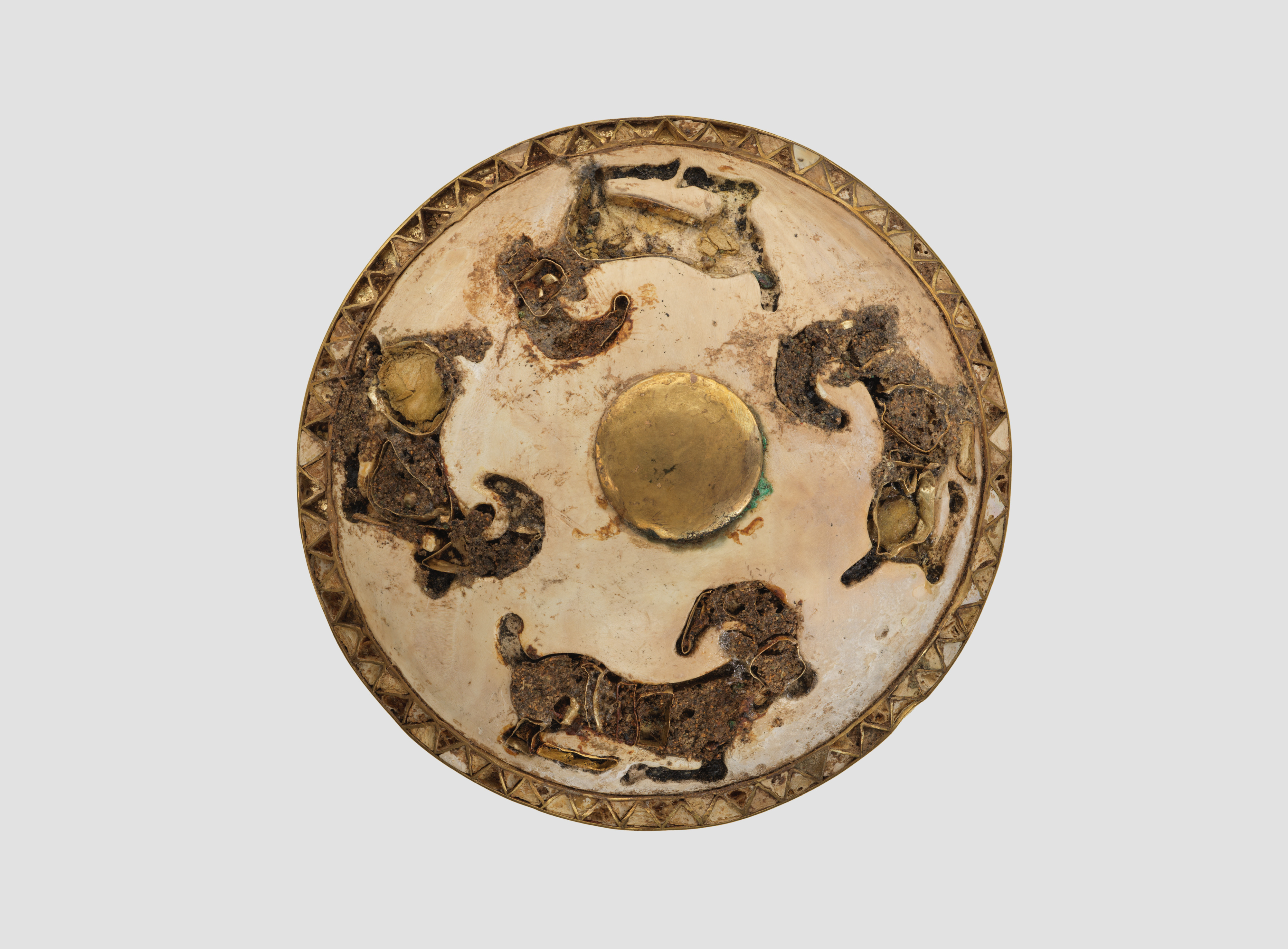
Heritage Analysis: The Roundel with Horned Animals
Introduction: A Masterwork of Pre-Islamic Iranian Adornment
The roundel with horned animals, originating from ancient Iran and crafted from shell, gold foil, and stone inlay, represents a pinnacle of symbolic and material sophistication in the pre-Islamic Near East. As a strategic standalone research artifact for Katherine Fashion Lab, this piece offers a profound lens through which to examine the interplay of symbolic power, historical adornment, and spiritual meaning. For a high-end luxury brand targeting 2026, understanding the layered semiotics and artisanal precision of this object is not merely academic—it is a blueprint for creating culturally resonant, emotionally charged collections that transcend fleeting trends. This analysis deconstructs the roundel’s heritage to extract actionable insights for luxury strategy, positioning it as a cornerstone for narrative-driven, heritage-infused product development.
Symbolic Power: The Horned Animal as Archetype of Dominion
At the heart of the roundel lies the horned animal—most likely a ram, ibex, or bull—whose iconography in ancient Iranian cosmology signified divine authority, fertility, and cosmic order. The horn, across Zoroastrian and earlier Mesopotamian traditions, was a symbol of kingship and supernatural strength, often associated with the god Mithra or the royal *farr* (divine glory). In this roundel, the repetition of horned figures within a circular frame reinforces a cyclical, eternal power—a visual mantra of dominion over both earthly and celestial realms.
For Katherine Fashion Lab, this symbolism offers a strategic narrative for 2026 luxury: the horned animal can be reinterpreted as an emblem of uncompromising leadership and resilience. In a market increasingly saturated with transient aesthetics, a motif rooted in ancient authority speaks to the discerning consumer’s desire for permanence and meaning. The roundel’s symmetrical composition further suggests balance and harmony, aligning with contemporary luxury’s turn toward mindfulness and spiritual grounding. By integrating horned animal motifs into jewelry, hardware, or textile patterns, a brand can evoke a sense of inherited power—a visual shorthand for the wearer’s own sovereignty.
Historical Adornment: Materials as Markers of Prestige and Craft
The roundel’s medium—shell, gold foil, and stone inlay—is a testament to the technological mastery and trade networks of ancient Iran. Shell, sourced from the Persian Gulf or Indian Ocean, was a luxury material prized for its iridescence and rarity. Gold foil, applied with meticulous precision, signified immortality and solar radiance, while stone inlays (likely lapis lazuli, turquoise, or carnelian) added chromatic depth and protective symbolism. This combination of materials was not decorative but performative: each element was chosen for its metaphysical properties and its ability to convey status at court or in ritual contexts.
For a 2026 high-end strategy, the lesson is clear: material provenance and artisanal complexity are non-negotiable differentiators. The roundel’s construction—layering humble shell with precious metal and stone—mirrors the contemporary luxury consumer’s appreciation for contrasting textures and unexpected material hierarchies. Katherine Fashion Lab can leverage this by sourcing ethically harvested shells, recycled gold, and responsibly mined stones, then highlighting the cross-continental journey of each component. This narrative of global craftsmanship, rooted in ancient trade, resonates with today’s values of sustainability and cultural appreciation. Furthermore, the roundel’s use of inlay—a painstaking technique requiring hours of precision—positions it as an anti-mass-production artifact, aligning with the luxury sector’s shift toward hyper-exclusivity and slow fashion.
Spiritual Meaning: The Roundel as Meditative and Protective Object
Beyond its aesthetic and status functions, the roundel served a deeply spiritual purpose. In Zoroastrian and earlier Iranian traditions, circular forms represented the eternal cycle of life, death, and rebirth, while horned animals were intermediaries between the earthly and divine. The roundel was likely worn as a pectoral or attached to ceremonial garments, functioning as a talisman against malevolent forces and a conduit for divine favor. The inclusion of stone inlays—each with specific apotropaic properties—amplified this protective role. Lapis lazuli, for instance, was believed to ward off evil, while carnelian promoted vitality and courage.
For a 2026 luxury strategy, this spiritual dimension offers a powerful opportunity to redefine adornment as a tool for personal empowerment and ritual. Modern consumers, particularly in the high-net-worth segment, are seeking objects that offer emotional and psychological value beyond material worth. A collection inspired by the roundel could include pieces designed for specific intentions—protection, clarity, or courage—with each material chosen for its symbolic resonance. The circular form itself can be reimagined as a meditative motif in jewelry, bags, or home accessories, inviting the wearer to engage with the piece as a daily ritual. This approach transforms a luxury item from a static possession into a dynamic, living artifact, deepening customer loyalty and brand attachment.
2026 High-End Luxury Strategy: From Artifact to Archetype
Translating the roundel’s heritage into a 2026 luxury strategy requires a multilayered approach that respects its origins while speaking to contemporary desires for authenticity, exclusivity, and spiritual depth. The following strategic pillars emerge from this analysis:
- Narrative-Driven Collections: Each piece should be accompanied by a curated backstory that traces the roundel’s symbolism, materials, and cultural context. This could take the form of digital storytelling, limited-edition booklets, or immersive in-store experiences. The goal is to position the collection as heirloom-worthy, not merely fashionable.
- Material Innovation with Heritage Roots: Use shell, gold foil, and stone inlay as signature materials, but reinterpret them through modern techniques—such as laser-cut shell overlays or reversible gold foiling—to appeal to tech-savvy luxury consumers. Partner with artisans from Iran and the broader Middle East to ensure authenticity and support traditional crafts.
- Symbolic Customization: Offer clients the ability to personalize horned animal motifs based on their own astrological or spiritual preferences. For instance, a ram for leadership, a bull for stability, or an ibex for agility. This creates a bespoke, emotionally resonant product that commands premium pricing.
- Ritual-Based Marketing: Frame the collection as modern talismans for a turbulent world. Campaigns could highlight the protective and empowering qualities of each piece, aligning with the 2026 trend toward mindful consumption. Collaborate with wellness experts to position the pieces as tools for daily meditation or intention-setting.
- Exclusive, Limited Drops: Mirror the roundel’s rarity by producing extremely limited quantities—perhaps 100 pieces per design—each with a unique serial number and certificate of authenticity. This scarcity, combined with the deep cultural narrative, will appeal to collectors and connoisseurs.
Conclusion: The Roundel as a Blueprint for Timeless Luxury
The roundel with horned animals is not a relic of a distant past but a living archetype of how material culture can encode power, spirituality, and prestige. For Katherine Fashion Lab, this artifact offers a strategic roadmap for creating luxury that is both historically grounded and forward-looking. By embracing the roundel’s symbolic depth, material integrity, and spiritual resonance, the brand can transcend the ephemeral and position itself as a custodian of meaning in an increasingly commodified market. In 2026, the most successful luxury brands will not merely sell products—they will sell narratives of transformation, protection, and legacy. The roundel, in its ancient wisdom, already knows this truth. The task now is to let it speak again, through the language of modern luxury.