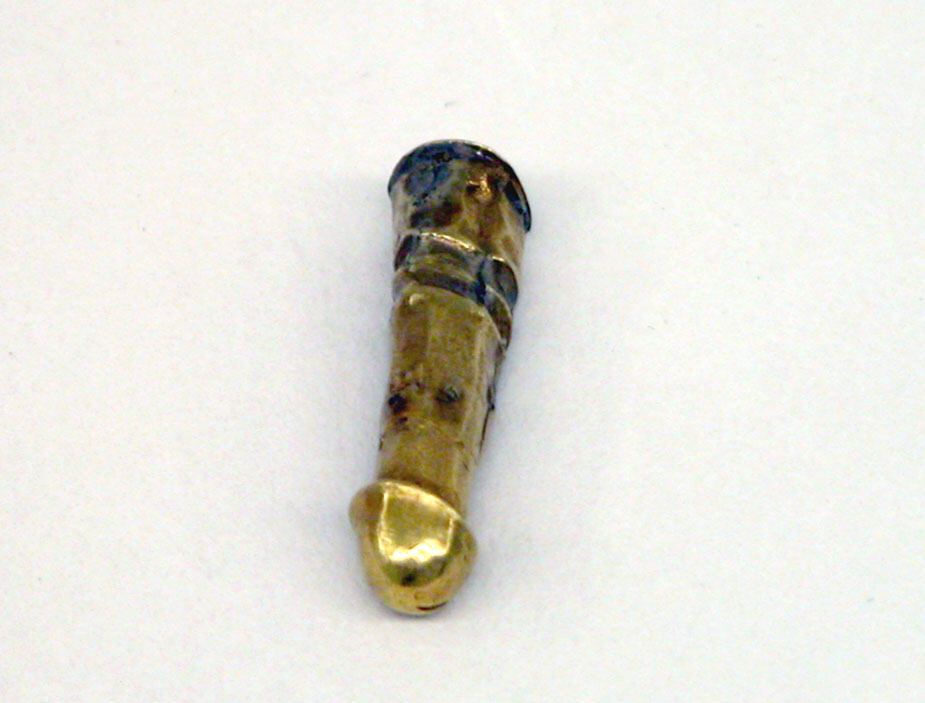
Heritage Analysis: The Linga in Gold – Symbolic Power, Historical Adornment, and Strategic Resonance for Katherine Fashion Lab
Introduction: The Linga as a Cultural Artifact of Java
The Linga, a sacred symbol deeply embedded in the Hindu-Buddhist traditions of Java, Indonesia, represents the divine masculine principle, cosmic creation, and the unmanifest potential of the universe. Crafted in gold, this artifact transcends mere ornamentation, embodying a profound spiritual narrative that intertwines power, fertility, and transcendence. For Katherine Fashion Lab, the Linga offers a unique lens through which to explore the interplay of historical adornment and luxury symbolism, aligning with the lab’s ongoing study of dualistic narratives—where light meets shadow, and the ephemeral confronts the eternal. This analysis examines the Linga’s symbolic power, its historical role in Javanese courtly and religious life, its spiritual meaning, and a strategic framework for integrating its essence into a 2026 high-end luxury strategy.
Symbolic Power: The Linga as a Manifestation of Divine Masculinity
In Javanese Hindu cosmology, the Linga is not merely a phallic symbol but a representation of Shiva as the supreme god of destruction and regeneration. Its form—a cylindrical or elliptical pillar—evokes the axis mundi, connecting the earthly realm to the celestial. The choice of gold as the medium amplifies this symbolism: gold, imperishable and radiant, signifies immortality, purity, and the sun’s life-giving energy. In Javanese court culture, gold Lingas were often consecrated in temples such as Candi Sukuh and Candi Ceto, where they served as focal points for rituals of kingship, fertility, and cosmic order. The Linga’s power lies in its ability to channel divine energy, making it a conduit between the mortal and the divine—a concept that resonates with Katherine Fashion Lab’s exploration of adornment as a bridge between the self and the sacred.
Historical Adornment: The Linga in Javanese Courtly and Ritual Contexts
Historically, the gold Linga was not a wearable object in the conventional sense but a ritual artifact housed in sanctums or carried in processions. However, its influence permeated Javanese adornment through miniature versions worn as amulets or incorporated into royal regalia. During the Majapahit Empire (1293–1527), goldsmiths mastered the art of repoussé and filigree, creating Linga-shaped pendants that signified the wearer’s spiritual authority and royal lineage. These objects were often paired with a Yoni (female counterpart), symbolizing the union of masculine and feminine cosmic forces. This duality mirrors the lab’s study of “一面是光洁银镜上以黄金镶嵌的纷繁棕叶纹,另一面是冰冷石棺板上以浮雕诉说的生命叙事”—a juxtaposition of reflective surfaces and narrative depths. The Linga, as a gold artifact, embodies this tension: its polished surface reflects the light of divinity, while its form narrates the story of creation and dissolution.
Spiritual Meaning: The Linga as a Vehicle for Transcendence
Spiritually, the Linga represents the unmanifested Brahman—the formless, absolute reality in Hindu philosophy. In Javanese mysticism, particularly within the Kejawen tradition, the Linga symbolizes the inner self’s journey toward enlightenment. Gold, as a material, enhances this meaning: its malleability and luster reflect the soul’s potential for transformation. The Linga’s verticality evokes the spine in yogic traditions, where energy (kundalini) rises through the chakras to achieve union with the divine. For Katherine Fashion Lab, this spiritual dimension offers a rich narrative for luxury consumers seeking meaning beyond materiality. The Linga becomes a metaphor for self-actualization—a reminder that true luxury lies in the alignment of inner purpose with outer expression. This aligns with the lab’s DNA correlation, where the split-leaf mirror and stone coffin represent dualities of life and death, reflection and narrative.
2026 High-End Luxury Strategy: Integrating the Linga’s Essence
To position the Linga within a 2026 high-end luxury strategy, Katherine Fashion Lab must transcend mere aesthetic appropriation and instead embed its symbolic power into a holistic brand experience. The following strategic pillars are proposed:
1. Artisanal Collaboration and Material Integrity
Partner with Javanese master goldsmiths from regions like Yogyakarta and Solo to create limited-edition pieces that honor traditional techniques—such as kethel (granulation) and kerawang (openwork). Each piece should be accompanied by a certificate of cultural provenance, detailing its symbolic lineage. The medium of gold must be ethically sourced, with a narrative of sustainability and reverence for the earth—a contemporary echo of the Linga’s cosmic connection.
2. Narrative-Driven Collections: The Mirror and the Coffin
Design a collection titled “Splitting the Divine”, inspired by the lab’s research on dualistic motifs. The Linga’s golden form can be reinterpreted as a pendant with a mirrored surface on one side and an engraved narrative (e.g., the story of creation from Javanese mythology) on the other. This directly references the split-leaf mirror and stone coffin study, offering clients a wearable artifact that invites reflection (the mirror) while telling a story of transformation (the coffin). The collection should be positioned as “heirloom objects” for the modern collector, blending heritage with avant-garde design.
3. Experiential Luxury: Ritual and Immersion
Launch an exclusive “Linga Immersion” experience for top-tier clients, held at a restored Javanese temple or private estate. This would include a guided meditation on the Linga’s symbolism, a gold-smithing workshop, and a private viewing of historical artifacts from the lab’s study. The experience culminates in the presentation of a bespoke Linga-inspired piece, personalized to the client’s spiritual journey. This aligns with the 2026 luxury trend of transformative consumption, where clients seek not just products but profound, life-enhancing encounters.
4. Digital Storytelling and Cultural Stewardship
Develop a multimedia campaign that explores the Linga’s dualities through film, photography, and interactive content. Use the lab’s DNA correlation as a central theme: juxtapose images of gold Lingas against modern mirrors and stone textures, with voiceovers from Javanese scholars and contemporary artists. This positions Katherine Fashion Lab as a cultural steward rather than a mere brand, fostering credibility and emotional resonance with discerning consumers. The campaign should also include a philanthropic component, supporting the preservation of Javanese temple sites and goldsmithing traditions.
Conclusion: The Linga as a Blueprint for Meaningful Luxury
The Linga in gold is more than a historical artifact; it is a blueprint for meaningful luxury in an era where consumers crave authenticity, spirituality, and narrative depth. By honoring its symbolic power, historical context, and spiritual resonance, Katherine Fashion Lab can create a luxury strategy that is both culturally respectful and commercially innovative. The Linga’s dualities—light and shadow, creation and dissolution, reflection and narrative—mirror the lab’s own research, offering a cohesive and compelling vision for 2026. In this vision, luxury is not about possession but connection: to heritage, to the self, and to the cosmos.