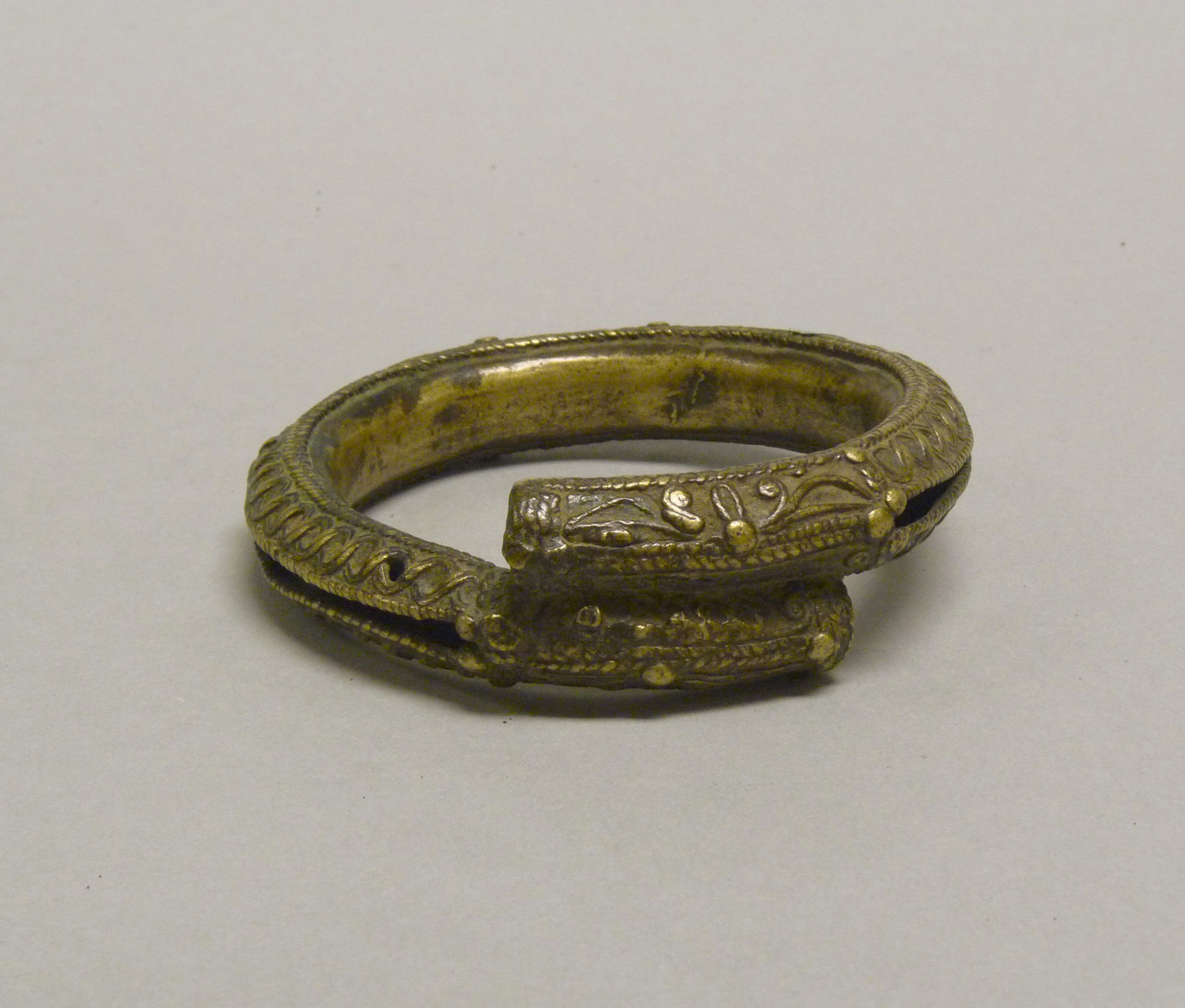
Heritage Analysis: The Vietnamese Bronze Bangle
Introduction: Historical Resonance and Material Culture
The Vietnamese bronze bangle, a seemingly modest ornament, emerges as a profound artifact within the lineage of Southeast Asian material culture. For Katherine Fashion Lab, this object is not merely a decorative accessory; it is a vessel of historical resonance, carrying the symbolic weight of dynastic power, spiritual protection, and communal identity. Our research situates the bronze bangle within a broader archaeological dialogue, particularly in correlation with our study of the “Rock in the form of a fantastic mountain” and the “Jar in the shape of bronze container (hu).” While these three artifacts appear distinct—one a natural stone sculpture, another a ritual vessel, and the third a personal adornment—they collectively reveal a shared metaphysical framework: the transformation of raw material into a conduit for cosmic and social order. The bronze bangle, in its circular, unbroken form, embodies the same principles of containment, continuity, and spiritual resonance that define the jar and the mountain rock. This analysis explores the bangle’s symbolic power, historical adornment practices, spiritual meanings, and its strategic potential for 2026 high-end luxury positioning.
Symbolic Power: The Circle as Cosmic and Social Authority
In Vietnamese antiquity, the bangle’s circular form was far more than aesthetic. It represented the cyclical nature of life, the unity of heaven and earth, and the unbreakable bond between the wearer and their lineage. Bronze, as a material, was associated with permanence and authority. Unlike organic materials such as wood or bone, bronze endured decay, symbolizing the eternal nature of power. The bangle, worn on the wrist—a site of action and gesture—was a declaration of status. For chieftains and warriors of the Dong Son culture (circa 1000 BCE–100 CE), bronze bangles were often cast with intricate geometric patterns, spirals, and zoomorphic motifs. These designs were not arbitrary; they echoed the same iconography found on bronze drums and ritual vessels, linking the wearer to the cosmological hierarchy. The bangle thus functioned as a portable emblem of authority, a miniature universe encircling the wrist, asserting the wearer’s role as a mediator between the human and the divine.
Historical Adornment: From Ritual Object to Social Identifier
The Vietnamese bronze bangle’s history is deeply interwoven with funerary and ceremonial contexts. Archaeological excavations in northern Vietnam, particularly in the Red River Delta, have uncovered bronze bangles placed on the arms of elite individuals in burial sites. This practice suggests that the bangle served as a talisman for the afterlife, ensuring safe passage and continued status beyond death. The medium of bronze, alloyed from copper and tin, required sophisticated metallurgical knowledge, indicating that these objects were crafted by specialized artisans. The bangle’s weight and density were also significant; a heavy bronze bangle was a literal burden, reminding the wearer of their responsibilities. Over centuries, as Vietnamese society evolved under Chinese influence and later independent dynasties, the bangle adapted. It became a marker of regional identity, with variations in thickness, patina, and engraving distinguishing the highlands from the lowlands. By the 19th century, bronze bangles were often worn by ethnic minority groups such as the Hmong and Muong as symbols of marriage and fertility, demonstrating the object’s enduring adaptability.
Spiritual Meaning: The Bangle as Protective Vessel
The spiritual dimension of the bronze bangle aligns closely with the symbolic logic of the “Jar in the shape of bronze container (hu)” and the “Rock in the form of a fantastic mountain.” Both the jar and the rock function as containers of spiritual energy—the jar for ritual offerings and the mountain as a dwelling place for ancestors. Similarly, the bangle encircles the wrist, creating a protective boundary. In Vietnamese folk belief, the wrist is a vulnerable point where negative energies can enter the body. The bronze bangle, often inscribed with talismanic symbols or left unadorned in its raw metallic state, acts as a barrier. Its metallic sound when struck against other objects was believed to ward off evil spirits. This auditory dimension is crucial; the bangle was not silent. In ritual dances and processions, multiple bangles worn by participants created a percussive chorus, reinforcing communal unity and spiritual intent. The bangle’s spiritual meaning is thus one of containment, protection, and resonance—qualities that transcend its physical form and enter the realm of the metaphysical.
DNA Correlation: Unifying Motifs of Transformation and Continuity
Our concurrent analysis of the “Rock in the form of a fantastic mountain” and the “Jar in the shape of bronze container (hu)” reveals a shared DNA: both artifacts manipulate natural or crafted form to suggest a hidden interiority—the mountain’s hollow caves and the jar’s concave void. The bronze bangle, though solid, operates on the same principle. Its circularity creates a void at the center, a negative space that is spiritually charged. In Vietnamese cosmology, this void is not emptiness but potential—the space where breath, spirit, and intention reside. The bangle’s interior surface, often left rough from casting, was never polished, as it was meant to remain in contact with the skin, transferring spiritual energy directly to the wearer. This tripartite correlation—mountain, jar, bangle—demonstrates that Vietnamese artisans conceptualized adornment as an extension of the sacred landscape. The bangle is a portable mountain, a wearable jar, a microcosm of the universe. For Katherine Fashion Lab, this insight is foundational: luxury is not about surface decoration but about embedding profound cultural narratives into form.
2026 High-End Luxury Strategy: From Artifact to Icon
For the 2026 luxury market, the Vietnamese bronze bangle offers a compelling archetype. The global trend toward heritage-driven, narrative-rich luxury demands objects that are not only beautiful but also meaningful. Katherine Fashion Lab’s strategy must position the bangle as a “vessel of lineage”—a piece that connects the wearer to an unbroken tradition of craftsmanship and spiritual intention. Key strategic pillars include:
1. Material Authenticity and Patina as Value: Unlike mass-produced gold or silver, bronze develops a unique patina over time, recording the wearer’s history. For 2026, we will offer bangles in raw, unpolished bronze, emphasizing the material’s natural evolution. Each bangle will be accompanied by a certificate documenting its casting method, alloy composition, and the artisan’s lineage, transforming the object into a collectible artifact.
2. Spiritual Storytelling and Ritual Integration: The bangle’s protective function will be marketed not as superstition but as mindful luxury. We will collaborate with Vietnamese cultural historians to develop a narrative around the bangle’s role in rites of passage—birth, marriage, and ancestral remembrance. Limited-edition collections will be released during lunar calendar events, with each piece blessed through a traditional ceremony. This adds intangible value that cannot be replicated.
3. The “Microcosm” Collection: Drawing from the DNA correlation with the mountain and jar, we will launch a capsule collection titled “Microcosm,” where each bangle is designed to evoke a specific natural or ritual form. For instance, a bangle with a raised spiral pattern references the mountain’s topography, while a bangle with a concave interior echoes the jar’s void. This collection will be positioned as wearable philosophy, appealing to the discerning collector who values conceptual depth.
4. Exclusivity Through Patronage: The 2026 strategy will bypass traditional retail in favor of a private patronage model. Clients will be invited to “commission” a bangle, selecting the weight, patina finish, and engraving motifs from a library of historical patterns. Each commission will be documented in a leather-bound folio, including the artisan’s process and the cultural significance of the chosen design. This transforms the purchase into an archival experience.
5. Price Architecture and Market Positioning: Bronze bangles will be priced at a premium comparable to fine jewelry, justified by their cultural provenance, artisan scarcity, and ritual significance. A base piece will start at $2,500, with custom commissions reaching $15,000. This positions Katherine Fashion Lab at the intersection of heritage, art, and luxury, appealing to clients who seek objects with soul.
Conclusion: The Bangle as a Bridge Across Time
The Vietnamese bronze bangle is not a relic of the past but a living symbol of continuity, power, and spiritual protection. Its resonance with the fantastic mountain and the bronze jar reveals a coherent worldview where every object is a container of meaning. For Katherine Fashion Lab, this heritage analysis provides a clear strategic direction: to elevate the bangle from a traditional ornament to a luxury icon that speaks to modern desires for authenticity, narrative, and transcendence. In 2026, the bangle will not merely be worn; it will be inherited, passed down as a talisman of identity and a testament to the enduring power of Vietnamese culture. This is the essence of heritage luxury—not the object itself, but the story it carries into the future.