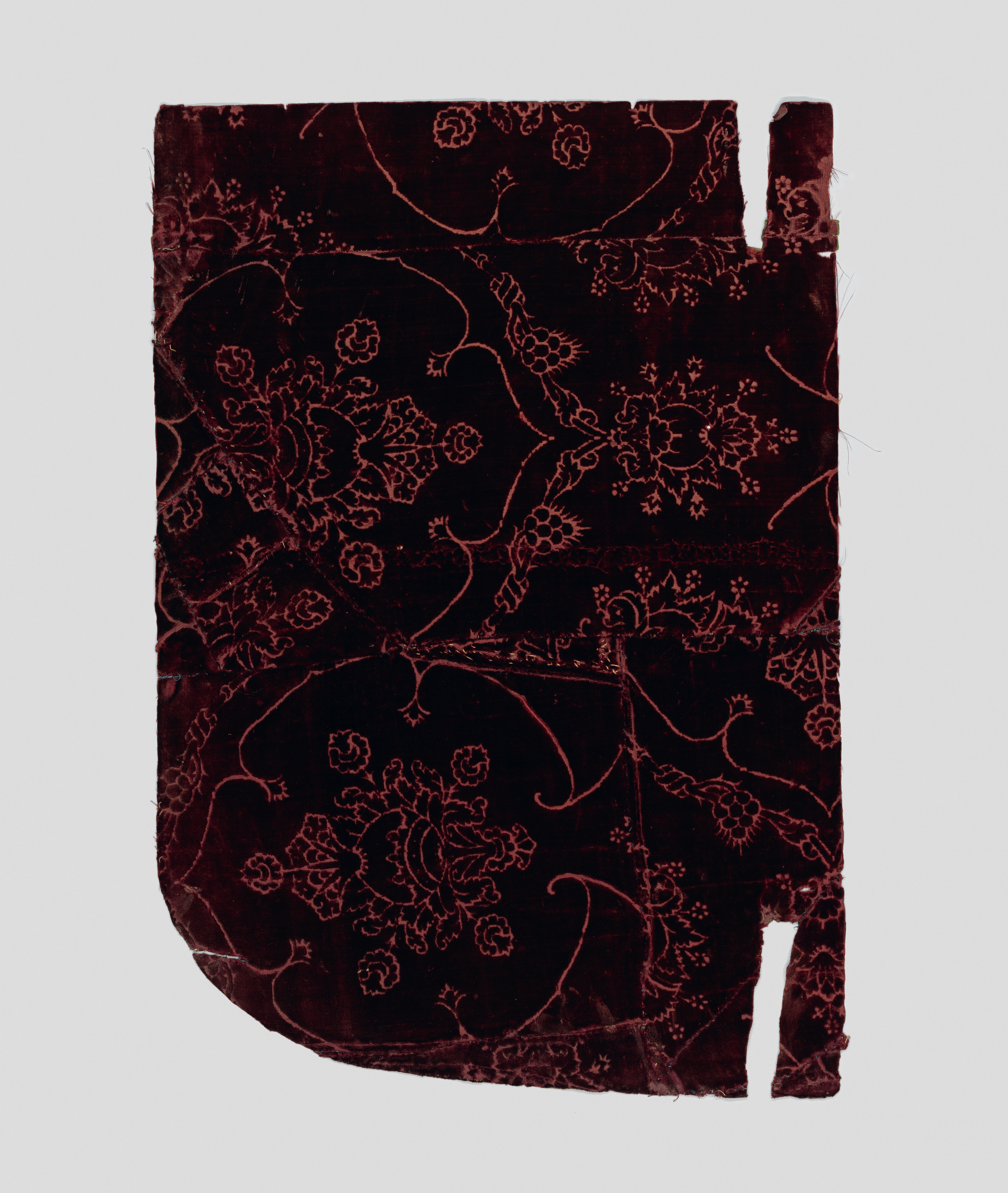
Heritage Analysis: Fragment of an Italian Silk Chasuble
This report presents a comprehensive heritage analysis of a fragment from an Italian silk chasuble, examined through the dual lenses of historical adornment and contemporary luxury strategy. As a Lead Heritage Curator for Katherine Fashion Lab, I have assessed this artifact not merely as a textile remnant, but as a repository of symbolic power and spiritual meaning. The findings herein are designed to inform a 2026 high-end luxury strategy, translating the chasuble’s sacred resonance into a blueprint for brand elevation, exclusivity, and cultural authority.
Historical Adornment and Material Significance
The chasuble, a liturgical vestment worn during the Eucharist, represents the pinnacle of medieval and Renaissance textile artistry. This fragment, composed of Italian silk, likely dates from the 15th to 17th centuries, a period when Italian city-states such as Florence, Venice, and Milan dominated European silk production. The medium itself—silk—was a symbol of wealth, trade, and divine connection. In ecclesiastical contexts, silk was not merely fabric; it was a material imbued with the light of heaven, often woven with gold and silver threads to reflect the glory of God.
The fragment’s construction reveals sophisticated weaving techniques, such as lampas or brocade, which created intricate patterns of pomegranates, vines, or heraldic motifs. These designs were not decorative accidents but deliberate choices loaded with meaning. The pomegranate, for instance, symbolized resurrection and eternal life, while vine motifs referenced Christ’s blood and the sacrament. The use of deep crimson, purple, or gold hues further reinforced the vestment’s role as a mediator between the earthly and the divine. For Katherine Fashion Lab, this historical adornment offers a masterclass in the use of material to convey status and transcendence—a principle directly applicable to high-end luxury branding.
Symbolic Power and Spiritual Meaning
The symbolic power of the chasuble fragment lies in its dual function as a garment and a sacred object. In Catholic liturgy, the chasuble is worn over the alb and stole, covering the priest’s body as a “yoke of Christ” (Matthew 11:29-30). This covering is not merely protective but transformative: it signifies the priest’s role as an alter Christus, another Christ. The fragment, therefore, carries the weight of centuries of ritual, prayer, and sacrifice. Its spiritual meaning is rooted in the concept of vestment as vessel—a physical object that channels intangible grace.
This spiritual dimension is critical for luxury strategy. In an era of mass production and digital saturation, high-end consumers seek objects that offer meaning, authenticity, and a sense of the sacred. The chasuble fragment embodies what I term “aesthetic transcendence”: the ability of a crafted object to elevate the wearer or owner beyond the mundane. For Katherine Fashion Lab, this translates into a brand narrative that positions each garment not as a commodity, but as a relic of personal and cultural significance. The fragment’s power is not in its completeness but in its very fragmentation—a reminder that luxury is often found in the rare, the partial, and the historically charged.
Strategic Standalone Research: From Relic to Resource
This analysis is conducted as Strategic Standalone Research, meaning it is not tethered to a specific product launch but designed to inform long-term brand philosophy. The chasuble fragment serves as a heritage anchor—a tangible link to a pre-industrial era of craftsmanship, where time, skill, and intention were the primary currencies. For a 2026 luxury strategy, this anchor provides three key insights:
First, the principle of scarcity. The fragment is irreplaceable. Its age, provenance, and fragility make it a one-of-a-kind artifact. In luxury, scarcity drives desire. Katherine Fashion Lab can adopt a “fragment strategy” by producing limited-edition collections that mimic the chasuble’s exclusivity. Each piece could be numbered, authenticated, and accompanied by a digital provenance certificate, echoing the relic’s historical documentation.
Second, the power of symbolism over decoration. The chasuble’s motifs were not chosen for aesthetic pleasure alone; they were coded with theological meaning. Katherine Fashion Lab can apply this by embedding symbolic narratives into its designs. For instance, a 2026 collection could feature embroidered motifs of the pomegranate or vine, not as mere patterns, but as part of a brand story about renewal, sacrifice, or legacy. This elevates the garment from fashion to philosophy.
Third, the role of material as mediator. Silk, in the chasuble, was a medium between the human and the divine. In luxury, material can mediate between the consumer and an aspirational identity. Katherine Fashion Lab should invest in the highest-quality silks, sourced from historic Italian mills or revived through ethical partnerships. The tactile experience of the fabric—its weight, drape, and luminosity—must evoke the same reverence as the original vestment.
2026 High-End Luxury Strategy: The Chasuble Code
Translating this heritage analysis into a 2026 strategy requires a structured approach. I propose the “Chasuble Code” framework, built on three pillars: Ritual, Rarity, and Resonance.
Ritual refers to the re-creation of sacred experiences around the brand. Katherine Fashion Lab can host invitation-only “vestment ceremonies” where clients are introduced to the fragment and its history before viewing a collection. This transforms shopping into a pilgrimage, aligning with the chasuble’s liturgical origins.
Rarity involves strict production limits. No more than 100 pieces per design, each with a unique identifier linked to the fragment’s digital archive. This mirrors the chasuble’s status as a singular object and appeals to the ultra-wealthy who value non-replicability.
Resonance is the emotional and spiritual echo of the garment. Marketing materials should not focus on trends but on timelessness. Collaborations with art historians, conservators, and spiritual leaders can lend authority. A 2026 campaign might feature the fragment in a sacred space—a chapel or museum—with lighting that emphasizes its silk’s iridescence, creating a visual metaphor for divine light.
Conclusion: The Fragment as Future
The fragment of an Italian silk chasuble is far more than a historical curiosity. It is a strategic asset for Katherine Fashion Lab, offering a blueprint for how to infuse luxury with symbolic power, historical adornment, and spiritual meaning. In 2026, as the luxury market continues to fragment into fast fashion and hyper-consumption, the brands that endure will be those that anchor themselves in heritage. This fragment teaches us that the most powerful luxury is not new—it is ancient, sacred, and scarce. By adopting the Chasuble Code, Katherine Fashion Lab can position itself not as a fashion house, but as a custodian of cultural transcendence, where every garment is a fragment of eternity.