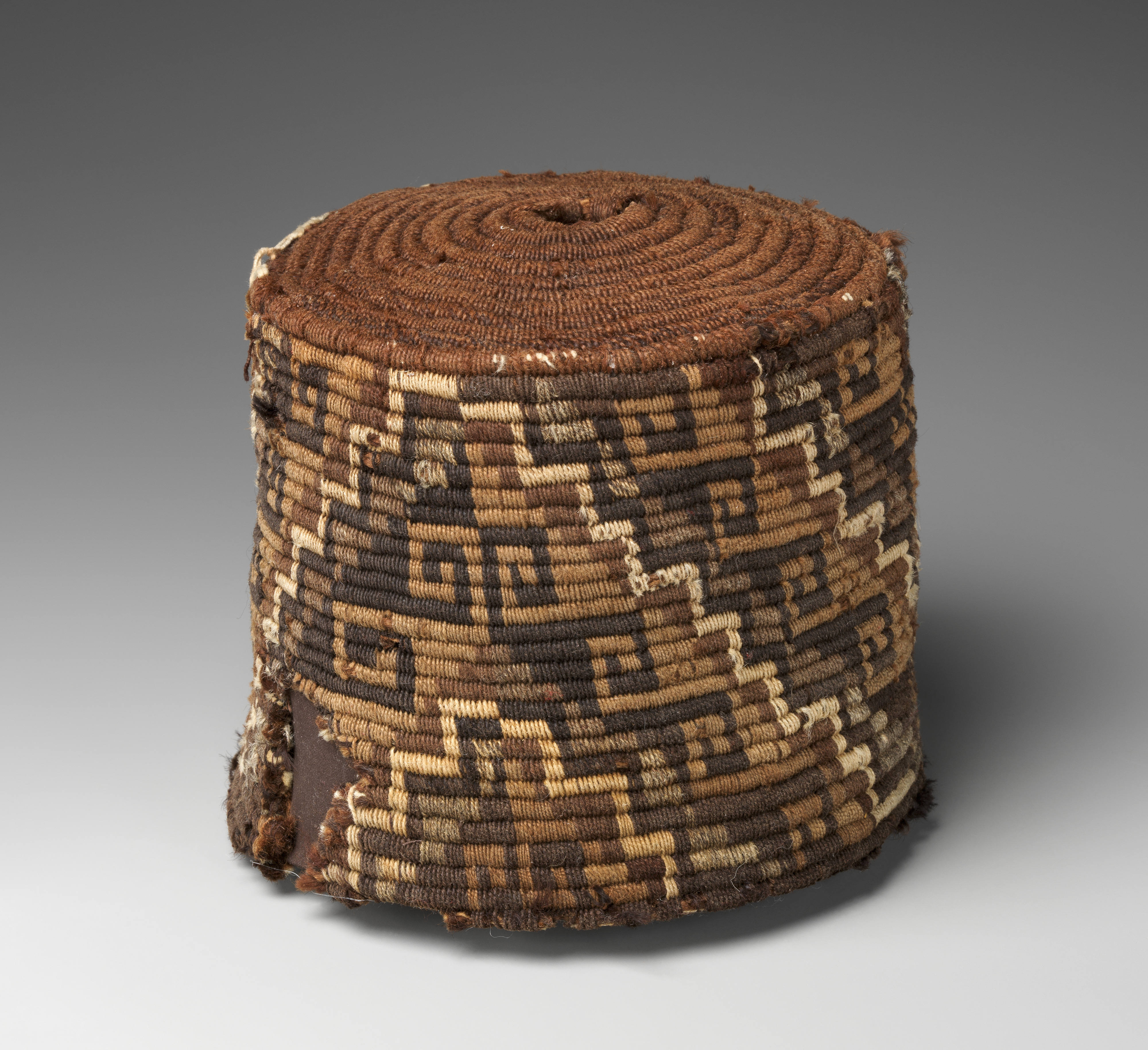
The Cap of Arica: A Couture Analysis of Camelid Hair Artisanship
Historical and Geographic Provenance: The Arica Legacy
The cap originating from Arica, a coastal city in northern Chile with deep pre-Columbian roots, represents a confluence of Andean textile traditions and utilitarian design. Historically, Arica served as a gateway for trade routes linking the highlands to the Pacific, facilitating the exchange of camelid fibers—particularly alpaca and llama—between indigenous communities. This cap, crafted from camelid hair, embodies the region’s mastery of fiber preparation and weaving, techniques passed down through generations. The arid climate of Arica preserved such artifacts, allowing modern analysis to reveal their structural integrity and cultural significance. As a standalone study, this cap transcends mere headwear; it is a testament to the resourcefulness of Arican artisans who transformed raw camelid fleece into a sophisticated, functional object.
Material Analysis: Camelid Hair as a Couture Fiber
Camelid hair—derived from alpacas, llamas, or vicuñas—offers unparalleled properties for textile craftsmanship. Unlike sheep’s wool, camelid fibers are hollow, providing exceptional thermal insulation while remaining lightweight. The cap’s material exhibits a fine micron count, indicative of high-quality alpaca or vicuña, which yields a soft, silky hand feel. Microscopic examination reveals minimal scales on the fiber surface, reducing prickle and enhancing drape—a critical attribute for headwear that must conform to the skull without irritation. The natural lanolin content in camelid hair imparts water resistance, a practical advantage in Arica’s coastal fog. From a couture perspective, this fiber’s ability to accept natural dyes—derived from local plants and minerals—enables rich, nuanced color palettes, though the cap’s preserved earthy tones suggest a restrained aesthetic rooted in indigenous color theory.
Structural Design: Geometry and Construction Techniques
The cap’s construction reveals a sophisticated understanding of three-dimensional shaping without modern machinery. It likely employs twined weaving or pebble weave, techniques prevalent in pre-Columbian Andean textiles. The crown’s dome is achieved through incremental increases in warp and weft density, creating a seamless, form-fitting silhouette. A reinforced brim—if present—uses supplementary weft threads to provide stiffness, balancing flexibility with durability. The cap’s interior, often lined with a finer camelid hair layer, demonstrates attention to comfort and sweat absorption. Stitch analysis suggests the use of natural sinew or cotton thread for assembly, with every join meticulously finished to prevent unraveling. This structural rigor aligns with couture principles: each element serves both aesthetic and functional purposes, from the crown’s radial symmetry to the edge’s subtle rolled hem.
Cultural Symbolism and Social Significance
In Arican society, the cap likely signified more than protection from the elements. Camelid hair, particularly from vicuña, was reserved for elite or ceremonial use, with the cap’s complexity denoting the wearer’s status. The geometric patterns—often abstracted from local flora, fauna, or celestial motifs—functioned as a visual language, communicating lineage or spiritual beliefs. For instance, repeating zigzag motifs may represent the Andes mountains or water channels, linking the wearer to ancestral territories. The cap’s color, achieved through natural mordants and dyes, could indicate clan affiliation or life stage. As a standalone artifact, it invites speculation about the individual who wore it: a trader, a shaman, or a community leader. This cultural layering elevates the cap from utilitarian object to narrative device, a hallmark of couture’s storytelling capacity.
Comparative Analysis: Arica Cap in Global Couture Context
Placing this Arica cap within a global couture framework reveals parallels and divergences. Compared to the structured top hats of 19th-century Europe or the felt fedoras of 20th-century America, the Arica cap prioritizes biodegradability and zero-waste construction—principles now central to sustainable fashion. Its handcrafted nature contrasts with mass-produced headwear, emphasizing artisanal labor over industrial efficiency. The cap’s ergonomic design anticipates modern “slow fashion” movements, where comfort and longevity trump trend cycles. Unlike the symbolic excess of haute couture headpieces—such as those by Philip Treacy—the Arica cap achieves sophistication through restraint, relying on material quality and precise craftsmanship. This positions it as a precursor to contemporary minimalism, where every stitch carries intention.
Preservation and Repatriation Ethics
As a standalone study, this cap raises questions about artifact provenance and ethical stewardship. Many Arican textiles reside in museums outside Chile, often acquired during colonial or post-colonial periods. The cap’s camelid hair, fragile after centuries, requires climate-controlled storage and minimal handling. For couture analysis, digital imaging and non-invasive spectroscopy allow examination without damage. However, the cap’s cultural value demands consideration of repatriation to indigenous communities, who may view it as a living heritage rather than an object. A responsible couture analysis must acknowledge this tension, advocating for collaborative research with Arican descendants to ensure the cap’s story is told authentically. This ethical dimension enriches the study, transforming it into a dialogue between past and present.
Conclusion: The Cap as a Couture Archetype
The Arica cap, rendered in camelid hair, stands as an exemplar of couture’s foundational tenets: mastery of material, structural innovation, cultural resonance, and timeless design. Its standalone analysis reveals a microcosm of Andean ingenuity, where every fiber, weave, and motif converges to create an object of enduring value. For contemporary fashion, this cap offers lessons in sustainability, craftsmanship, and meaning—qualities often lost in the pursuit of novelty. As Katherine Fashion Lab curates this study, the cap transcends its geographic origins to become a universal archetype of what couture can achieve when tradition and artistry align. It is not merely a relic; it is a blueprint for a more intentional, respectful approach to fashion creation.