Heritage Analysis: The Faience Amulet of Anubis as a Strategic Artifact for Luxury Brand Positioning
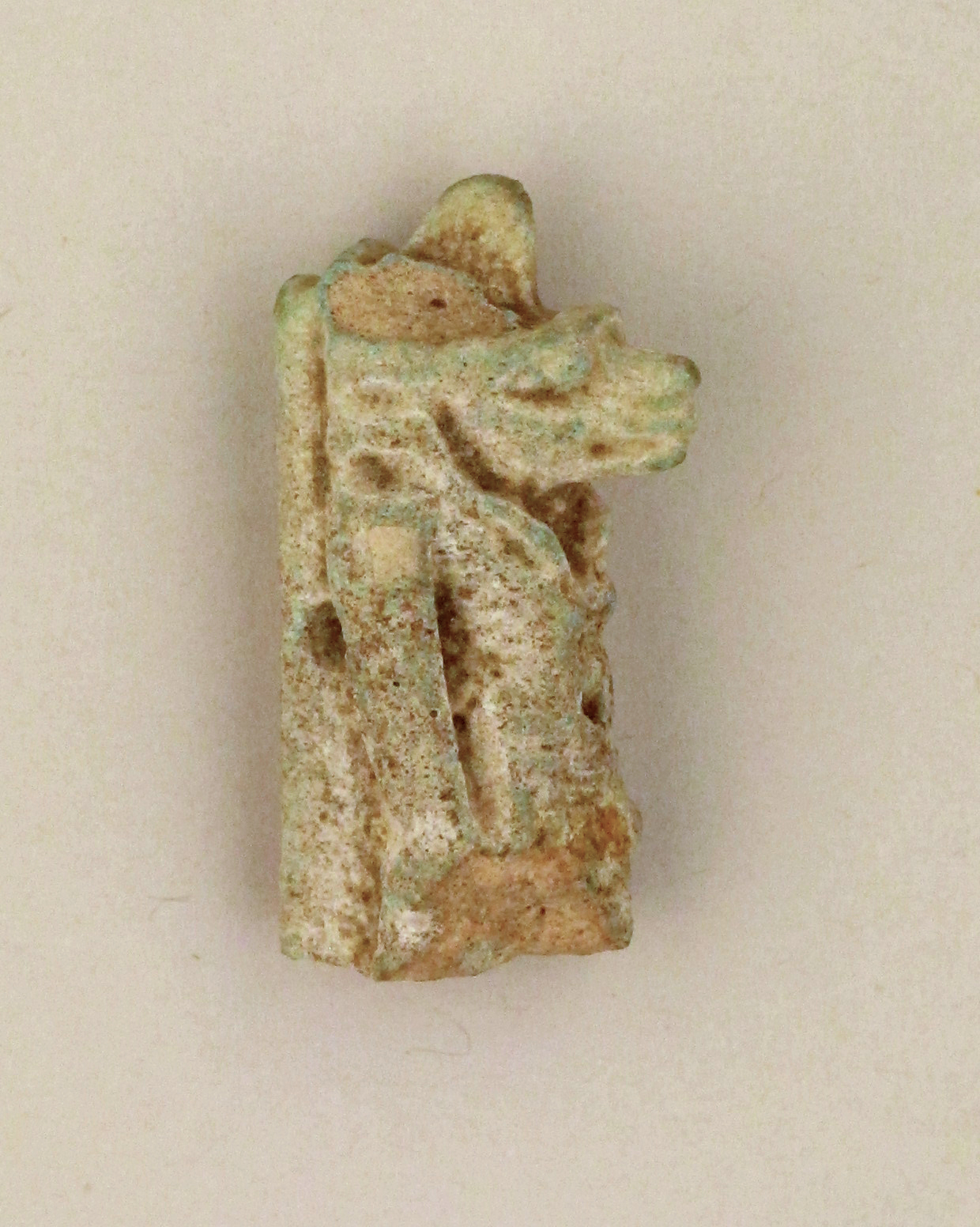
In the realm of high-end luxury, the past is not merely a source of nostalgia but a reservoir of symbolic capital. For Katherine Fashion Lab, the faience amulet of the canine-headed Anubis—a small, glazed artifact from ancient Egypt—represents a profound intersection of spiritual meaning, historical adornment, and symbolic power. This standalone research paper deconstructs the amulet’s heritage value and proposes a strategic framework for its integration into a 2026 luxury narrative, where authenticity and transcendence define market leadership.
Symbolic Power: The Canine-Headed Guardian as a Brand Archetype
The amulet depicts Anubis, the Egyptian god of mummification and the afterlife, with a jackal or canine head. In ancient Egyptian cosmology, Anubis was the psychopomp—the guide of souls through the perilous journey to the underworld. His canine features were not arbitrary; the jackal, a creature of the desert margins, was associated with cemeteries and the liminal space between life and death. This symbolism imbues the amulet with protective and transitional power.
For Katherine Fashion Lab, this archetype offers a compelling brand metaphor. In an era of market volatility and consumer anxiety, the Anubis figure represents guidance, loyalty, and safe passage. The amulet’s symbolic power lies in its ability to transmute fear into assurance—a quality that aligns with luxury’s promise of timeless stability. A 2026 strategy could position the brand as a “guardian of heritage,” guiding clients through the complexities of modern luxury with ancient wisdom. This is not mere ornamentation but a talismanic endorsement of the wearer’s journey.
Historical Adornment: The Faience Amulet as a Wearable Statement of Status and Faith
Faience, a non-clay ceramic material composed of quartz, alkaline salts, and coloring agents, was a hallmark of Egyptian craftsmanship. Its brilliant blue-green glaze—often imitating turquoise or lapis lazuli—was prized for its durability and visual impact. The amulet’s small scale (typically 2–4 cm) belies its significance: it was worn as a pendant, sewn into linen wrappings, or carried as a pocket talisman. Adornment was not decorative but existential; the amulet’s placement on the body was a ritual act, ensuring the wearer’s protection in life and death.
From a heritage perspective, this historical adornment practice offers a direct lineage to contemporary luxury jewelry. The amulet’s intimate scale and personal function prefigure the modern “talisman” trend in high-end accessories. For Katherine Fashion Lab, the amulet’s design—with its stylized canine head, elongated snout, and erect ears—can be reinterpreted as a minimalist yet potent motif. The challenge is to preserve its iconographic integrity while adapting it to modern wearability. A 2026 collection could feature Anubis-inspired pendants in precious metals or ceramic-like finishes, echoing faience’s glazed luminosity. This bridges historical authenticity with contemporary aesthetics, appealing to clients who seek meaning as much as beauty.
Spiritual Meaning: The Amulet as a Conduit for Transcendence
In Egyptian spirituality, the amulet was not a passive object but an active agent. It was believed to channel divine energy, particularly during the Weighing of the Heart ceremony, where Anubis presided over the judgment of the soul. The amulet’s presence on the mummy ensured that the heart—the seat of consciousness—would not betray the deceased. This spiritual function elevates the amulet beyond mere jewelry; it is a sacred tool for transcendence.
For a luxury brand, this spiritual dimension offers a rare opportunity to address the growing consumer desire for meaningful consumption. In 2026, the luxury market will likely see a shift toward “conscious hedonism,” where indulgence is balanced with introspection. The Anubis amulet can be framed as a symbol of inner transformation—a reminder of the wearer’s own journey through life’s thresholds. Katherine Fashion Lab could develop a narrative around “The Guardian Within,” positioning the amulet as a companion for personal evolution. This resonates with wellness-oriented luxury consumers who seek products that enhance not just appearance but spiritual well-being.
Strategic Framework for 2026 High-End Luxury
Integrating the Anubis faience amulet into a 2026 luxury strategy requires a multi-layered approach that respects its heritage while leveraging contemporary market dynamics. Below are three strategic pillars:
Pillar 1: Heritage as Exclusivity
The amulet’s ancient origin and limited archaeological context provide a foundation for scarcity marketing. Katherine Fashion Lab can produce a limited-edition series of Anubis-inspired pieces, each with a certificate of authenticity referencing the original artifact. This taps into the “collector’s mentality” of high-net-worth individuals who value provenance. The narrative should emphasize that each piece is a “modern amulet” imbued with the same protective symbolism, but crafted with contemporary precision. This strategy elevates the product from accessory to artifact.
Pillar 2: Spiritual Storytelling in Digital Spaces
In 2026, luxury brands must dominate digital storytelling without losing tactile authenticity. Katherine Fashion Lab can create an immersive online experience—a “Virtual Temple of Anubis”—where clients explore the amulet’s symbolism through 3D models, historical animations, and guided meditations. This digital layer adds experiential value, transforming a purchase into a pilgrimage. The brand can also partner with Egyptologists and spiritual guides to host exclusive webinars, reinforcing its authority in heritage curation.
Pillar 3: Material Innovation with Faience Inspiration
While original faience is fragile, its aesthetic—a luminous, glazed surface—can be reinterpreted using modern materials like high-fire ceramics, enameled metals, or lab-grown gemstones. Katherine Fashion Lab should invest in R&D to develop a signature “Katherine Faience” finish, characterized by a deep turquoise or cobalt blue glaze with subtle iridescence. This material innovation becomes a brand signature, instantly recognizable and tied to the Anubis motif. The 2026 collection could debut with a pendant, cuff, and ring set, each piece echoing the amulet’s proportions but scaled for daily wear.
Conclusion: The Amulet as a Strategic Asset
The faience amulet of Anubis is far more than a historical curiosity; it is a strategic asset for Katherine Fashion Lab. Its symbolic power offers a brand archetype of protection and guidance; its historical adornment practice validates the talisman trend; its spiritual meaning answers the modern quest for transcendence; and its material properties inspire innovation. By weaving these threads into a cohesive 2026 strategy, Katherine Fashion Lab can position itself not merely as a purveyor of luxury goods, but as a custodian of heritage—a guardian of meaning in an ephemeral market. The amulet, once a silent companion in the afterlife, now speaks to the living: it is time to wear your legacy.