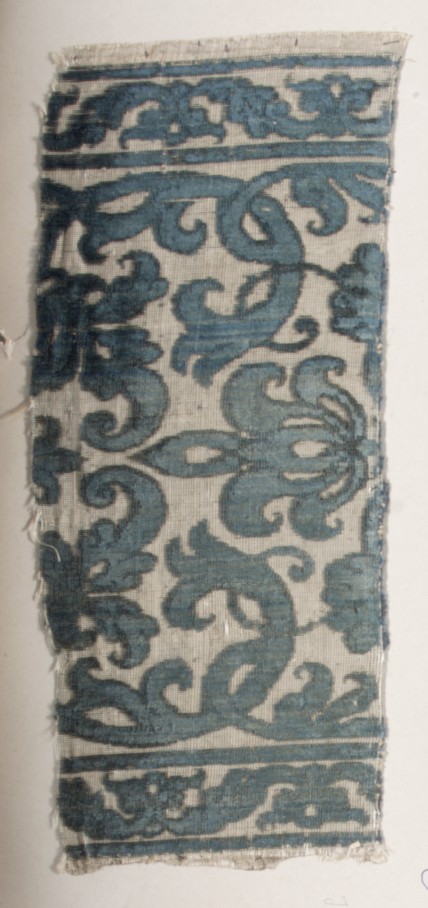
The Fragment: A Study in Global Heritage, Materiality, and Narrative Construction
In the rarefied domain of haute couture, the fragment is often dismissed as a remainder—a leftover, a trace of a more complete whole. Yet within the conceptual framework of Katherine Fashion Lab, the fragment is elevated to a primary subject of study, a deliberate artifact that challenges the very notion of completion. The Fragment: Global Heritage collection piece, rendered in silk and metal thread, is not a garment in the traditional sense; it is a standalone thesis on the poetics of memory, the politics of provenance, and the tactile language of luxury. This analysis dissects the couture piece as a material-semiotic object, exploring how its origins, materials, and structural choices coalesce into a narrative of global cultural inheritance.
Deconstructing the Fragment as a Conceptual Framework
The decision to present a fragment rather than a complete garment is a deliberate rupture from the couture tradition of perfectionism. In the context of global heritage, the fragment embodies the incomplete record of history—the shards of pottery, the tatters of ancient textiles, the faded pigments of a mural. Katherine Fashion Lab leverages this incompleteness as a strength, positing that the fragment is more truthful than the whole, for it does not pretend to be a seamless narrative. The piece, therefore, is not a dress but a material fragment of a larger, unknowable cultural tapestry. It invites the viewer to fill the gaps with their own historical imagination, making the act of looking an act of co-creation.
This conceptual choice also speaks to the contemporary discourse on cultural appropriation versus appreciation. By presenting a fragment—a piece of a larger heritage—the lab avoids the trap of claiming to represent an entire culture. Instead, it acknowledges that what we possess is always partial, always mediated. The fragment becomes an ethical stance, a humility in the face of vast, complex traditions. The viewer is not presented with a complete "costume" of a foreign culture but with a single, evocative element that demands respect and contemplation.
Materiality as a Carrier of Heritage
The selection of materials—silk and metal thread—is not arbitrary; each carries a profound historical and geographic weight. Silk, originating from ancient China and traveling along the Silk Road, is a material that embodies centuries of global exchange, labor, and artistry. Its use in this fragment is not merely decorative but referential: the luminous, fluid quality of silk speaks to the fragility and resilience of cultural artifacts. The metal thread, often associated with opulent textiles from the Byzantine Empire to Mughal India, introduces a structural rigidity and a reflective surface that catches light, creating a dialogue between opacity and transparency, softness and hardness.
Together, these materials form a material palimpsest. The silk serves as the ground, the canvas of history, while the metal thread is the inscription—the embroidery that tells a story of conquest, trade, and hybridization. The interplay between the two is not seamless; the metal thread may pull at the silk, creating tension, just as colonial histories pull at indigenous traditions. This tension is the core of the piece's narrative. It refuses to smooth over the contradictions of global heritage, instead making them visible through the very fabric.
Structural Analysis: The Fragment as Sculpture
From a structural perspective, this fragment is a study in balance and imbalance. The piece is not draped to conform to the human body in a conventional manner; instead, it is constructed as a standalone sculptural form. The silk is pleated and gathered in asymmetrical clusters, creating pockets of volume and areas of flatness. The metal thread is embroidered in geometric patterns that recall ancient motifs—perhaps a fragment of a Persian medallion, a Chinese cloud collar, or a European Renaissance arabesque. Yet these motifs are not reproduced faithfully; they are broken, interrupted, and recombined. The metal thread does not form a complete circle but an arc, a partial spiral, a broken line.
This structural incompleteness is deliberate. It mimics the archaeological condition of a textile fragment that has survived centuries of decay. The edges of the silk are raw, not hemmed, and the metal thread may be left loose in places, suggesting the fraying of cultural memory. The piece is intended to be displayed on a mannequin or a stand, not worn, emphasizing its status as an object of contemplation rather than utility. The absence of a functional closure—no zippers, buttons, or hooks—further reinforces its identity as a fragment, a piece of a larger puzzle that will never be completed.
The Global Heritage Narrative: A Web of References
The title "Global Heritage" is both a claim and a question. The fragment draws from multiple cultural reservoirs, yet it refuses to be pinned down to a single origin. The silk may be Chinese, but the metal thread techniques could be Indian, Persian, or Italian. The geometric embroidery echoes Islamic geometric art, yet the asymmetrical draping recalls Japanese boro textiles or the patchwork traditions of European folk costumes. This deliberate ambiguity is the piece's greatest intellectual achievement. It challenges the viewer to resist the urge to categorize, to name, to possess through labeling.
In the context of fashion's historical entanglement with colonialism—where "exotic" materials and motifs were extracted and commodified—this fragment offers a counter-narrative. It does not present a unified, sanitized version of global heritage; instead, it presents the fractured reality of cultural exchange. The metal thread may gleam, but it also cuts; the silk may be smooth, but it also tears. The piece is a meditation on how heritage is always already a hybrid, a palimpsest of power relations, migrations, and transformations.
The Standalone Study: Implications for Couture and Curation
Presenting this fragment as a standalone study is a curatorial decision that aligns with the lab's avant-garde ethos. Unlike a complete collection, which is often designed for commercial viability or seasonal trends, a standalone study exists outside the market cycle. It is an experiment, a hypothesis, a provocation. For the viewer, this means engaging with the piece on its own terms, without the distraction of a runway show or a brand narrative. The fragment demands a slower, more contemplative gaze.
This format also allows for a deeper exploration of material and concept. Without the need to create a full garment, the designer can focus entirely on the interplay of silk and metal thread, the tension between structure and drape, the evocation of memory and loss. The fragment becomes a microcosm of the lab's broader philosophy: that couture is not just about clothing but about the stories we tell through cloth, that luxury is not about abundance but about significance, and that heritage is not a static possession but a dynamic, contested process.
Conclusion: The Fragment as a Future Archive
Katherine Fashion Lab's Fragment: Global Heritage is more than a couture piece; it is an argument for a new kind of fashion scholarship. It insists that the fragment has as much to teach us as the complete garment, perhaps more. In its raw edges, its broken motifs, its tension between silk and metal, it archives the complexities of global cultural exchange. It does not offer easy answers or beautiful lies. Instead, it offers a truth that is partial, contested, and luminous—a truth that, like all heritage, is always in the process of being woven and unwoven.
For the discerning observer, this piece is a call to reconsider what couture can be: not a commodity, but a critical artifact; not a product, but a proposition. In the hands of Katherine Fashion Lab, the fragment becomes a whole world—broken, beautiful, and endlessly interpretable.