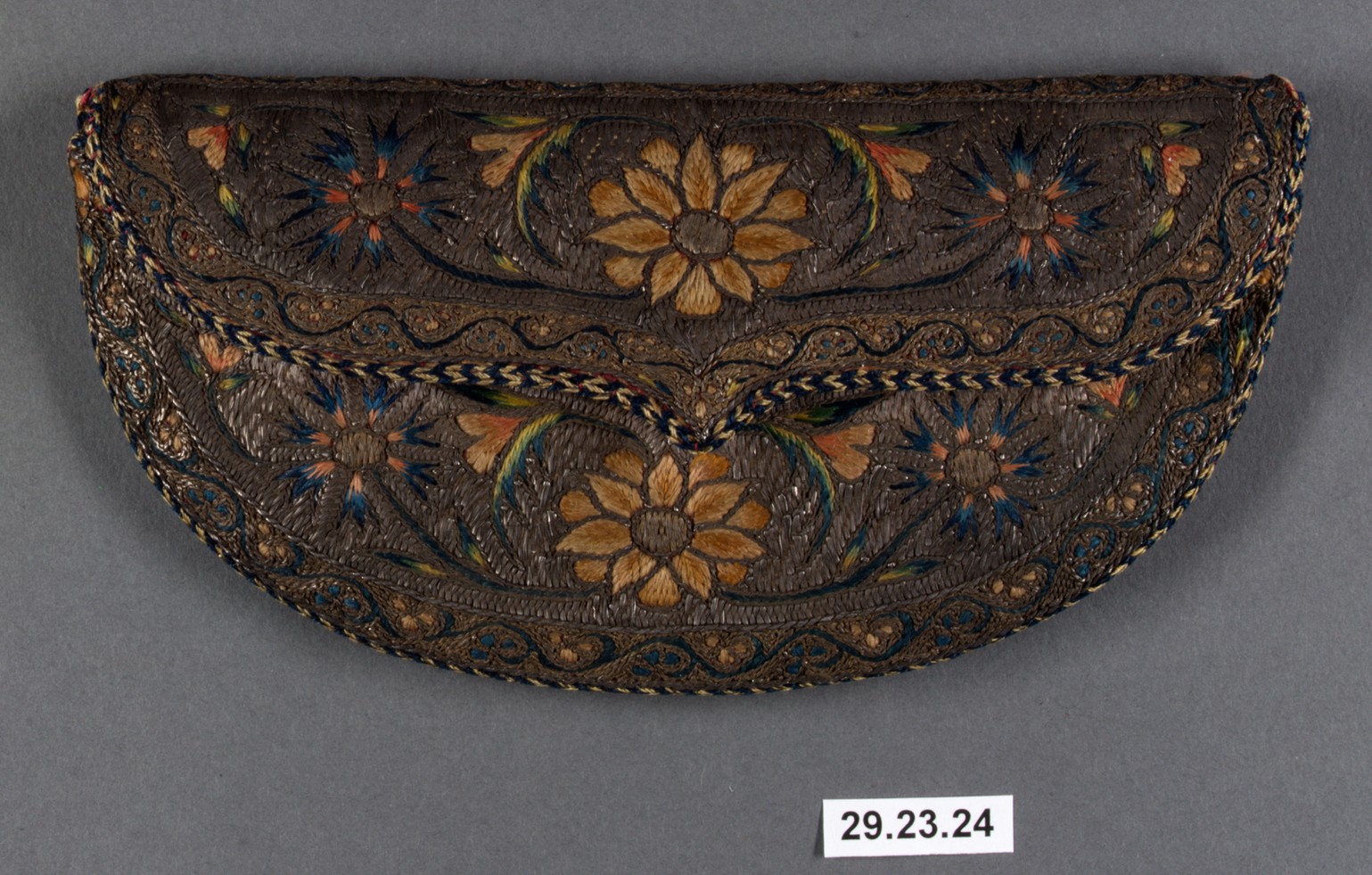
Deconstructing the Embroidered Artifact: A Global Heritage Bag as a Vessel of Cultural Capital
In the rarefied realm of haute couture and luxury artifacts, the handbag transcends its utilitarian genesis to become a complex signifier of identity, craftsmanship, and value. This standalone study from Katherine Fashion Lab examines an exemplary piece: a bag conceived under the thematic aegis of Global Heritage, constructed from silk and intricately embroidered with metal-wrapped thread. Our analysis moves beyond superficial appreciation to interrogate how this object functions as a nexus of material intelligence, symbolic narrative, and sophisticated cultural brokerage. It is not merely an accessory; it is a portable archive, a deliberate curation of heritage re-contextualized for the contemporary luxury market.
Material Semiotics: Silk and Metal as Dialectical Elements
The foundational material selection—silk and metal-wrapped thread—establishes an immediate and potent dialectic. Silk, a protein filament of organic origin, carries a millennia-old legacy as the ultimate luxury textile, synonymous with the Silk Road and the flow of ideas, aesthetics, and commerce between East and West. Its surface is receptive yet fragile, demanding reverence. In contrast, the metal-wrapped thread—often a fine core of silk or linen sheathed in gilded silver or copper—introduces an inorganic, luminous, and enduring element. This juxtaposition is a masterstroke of material narrative.
The interaction between these materials under the needle creates a dynamic textural and symbolic language. The pliant silk ground yields to the assertive, structural penetration of the metal thread. The embroidery does not simply lie upon the surface; it re-engineers the material's behavior and perception. Light interacts with each component differently: it is absorbed by the matte silk and reflected spectacularly by the metallic filaments, causing the pattern to appear and recede with movement. This embodies a core principle of heritage: the interplay between the soft, perishable records of human culture (textiles, stories) and the hard, enduring artifacts (metalwork, architecture) that survive the ages. The bag becomes a microcosm of this enduring dialogue.
The Embroidery as Cartographic and Cryptographic System
Embroidery here is elevated from decoration to a form of tactile cartography and encrypted communication. The specific motifs, though abstracted for a standalone study, likely reference a constellation of global traditions: perhaps the phoenix from Chinese symbolism, the arabesque from Islamic art, the Celtic knot, or the Art Nouveau whiplash line. The critical couture intelligence lies not in direct replication, but in the synthesis. The metal thread’s path across the silk ground maps a journey, connecting cultural nodes not through literal geography, but through visual lexicon.
Each stitch is a deliberate investment of time—hundreds, perhaps thousands of hours—creating a non-fungible asset of human labor. In an age of digital replication and mechanized production, this hand-embroidery asserts an undeniable aura of authenticity and exclusivity, central to the value proposition of heritage luxury. The pattern likely employs techniques sourced from distinct regions: zardozi from India and Persia for raised metalwork, couching from Europe to anchor threads, or subtle hints of Japanese kinran weaving. This technical fusion makes the bag a site of silent artisanal diplomacy, where borders dissolve under the needle’s point.
Global Heritage as a Curatorial Framework, Not a Pastoral Fantasy
The "Global Heritage" context is the most strategically significant and analytically rich layer. In the hands of a sophisticated atelier, heritage is not a nostalgic pastiche but a curatorial framework for value creation. This bag does not belong to one culture; it performs the act of cultural aggregation. It engages in what scholars term "strategic heritage assembly," selecting elements with high recognizability and positive symbolic capital (e.g., opulence, skill, spirituality, nature) and divorcing them from their specific liturgical or social contexts.
This process transforms the bag into a portable credential for its bearer. It signals not just wealth, but worldliness, connoisseurship, and an appreciation for the "authentic." It allows the wearer to affiliate with the perceived nobility and artistry of multiple ancient civilizations simultaneously, without the burden of specific cultural allegiance. The heritage is rendered safe, elegant, and consumable. This is the essence of luxury heritage branding: the distillation of complex cultural histories into an aesthetic and tactile experience of exclusive belonging.
Conclusion: The Bag as a Sovereign Asset in the Luxury Ecosystem
This analysis reveals the embroidered bag from Katherine Fashion Lab as a triumph of conceptual and material engineering. It functions on multiple levels: as a peerless object of craft; as a narrative device encoding global dialogues; and as a potent symbol within the economy of luxury. Its value is compound: the intrinsic value of rare materials and irreplaceable labor, plus the symbolic value of curated heritage, plus the experiential value of its tactile and visual splendor.
As a standalone study, it asserts its own sovereignty. It does not require a specific collection or seasonal narrative to justify its existence; its justification is its own encapsulated perfection. It stands as a testament to the power of fashion objects to act as vessels of condensed meaning and as instruments of cultural capital exchange. In holding this bag, one does not simply hold an accessory; one holds a meticulously crafted argument about beauty, history, and the enduring human desire to weave identity into the very fabric of our possessions.