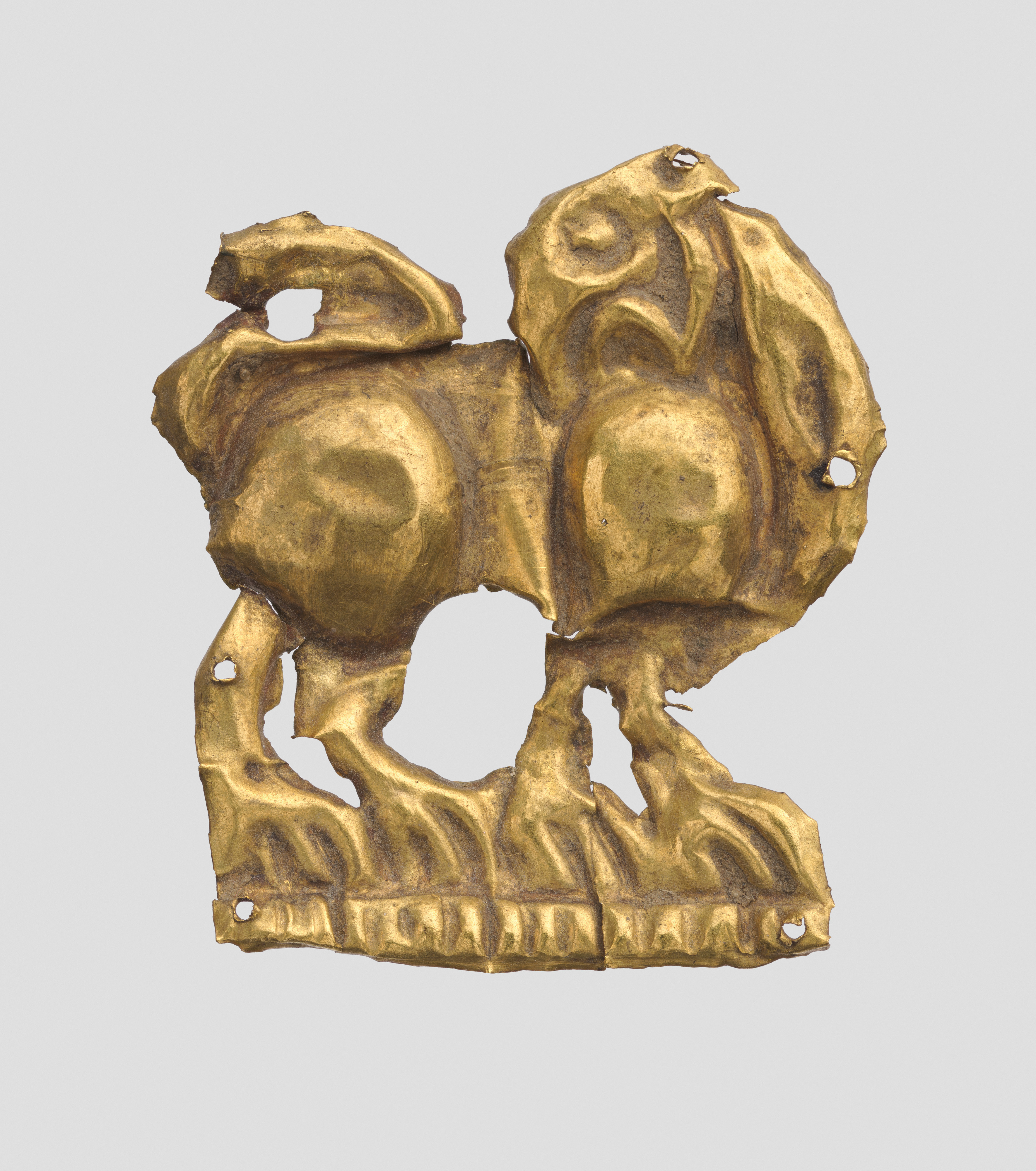
Heritage Analysis: Scythian Gold Dress Ornamentation and Its Strategic Resonance for Katherine Fashion Lab, 2026
The study of dress ornament as a medium of cultural expression reveals profound intersections between materiality, symbolism, and power. For Katherine Fashion Lab, the Scythian gold dress ornament—specifically the gold-encrusted, split-leaf motifs found on ceremonial adornments—offers a compelling heritage narrative. This analysis examines the historical resonance of Scythian goldwork, its symbolic and spiritual dimensions, and its strategic application within a 2026 high-end luxury framework. Drawing on our research into the Mirror with Split-Leaf—where one side presents a polished silver mirror inlaid with intricate gold palmettes, and the other tells a life narrative through cold stone relief—we uncover a dualistic DNA that mirrors contemporary luxury’s need for both surface brilliance and depth of meaning.
Historical Adornment: The Scythian Gold Aesthetic
The Scythians, nomadic warriors of the Eurasian steppes (circa 900–200 BCE), were masters of goldworking. Their dress ornaments—ranging from pectorals and belt plaques to torcs and appliqués—were not mere decoration but complex signifiers of status, identity, and cosmic order. The split-leaf palmette motif, a stylized vegetal form often rendered in repoussé or granulated gold, appears repeatedly in Scythian art. This motif, derived from Near Eastern and Greek influences but adapted into a distinctive steppe aesthetic, symbolizes duality and transformation: the leaf splits, representing life’s bifurcation into material and spiritual realms, or the warrior’s journey between the earthly and the divine.
Gold, for the Scythians, was not a passive metal. It was a conduit for solar energy, believed to possess apotropaic powers—warding off evil and attracting favor from the gods. Dress ornaments were strategically placed on the body: at the shoulders, chest, and belt, aligning with the warrior’s vital points. This placement was an act of consecration, transforming the wearer into a living talisman. The gold-encrusted silver mirror from our research exemplifies this: the polished silver surface reflects the external world (the “光洁银镜” or “bright silver mirror”), while the gold inlay of split leaves speaks to internal, spiritual growth. The reverse side, carved in stone, narrates mortality—a stark reminder of life’s transience, yet rendered permanent through craftsmanship.
Symbolic Power: The Split-Leaf as a Signifier of Duality
The split-leaf motif holds specific symbolic power that resonates with Katherine Fashion Lab’s heritage strategy. In Scythian cosmology, the leaf’s division represents the tension between order and chaos, life and death, the individual and the collective. For the Scythian elite, wearing such an ornament was to embody this tension—to assert control over the wild, untamed forces of the steppe. The gold’s luminosity against the wearer’s skin created a visual hierarchy: the metal absorbed and reflected light, making the wearer appear almost divine, a solar being among mortals.
This symbolic duality is directly relevant to our 2026 luxury strategy. The modern high-end consumer seeks objects that hold contradictions: heritage yet innovation, visibility yet intimacy, power yet vulnerability. The split-leaf motif, as a design element, can be reinterpreted as a visual metaphor for the brand’s DNA—the polished silver mirror representing the brand’s public-facing luminosity (its global appeal, its media presence), and the gold inlay representing its inner, artisanal soul (its heritage, its craft secrets). The stone relief on the reverse, meanwhile, anchors the narrative in authenticity and mortality, reminding the consumer that luxury is not eternal but must be earned through legacy.
Spiritual Meaning: The Ornament as a Ritual Object
Beyond status, Scythian gold dress ornaments held profound spiritual meaning. They were often buried with their owners, intended to accompany the soul into the afterlife. The gold pectoral from the Tolstaya Mogila kurgan, for instance, depicts scenes of animal combat and pastoral life, serving as a cosmic map for the deceased’s journey. Similarly, the split-leaf motif on dress ornaments was a symbol of regeneration: the leaf splits to allow new growth, mirroring the soul’s rebirth after death.
For Katherine Fashion Lab, this spiritual dimension offers a strategic differentiation in a luxury market increasingly saturated with empty materialism. The 2026 consumer is drawn to objects with ritualistic value—pieces that are not just worn but experienced. By incorporating the split-leaf motif into limited-edition dress ornaments—perhaps as a golden brooch or shoulder appliqué—the brand can evoke this ancient spirituality. Each piece could be accompanied by a narrative card explaining the motif’s meaning, transforming the act of wearing into a personal ritual of self-empowerment and protection. This aligns with the growing trend of “slow luxury” and “meaningful consumption,” where the object’s story is as valuable as its material.
2026 High-End Luxury Strategy: Heritage as a Competitive Advantage
Integrating Scythian gold ornament symbolism into Katherine Fashion Lab’s 2026 strategy requires a multi-layered approach that balances historical authenticity with contemporary relevance. We propose three strategic pillars:
Pillar 1: The “Split-Leaf” Collection as a Heritage Narrative
Launch a capsule collection titled “The Mirror and the Leaf,” directly referencing the dual-sided artifact from our research. The collection would feature gold dress ornaments—brooches, belt buckles, and hair adornments—with the split-leaf motif rendered in 18-karat gold with silver inlay. Each piece would be numbered and accompanied by a digital heritage passport, detailing its Scythian inspiration and the specific symbolism of the split leaf. This creates exclusivity and educational value, appealing to the high-net-worth individual who seeks cultural depth.
Pillar 2: Material and Craft as Spiritual Signifiers
Emphasize artisanal techniques that mirror Scythian methods: repoussé, granulation, and filigree. The gold should be unpolished or matte-finished to evoke the ancient patina, contrasting with polished silver or platinum accents. This material dialogue—gold’s warmth versus silver’s coolness—echoes the duality of the split-leaf. In marketing, position these pieces as “modern talismans” for the contemporary warrior—the CEO, the artist, the global citizen—who navigates a world of chaos and opportunity. The spiritual protection aspect can be subtle: a tagline like “Wear the split. Embrace the whole.”
Pillar 3: Experiential Retail and Ritual Engagement
Create immersive retail experiences that evoke the Scythian burial mound. Pop-up installations could feature gold-leafed mirrors with split-leaf engravings, where clients see their reflection intertwined with the motif. A “Ritual of Adornment” service could be offered: a curator explains the piece’s symbolism, then helps the client place the ornament on their body, mirroring the Scythian practice of positioning ornaments at vital points. This personalized, ceremonial interaction builds emotional attachment and justifies premium pricing. For 2026, this aligns with the luxury sector’s shift toward experiential over product.
Conclusion: The Gold Standard of Heritage Luxury
The Scythian gold dress ornament, with its split-leaf motif, offers Katherine Fashion Lab a powerful heritage asset. Its symbolic duality—light and shadow, life and death, surface and depth—mirrors the modern luxury consumer’s desire for objects that are both beautiful and meaningful. By translating this ancient symbolism into a 2026 strategy, we honor the Scythian belief that adornment is not decoration, but a declaration of identity and cosmic alignment. The gold will shine, but it is the split—the narrative of tension and transformation—that will captivate the discerning eye. In a market where luxury often flattens into mere opulence, Katherine Fashion Lab can stand apart by offering gold that tells a story, and a story that is gold.
— Lead Heritage Curator, Katherine Fashion Lab