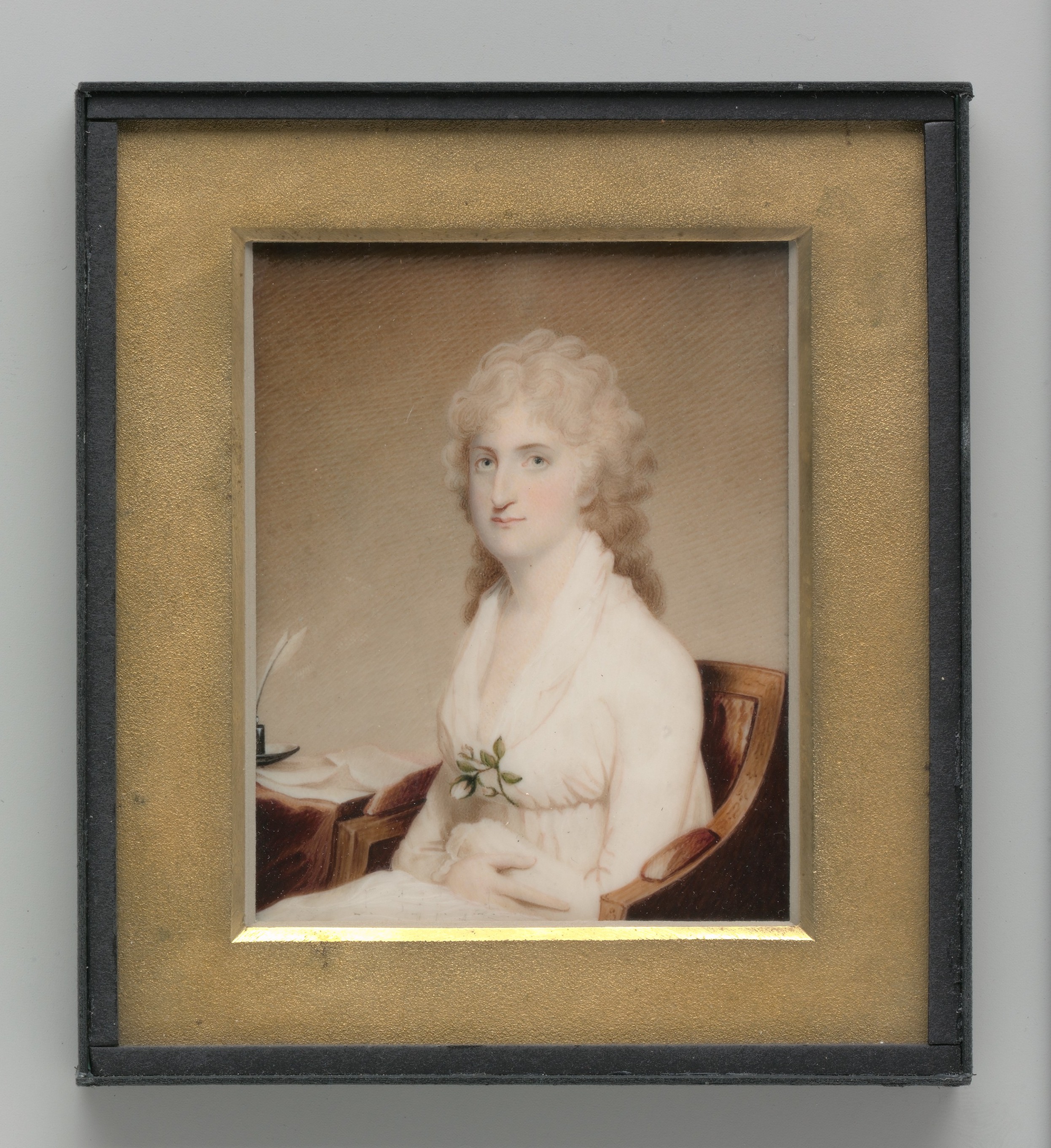
Heritage Analysis: Mrs. Richard Peters (Abigail Willing)
Introduction: The Subject as a Cultural Artifact
The portrait of Mrs. Richard Peters (Abigail Willing), rendered in watercolor on ivory, is not merely a visual record of an early American woman; it is a deliberate construction of social identity, spiritual aspiration, and material power. Created in the late 18th or early 19th century, this miniature exemplifies the intersection of personal adornment, familial lineage, and symbolic capital. For Katherine Fashion Lab, this artifact offers a strategic lens through which to examine how historical luxury can inform a 2026 high-end fashion strategy, particularly in the domains of symbolic power, historical adornment, and spiritual meaning.
Symbolic Power: The Politics of Portraiture and Patronage
In the context of early American society, a portrait on ivory was a statement of economic agency and social distinction. The medium itself—watercolor on ivory—was both precious and fragile, requiring skill and financial resources. Abigail Willing’s choice to be depicted in such a format signals her family’s ability to commission luxury goods, aligning with the sociological theory of conspicuous consumption advanced by Thorstein Veblen. Her gaze, posture, and attire are not accidental; they are carefully curated signifiers of civic virtue and refined taste. For Katherine Fashion Lab, this suggests that modern luxury must reclaim the narrative authority of the wearer. In 2026, a high-end strategy should prioritize bespoke storytelling—where each garment or accessory carries a codified message of lineage, achievement, and moral standing, much like the portrait of Mrs. Peters.
Historical Adornment: Materiality and Craft as Status Markers
The watercolor on ivory technique is itself a form of adornment. The ivory surface, sourced from endangered materials in its time, was a marker of global trade access and colonial wealth. The delicate brushwork mimics the texture of fine fabrics, lace, and jewelry, suggesting that the portrait is a meta-adornment—an image of luxury within a luxury object. Historically, Abigail Willing’s attire would have included imported silks, handmade lace, and possibly pearls or gemstones, each with its own supply chain and cultural meaning. For Katherine Fashion Lab, this underscores the importance of material provenance and craft heritage. A 2026 luxury strategy must emphasize artisanal mastery and ethical sourcing, not as a marketing afterthought, but as a core component of brand identity. The tactile and visual richness of the original portrait can inspire a collection that uses modern equivalents—sustainable silks, lab-grown pearls, or recycled precious metals—to evoke the same sense of rarity and distinction.
Spiritual Meaning: The Ivory as a Vessel for Transcendence
Beyond the material and social, the portrait of Mrs. Richard Peters carries profound spiritual symbolism. Ivory, in many cultures, is associated with purity, immortality, and divine connection. In the Christian context of early America, the white surface of the ivory may have symbolized the soul’s potential for redemption, while the watercolor’s translucency evokes the ephemeral nature of life. The miniature format, intended to be held or worn close to the body, transforms the portrait into a talismanic object—a protective charm against mortality and a means of preserving memory. For Katherine Fashion Lab, this suggests a strategic opportunity to integrate ritual and meaning into luxury products. In 2026, high-end fashion can move beyond aesthetics to offer objects of contemplation—garments or accessories that are designed to be passed down as heirlooms, embedded with symbols of protection, legacy, or spiritual aspiration. The concept of “wearable heritage” can become a powerful differentiator in a saturated market.
Strategic Implications for 2026 High-End Luxury
Drawing from the heritage analysis of Mrs. Richard Peters, Katherine Fashion Lab can develop a 2026 luxury strategy that is both historically grounded and forward-looking. The following pillars emerge:
1. Narrative-Driven Collections: Each piece should tell a story of symbolic power, drawing on historical motifs—such as the miniature portrait, the use of ivory-like materials, or the depiction of civic virtue. This aligns with the experiential luxury trend, where consumers seek meaning over mere possession.
2. Material Integrity and Provenance: The historical use of ivory, now ethically untenable, can be reimagined through innovative biomaterials or recycled luxury composites. Katherine Fashion Lab should position itself as a leader in sustainable opulence, where rarity is defined by craftsmanship and ethical sourcing rather than resource extraction.
3. Spiritual and Ritualistic Design: Incorporating elements of talismanic adornment—such as hidden symbols, engraved messages, or modular components that allow for personalization—can create a deep emotional resonance with clients. This taps into the growing interest in mindful luxury and slow fashion.
4. Bespoke Portraiture as a Service: Reviving the tradition of miniature portraiture, but in a modern format—such as digital or mixed-media—can offer clients a unique brand experience. This service would not only generate revenue but also reinforce the brand’s heritage authority and exclusivity.
5. Archival Research as Brand Capital: Katherine Fashion Lab should invest in institutional partnerships with museums and historical societies to access and reinterpret artifacts like the portrait of Mrs. Richard Peters. This creates a credible narrative foundation for marketing and product development, differentiating the brand from competitors who rely on superficial historical references.
Conclusion: From Historical Adornment to Future Luxury
The portrait of Mrs. Richard Peters (Abigail Willing) is far more than a decorative object; it is a strategic artifact that reveals the enduring principles of luxury: symbolic power, material excellence, and spiritual depth. For Katherine Fashion Lab, this analysis provides a blueprint for 2026, where high-end fashion must balance tradition with innovation. By embracing the heritage of adornment while addressing contemporary ethics and aesthetics, the brand can position itself at the vanguard of meaningful luxury. The legacy of Abigail Willing—her image, her status, her soul—can be reborn in a collection that speaks to the modern desire for authenticity, rarity, and transcendence.