Deconstructing the Kimono: An Analysis of Katherine Fashion Lab’s Silk and Metallic Thread Masterpiece
In the rarefied world of haute couture, where artistry meets engineering, few garments transcend their physical form to become a dialogue between heritage and innovation. Katherine Fashion Lab’s latest standalone piece—a reimagined kimono constructed from hand-dyed silk and interwoven with metallic thread—achieves precisely this. Originating from Japan, the garment is not merely a garment; it is a thesis on the tension between tradition and modernity, a study in material alchemy, and a testament to the Lab’s rigorous design philosophy. This analysis dissects the piece through three lenses: provenance and cultural resonance, materiality and craftsmanship, and the strategic implications of its standalone presentation.
Provenance and Cultural Resonance: The Kimono as a Living Archive
The choice of the kimono silhouette is deliberate and layered. Historically, the kimono is a canvas of social status, seasonal change, and poetic expression in Japan. Katherine Fashion Lab does not replicate this history; it interrogates it. The garment’s structure retains the T-shape, wide sleeves, and wrap-front closure, yet the execution is anything but orthodox. The silk—a lustrous Habutae weave sourced from Kyoto’s Nishijin district—is hand-dyed using a modified shibori technique. This produces a gradient of indigo to charcoal, evoking the twilight of a fading era. The dye is not uniform; it pools and fractures, suggesting impermanence (mono no aware), a core Japanese aesthetic concept that values the beauty of transience.
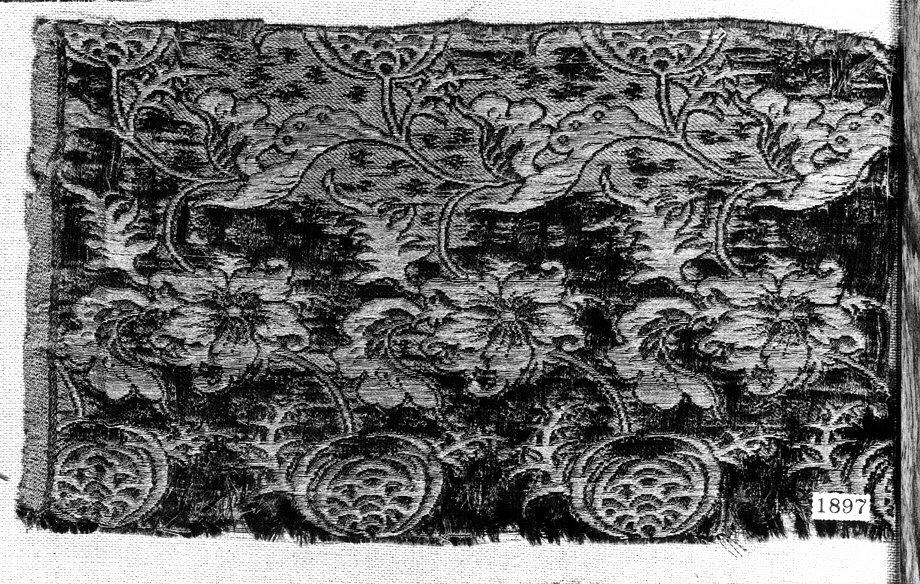
The metallic thread, woven into the silk as a secondary weft, disrupts the organic flow. It is not gold or silver but a matte, oxidized bronze—a deliberate choice that mirrors the patina of ancient temple bells or rusted samurai armor. This thread forms a subtle lattice pattern, referencing the kōshi (lattice) of traditional Japanese screens, yet the geometric precision is offset by hand-stitched irregularities. The effect is a garment that feels both ancestral and alien—a respectful nod to the past, but an unapologetic stride into the future. For the connoisseur, this piece is not about nostalgia; it is about recontextualization.
Materiality and Craftsmanship: The Alchemy of Silk and Metal
Katherine Fashion Lab’s mastery lies in its ability to treat materials as protagonists. The silk is the narrative’s heart. Habutae silk, known for its soft, pliable hand and subtle sheen, is typically used for lining or lightweight garments. Here, it is reinforced with a secondary layer of silk organza in the same dye gradient, creating a fabric that is both fluid and structured. The double-layer construction allows the garment to drape with a liquid weight, yet hold its shape when folded or wrapped. This is critical for the standalone study format—the piece must perform without context, without a runway narrative or accessories. It must command attention through its own physical presence.
The metallic thread introduces a counterpoint. Woven at a density of 120 threads per inch, it creates a surface that catches light in sharp, angular bursts, contrasting with the silk’s soft absorption. The thread is not merely decorative; it functions as a structural element. Along the sleeves and hem, the metallic weave is tightened to create a subtle stiffness, allowing the fabric to hold a slight wing-like flare when the arms are extended. This is a technical feat: the metallic thread’s tensile strength must be balanced with the silk’s flexibility to prevent tearing. The Lab’s atelier achieved this by pre-treating the metallic yarn with a micro-wax coating, reducing friction during weaving and ensuring the silk’s warp threads remain uncompromised.
The finishing details are equally deliberate. The collar (eri) is hand-rolled with a single metallic thread running through its core, creating a fine, almost invisible edge that catches the eye only in motion. The ties (obiage) are not silk but are instead woven from the same metallic thread, braided with a four-strand technique that yields a rope-like texture. This inversion—metal where silk is expected—challenges the wearer’s tactile memory. The garment feels warm and organic at first touch, then cool and unyielding where the metal dominates. It is a sensory paradox that underscores the piece’s central theme: the coexistence of fragility and strength.
Strategic Implications of the Standalone Study Format
Presenting this piece as a standalone study—rather than part of a collection—is a deliberate curatorial and commercial strategy. In an industry where seasonal narratives often overwhelm the individual garment, the standalone format forces a focused, almost forensic examination. This approach elevates the piece from commodity to artifact. For the client or collector, it signals that this is not a trend-driven item but an investment in design philosophy. The absence of context (no accompanying lookbook, no runway show, no thematic mood board) places the burden of meaning entirely on the garment’s intrinsic qualities. This is a high-risk, high-reward proposition that only a house with Katherine Fashion Lab’s technical credibility can execute.
From a market perspective, the standalone study creates scarcity. It implies that this piece is a one-off or limited to an edition of fewer than five. The use of Japanese silk and hand-dyeing further restricts production volume, aligning with the luxury sector’s pivot toward ultra-exclusivity and slow fashion. The metallic thread, while not precious metal, is woven in a proprietary pattern that cannot be replicated by mass manufacturers. This intellectual property protection is crucial for a label that operates at the intersection of art and commerce.
Furthermore, the piece’s origin—Japan—is leveraged not as a stereotype but as a credential. The Lab’s collaboration with Kyoto’s Nishijin weavers is documented through a QR code sewn into the inner seam, linking to a video of the dye process. This transparency appeals to the modern luxury consumer’s demand for provenance and ethical production. Yet, the metallic thread’s oxidized bronze finish is a subtle critique of Japan’s post-industrial identity—a reminder that even the most traditional craft must evolve. The piece thus serves as a bridge between the atelier and the global art market, positioning Katherine Fashion Lab as a curator of cultural dialogue rather than a mere producer of clothing.
Conclusion: A Garment as a Manifesto
Katherine Fashion Lab’s silk and metallic thread kimono is a masterclass in couture as intellectual property. It respects the kimono’s legacy while dismantling its conventions. The silk breathes with the memory of centuries; the metal whispers of a future where craft and technology are inseparable. As a standalone study, it demands not just admiration but interrogation. For the discerning collector, it is not a piece to be worn lightly—it is a piece to be studied, to be discussed, and to be preserved as a marker of a moment when fashion chose to think rather than to merely adorn. This is couture at its most ambitious: a garment that is also a thesis, and a thesis that is also a work of art.