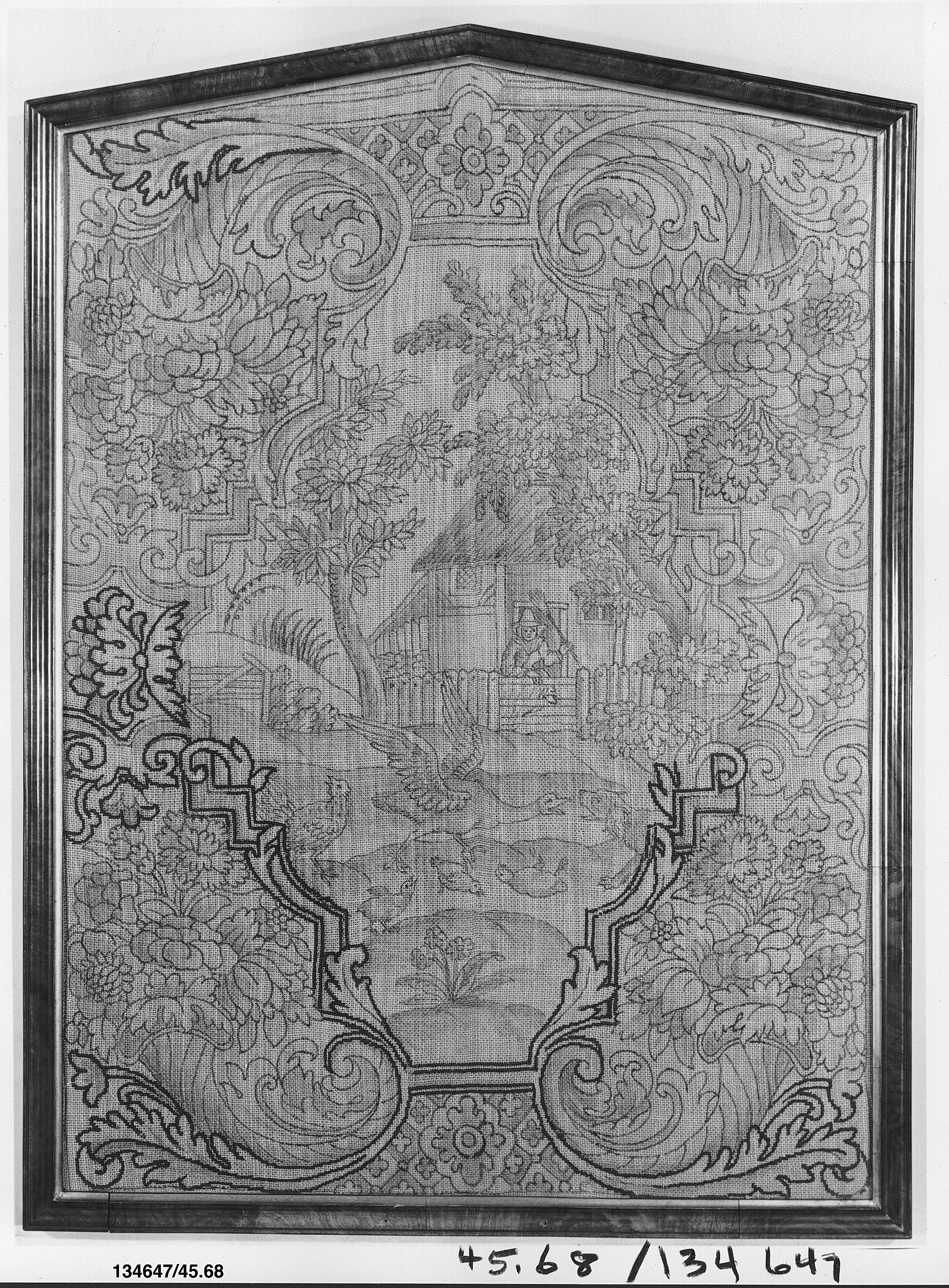
The Panel: A Study in Architectural Draping and Global Heritage
In the rarefied world of haute couture, where fabric becomes narrative and silhouette serves as cultural commentary, Katherine Fashion Lab’s latest standalone study—centered on the Panel—emerges as a masterclass in restrained opulence. This piece, drawn from a deep well of Global Heritage and executed in pure Wool, eschews the transient whims of seasonal trends for a more enduring dialogue between form, material, and memory. As Lead Curator, I approach this analysis not merely as a review of a garment but as an interrogation of how a single, seemingly simple element—the panel—can become a vessel for centuries of craftsmanship, migration, and identity.
Deconstructing the Panel: Beyond the Seam
The term “panel” in conventional fashion parlance often denotes a flat, functional segment of fabric. Yet in Katherine Fashion Lab’s hands, the panel is elevated to a structural protagonist. This is not a garment composed of panels; it is a garment that is a panel—a singular, unbroken expanse of wool that has been engineered to wrap, fold, and drape the human form with architectural precision. The piece, conceived as a standalone study, deliberately isolates the panel’s potential: it is neither a jacket nor a coat nor a skirt, but a transformative canvas that redefines the wearer’s relationship to space and silhouette.
The wool itself—a dense, felted merino from a heritage mill in the Scottish Borders—serves as the study’s first critical statement. Wool, historically a fiber of utility and warmth, is here reimagined as a medium of sculptural weight. The fabric’s natural memory allows it to hold a crease or a fold with the permanence of stone, while its soft hand ensures that the panel can be manipulated into fluid, organic curves. This duality—rigidity and flow—is the conceptual bedrock of the piece.
Global Heritage: Threads of the Silk Road and the Steppes
The panel’s design vocabulary draws from a carefully curated lexicon of global heritage. One can trace the influence of the Mongolian deel in the asymmetrical wrap that crosses the torso, its diagonal lines echoing the nomadic garment’s practical elegance. Simultaneously, the panel’s structural pleats and precise darting recall the Japanese kimono, where fabric is treated as a flat plane that gains volume only when inhabited by the body. The hemline, which falls in a gentle, uneven cascade, nods to the Indian sari’s unfurled grace—a continuous length of cloth that is never cut but always draped.
Yet this is not a pastiche. Katherine Fashion Lab has synthesized these references into a coherent, contemporary language. The panel’s construction avoids overt cultural signifiers—no obi belts, no embroidery of specific motifs—in favor of a universal geometry. The result is a garment that feels both ancient and futuristic, as if it were excavated from a Silk Road tomb and reimagined by a Bauhaus architect. This is heritage not as costume, but as design DNA.
Materiality and Craft: The Wool as Witness
The choice of wool is deliberate and deeply researched. Beyond its tactile appeal, wool possesses a narrative weight that aligns with the panel’s global heritage theme. It is a fiber that has been traded across continents for millennia, from the sheep of Central Asia to the looms of Europe. In this study, the wool is treated with a traditional fulling process—a technique that shrinks and thickens the fabric, giving it a suede-like density that resists fraying and allows for raw, unfinished edges. These edges are left uncut, their slight fuzziness a deliberate counterpoint to the panel’s sharp, architectural lines.
The finishing is a study in restraint. No zippers, buttons, or hooks disrupt the panel’s surface. Instead, the garment is secured by a single, hidden Japanese-style knot at the shoulder, a detail that allows the wearer to adjust the drape. This minimal intervention underscores the panel’s autonomy: it is a self-contained system, a piece of fabric that becomes clothing through the wearer’s interaction. The wool’s natural breathability and thermoregulatory properties further enhance the piece’s functionality, making it a garment that lives with the body rather than against it.
Contextualizing the Standalone Study
As a standalone study, the panel exists outside the usual framework of a collection or a season. This context is crucial. Without the narrative of a runway show or the constraints of a retail calendar, the piece can be examined as a pure design proposition. It asks a fundamental question: What can a single piece of wool, cut as a panel, become? The answer is both literal and metaphorical.
Literally, the panel can be worn in multiple configurations—as a cape, a tunic, a shoulder wrap, or even a floor-length skirt, depending on how the knot is tied and the fabric is arranged. This transformative versatility is a hallmark of Katherine Fashion Lab’s philosophy, which prioritizes the wearer’s agency over the designer’s fixed vision. Metaphorically, the panel represents a decolonization of form, stripping away the Western tailoring traditions of darts, seams, and linings in favor of a more fluid, inclusive approach to silhouette. It is a garment that does not impose a shape but invites the body to define it.
Critical Assessment: The Panel as a New Classic
In the broader context of contemporary couture, the panel stands as a quiet but formidable challenge to the industry’s obsession with ornamentation and excess. It is a meditation on subtraction, where every cut and every fold carries the weight of intention. The wool’s rich charcoal hue—achieved through a natural dye derived from walnut husks and iron—adds a layer of environmental consciousness, grounding the piece in a slow fashion ethos that values longevity over novelty.
Yet the panel is not without its demands. Its minimalism requires a wearer with a strong sense of personal style, as the garment offers no crutch of embellishment or trend-driven detail. It is a piece that commands attention through its silence, its monumental simplicity. For the discerning collector, this is precisely its appeal: it is a garment that does not shout but whispers, a study in the power of a single, perfect panel of wool to transcend time, culture, and the fleeting whims of fashion.
As Lead Curator, I conclude that Katherine Fashion Lab has succeeded in creating not just a garment, but a provocation. The panel challenges us to reconsider the very foundations of couture: its reliance on complex construction, its cultural borrowings, and its material hierarchies. In this standalone study, wool becomes a global citizen, the panel becomes a canvas, and the wearer becomes a collaborator. It is a work of quiet genius, destined to be studied, debated, and—above all—worn.