Couture Analysis: The Collar as Architectural Statement in The Cloisters Playing Cards
Historical and Material Context: The Card as a Canvas
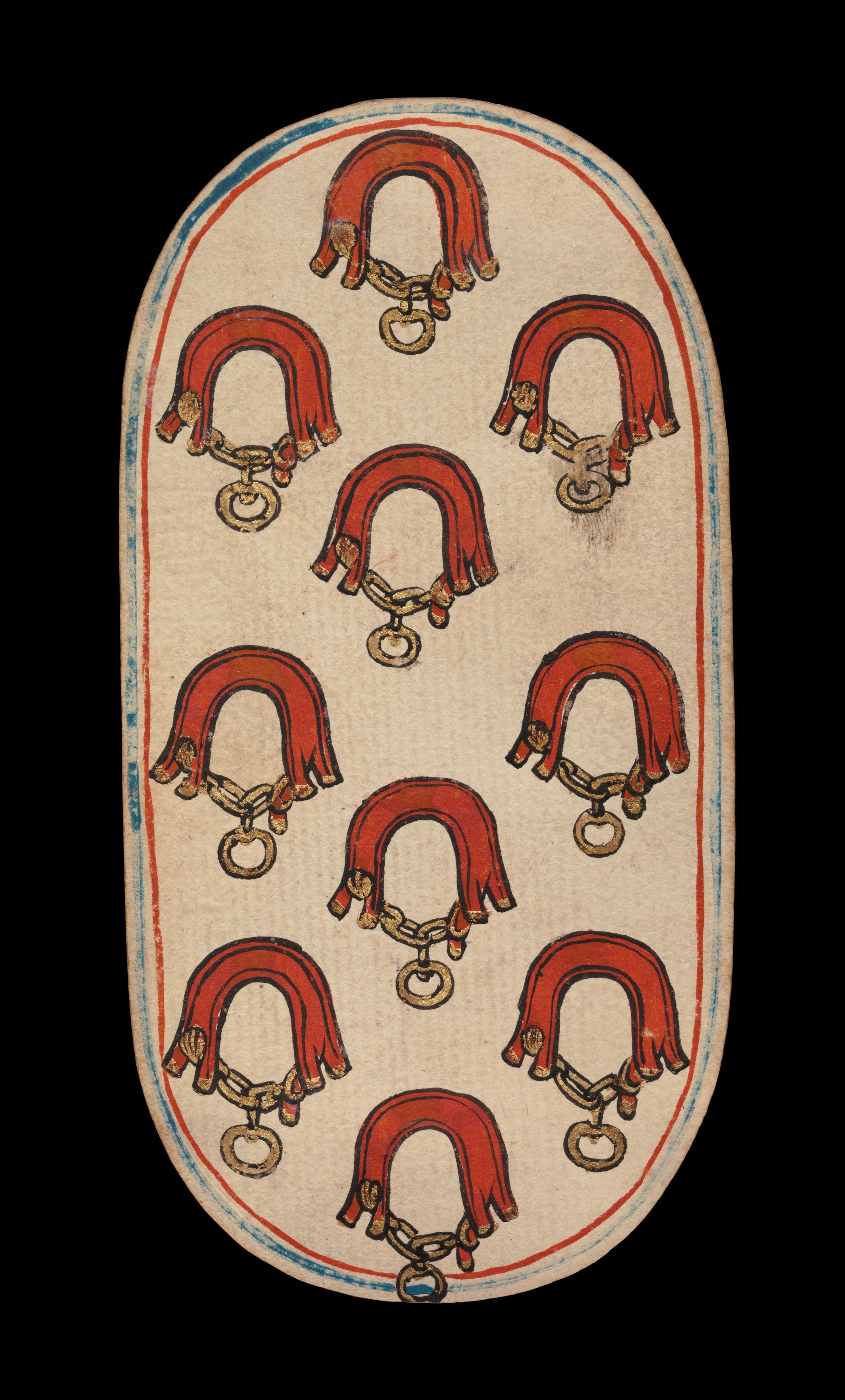
The 10 of Collars from The Cloisters Playing Cards, a South Netherlandish masterpiece circa 1470–1485, transcends its functional role as a gaming artifact to become a profound study in late medieval luxury and design. Crafted from four layers of pasteboard—a sophisticated composite material for its time—the card is a testament to the era’s artisanal ambition. The medium of pen and ink, opaque paint, glazes, and applied silver and gold transforms a humble playing card into a miniature altarpiece of sartorial expression. For Katherine Fashion Lab, this object serves as a critical reference point for understanding how collars, as standalone design elements, evolved from mere utilitarian fastenings into powerful signifiers of status, identity, and architectural form. The card’s survival, with its delicate metallic foils and vibrant pigments intact, offers an unparalleled window into the material culture that informed courtly fashion in the Burgundian Netherlands.
Deconstructing the Collar: Form, Function, and Symbolism
The 10 of Collars depicts a stylized, almost heraldic arrangement of ten collars, each distinct in its construction and ornamentation. This is not a random assortment but a deliberate catalog of late Gothic collar typologies. The collars range from simple, rolled bands to elaborate, jewel-encrusted ruffs and pendant-bearing chains. Each collar is rendered with meticulous precision, the opaque paint defining the contours of velvet, silk, and brocade, while the applied gold and silver highlight the metalwork and gemstones. The use of glazes suggests a depth of texture, mimicking the interplay of light on luxurious fabrics and polished metals. For the contemporary designer, these collars represent a lexicon of structural possibilities—how a neckline can frame the face, assert authority, or convey intimacy.
Architectural Silhouettes: The Collar as Structural Scaffold
In this playing card, the collar is not an afterthought but the primary architectural element. The collars are depicted as freestanding forms, almost like sculptural frames. One collar features a high, stiffened upright band, reminiscent of the later Henry VIII collar, which would have required a complex understructure of starch, wire, or buckram. This rigidity creates a vertical silhouette, elongating the neck and projecting an aura of unassailable dignity. Another collar is a wide, flat yoke, likely of velvet or damask, adorned with applied silver rosettes and gold filigree. This horizontal emphasis broadens the shoulders, creating a powerful, grounded presence. The interplay of these silhouettes—vertical vs. horizontal—demonstrates a sophisticated understanding of how collars can manipulate the visual proportions of the human form, a principle that remains central to high couture today.
Materiality and Surface: The Language of Luxury
The material treatment in the 10 of Collars is a masterclass in surface design. The applied silver and gold are not merely decorative; they are narrative. Gold leaf or paint is concentrated on the clasps, brooches, and chain links, signifying wealth and divine light. Silver, now tarnished to a muted grey in the original, would have originally gleamed with a cool, reflective brilliance, evoking armor and chivalric valor. The opaque paint mimics the weight and drape of heavy brocade, while the glazes add a translucent sheen, suggesting the play of candlelight on satin. For Katherine Fashion Lab, this card is a reminder that materiality is a language. The choice of metal, the density of fabric, the application of pigment—each decision communicates a layer of meaning. In contemporary terms, this translates to the selection of high-twist silks, hand-embroidered metallic threads, and custom-developed dyes that embody the same commitment to tactile and visual richness.
Symbolic Codes: The Collar as Social Identifier
Beyond its aesthetic function, the collar in this context is a potent symbol of social order. The ten collars likely represent different ranks or roles within a courtly hierarchy—from the simple leather or cloth collar of a servant to the elaborate, gem-studded collar of a noble. The playing card format itself reinforces this: the suit of collars may allude to the collars of livery, the insignia worn by retainers and members of chivalric orders. The 10 of Collars thus becomes a microcosm of societal structure, where the collar is the visible marker of allegiance, status, and identity. This symbolic weight is not lost on the modern couturier. The collar remains one of the most potent tools for signaling belonging—whether to a house, a subculture, or a moment in time. The card’s imagery encourages a reexamination of how contemporary collars can encode similar messages of affiliation and power.
Design Implications for Katherine Fashion Lab
This analysis yields several actionable insights for the design studio. First, the 10 of Collars advocates for a return to sculptural rigor in collar design. The collars are not merely attached to a garment; they define the garment’s entire presence. Katherine Fashion Lab can explore collars as independent, detachable structures—art objects in their own right—that transform a simple silhouette into a statement piece. Second, the card’s use of layered materials—pasteboard, paint, metal, glaze—suggests a methodology of construction. Modern equivalents could involve laminating sheer organza with metallic foil, applying hand-painted resin finishes, or embedding micro-crystals within a fabric matrix to achieve the same depth and luminosity.
Third, the hierarchical symbolism of the collars invites a narrative approach to design. A collection could be organized around the concept of “ten collars,” each representing a different archetype—the sovereign, the scholar, the warrior, the muse. This would allow for a cohesive but diverse exploration of neckline architecture, from the severe and authoritative to the delicate and ornamental. Finally, the card’s miniaturization of detail is a lesson in precision. In an age of mass production, the hand-rendered quality of the 10 of Collars reminds us of the value of artisanal craftsmanship. Katherine Fashion Lab can integrate this philosophy by collaborating with embroiderers, metalworkers, and milliners to create collars that are as meticulously crafted as the original card.
Conclusion: The Enduring Power of the Collar
The 10 of Collars from The Cloisters Playing Cards is far more than a historical curiosity; it is a blueprint for the collar as a medium of artistic expression. Its combination of architectural form, luxurious materiality, and symbolic depth offers a timeless template for high fashion. For Katherine Fashion Lab, this object challenges the modern designer to elevate the collar from a functional accessory to a central, narrative element of the garment. By studying the South Netherlandish artisans’ mastery of pasteboard, paint, and precious metal, we can reimagine the collar as a standalone study—a miniature monument of style that speaks across centuries. The collar, in this reading, is not merely a piece of clothing; it is a declaration of identity, a frame for the face, and a testament to the enduring human desire to adorn and to signify.