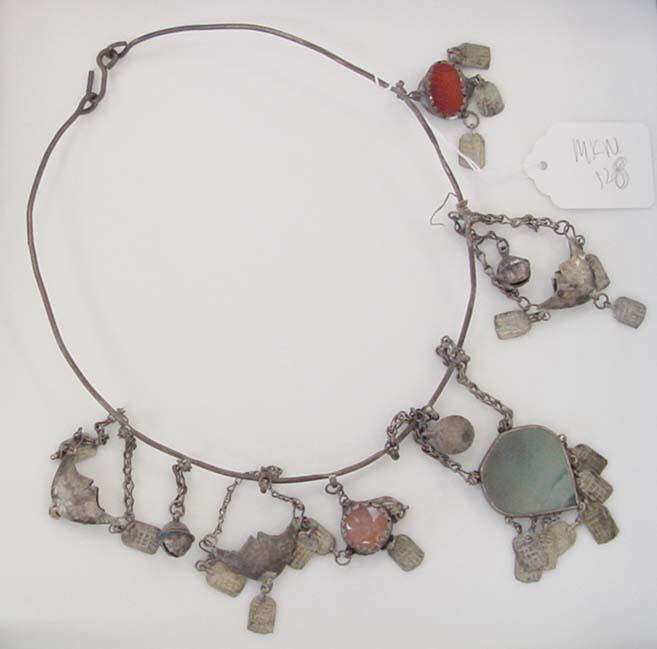
Strategic Heritage Analysis: The Moroccan Necklace as a Framework for Luxury Recontextualization
For Katherine Fashion Lab, the pursuit of heritage is not an exercise in archival replication but a strategic process of cultural distillation and avant-garde reimagination. This analysis examines the Moroccan necklace—an artifact rendered in metal and stone—as a potent vessel of symbolic power, historical narrative, and spiritual meaning. Our objective is to deconstruct its intrinsic cultural codes and propose a framework for their translation into a definitive 2026 high-end luxury strategy, positioning KFL not merely as a brand, but as a curator of profound, wearable legacies.
Deconstructing Symbolic Power: The Necklace as a Talismanic Architecture
The Moroccan necklace transcends mere ornamentation; it is a meticulously coded system of protection, status, and identity. Crafted primarily in silver—a metal historically believed to possess purifying qualities—and adorned with stones like amber, coral, carnelian, or onyx, each element is semantically charged. The fibula (khelkhal or tizerzai) motifs, often abstracted into triangular or hand-shaped (khamsa) pendants, are not decorative whims but explicit symbols of defense against the malevolent gaze. The weight and volume of the piece communicate social standing, with elaborate, multi-strand necklaces historically denoting wealth, marital status, and tribal affiliation. This transforms the necklace from an accessory into a portable, personal fortress and a public ledger of one’s place in the social and spiritual cosmos. For KFL, the strategic insight lies not in copying these forms, but in mastering their language: understanding that luxury consumers in 2026 seek not just beauty, but embedded narrative and perceived talismanic value.
Historical Adornment and the Dialectic of Craft
Historically, the creation of these necklaces existed at the intersection of high artisanal skill and deeply rooted spiritual practice. Techniques such as filigree (m’tarb), engraving (naqsh), and enamel work (melemsa) were guarded within familial and guild-like workshops, often in cities like Fes, Meknes, and the Souss region. The stones were selected as much for their cosmological properties as their hue: coral from the Mediterranean for vitality, amber for its electrostatic, healing allure. This context presents a critical luxury precedent: the inseparability of material, maker, and meaning. In an era of increasing automation, the 2026 luxury mandate will be authenticity through traceable, exalted craftsmanship. KFL’s strategy must therefore involve deep, equitable partnerships with Moroccan master artisans, positioning their hands and inherited knowledge as the ultimate luxury provenance. The "lab" in our name can evolve to signify a collaborative atelier where ancient metallurgy meets contemporary design experimentation.
Spiritual Meaning: From Amulet to Emotional Resonance
At its core, the traditional Moroccan necklace is an interface with the unseen. The ubiquitous khamsa (Hand of Fatima), the evocation of protective eyes, and the use of geometric patterns reflecting cosmic order, all serve to align the wearer with benevolent forces. This spiritual utility addresses a profound, growing consumer need in the high-end market: the search for grounding, intention, and mindfulness in material possessions. The 2026 luxury client is increasingly an "emotional consumer," investing in objects that offer psychological and spiritual ROI. KFL can innovate by curating collections that are "energetically coded." Imagine a necklace where the metal alloy is informed by historical Moroccan silver compositions, paired with a specific, sustainably sourced stone, presented with a narrative of its traditional protective or fortifying purpose. This transforms the point of sale into a moment of meaningful acquisition, elevating the piece from a seasonal item to a lifelong companion.
2026 High-End Luxury Strategy: The KFL Recontextualization Framework
To translate this heritage into a competitive 2026 strategy, Katherine Fashion Lab must execute a bold recontextualization, moving from cultural reference to cultural conversation.
Pillar 1: Radical Material Alchemy
Move beyond literal interpretation. Fuse the Moroccan symbolic lexicon with cutting-edge material science. Reimagine the khamsa motif in titanium coated with a proprietary ceramic glaze inspired by Fassi enamel. Set "Moroccan sky" blue amazonite or "desert rose" gypsum in recycled, ethically sourced platinum alloys. The "Lab" ethos demands we respect the past by violently reinterpreting its materiality for the future, creating heirlooms for a new epoch.
Pillar 2: The Narrative-Driven Client Journey
Each piece must be accompanied by a "Heritage Dossier"—a digital and physical record detailing the origin of motifs, the artisan partnership, and the symbolic properties of materials. Leverage immersive technology: AR experiences that reveal the story behind a pendant’s engraving. This builds an audit of authenticity that is paramount for the discerning 2026 consumer, who values transparency and depth.
Pillar 3: Standalone "Cultural Code" Collections
Rather than integrating Moroccan elements into broader lines, launch definitive, standalone collections. Titles like "KFL Atlas: Talismans for the Modern Voyager" or "KFL Maghreb: Cryptographic Adornment" establish authority. These are not influencer-driven capsules but curatorial statements, presented in contexts that blend archaeological reverence with futuristic minimalism—think presentations in stark, modern galleries where the only ornament is the jewelry itself.
Conclusion: The Curatorial Imperative
The Moroccan necklace, in its confluence of metal, stone, and meaning, offers Katherine Fashion Lab a masterclass in depth. The 2026 luxury landscape will be won by brands that provide not just products, but culturally intelligent, spiritually resonant, and impeccably crafted worlds. By strategically deconstructing this heritage—honoring its symbolic power, elevating its artisanal dialogue, and transmuting its spiritual essence into contemporary emotional utility—KFL can position itself at the vanguard. The goal is to create necklaces that are not from Morocco, but are of its enduring philosophy, making the wearer a citizen of both history and the avant-garde. This is the standalone strategic path: from fashion lab to culture lab, forging the future in the refined fire of the past.