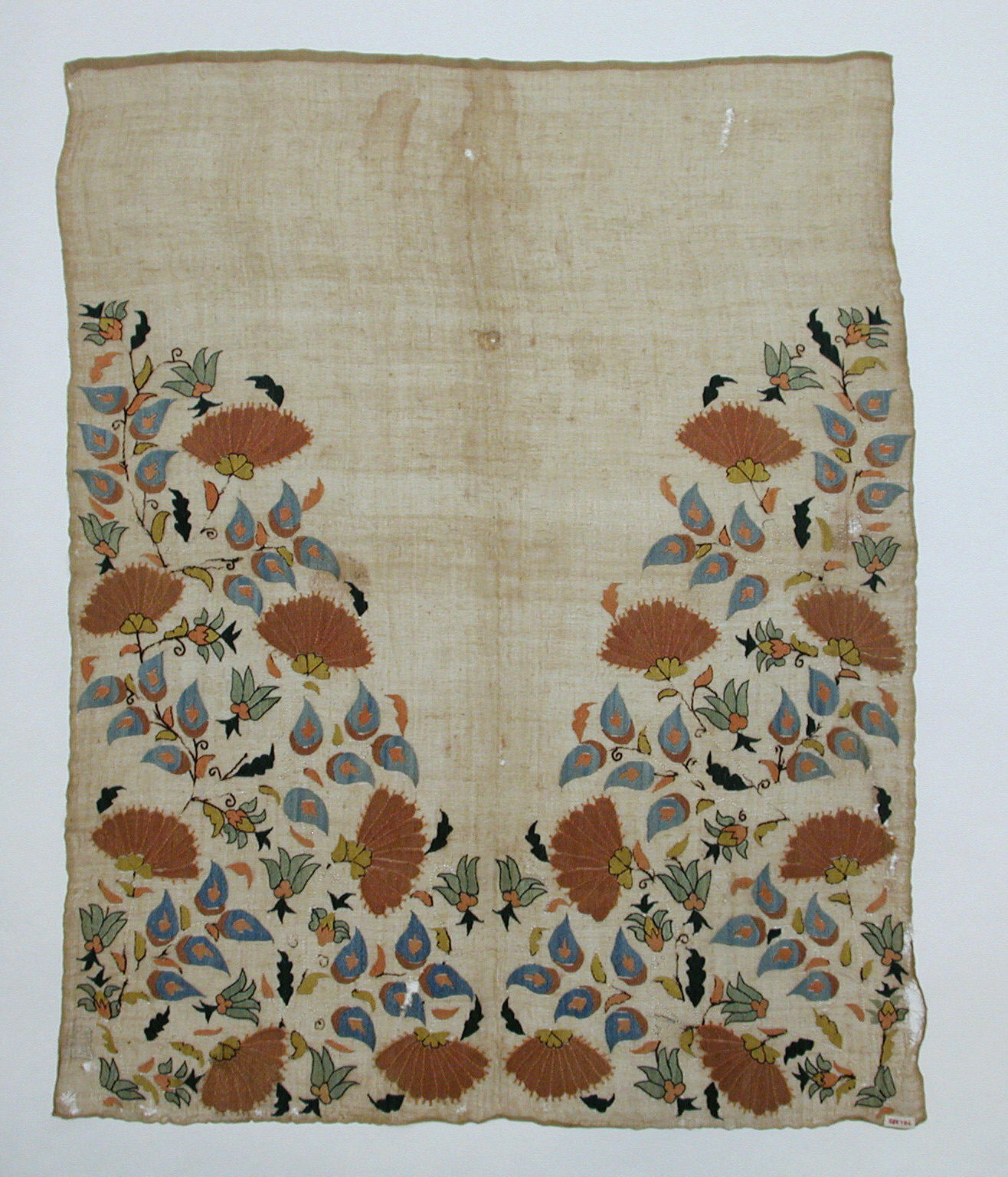
The Art of the Towel End: A Couture Analysis of Katherine Fashion Lab’s Global Heritage Study
In the rarefied world of haute couture, where every stitch is a narrative and every fiber a testament to cultural memory, the humble towel end—often dismissed as a mere utilitarian fragment—emerges as a profound subject of study. Katherine Fashion Lab’s latest standalone investigation, “Towel End: Global Heritage,” elevates this overlooked textile remnant to the status of a couture artifact. By marrying the tactile purity of linen and silk with the structural discipline of plain weave and the narrative richness of embroidery, the Lab redefines the towel end as a canvas for global storytelling. This analysis unpacks the material, technical, and conceptual dimensions of this collection, revealing how a fragment becomes a finished statement of luxury and heritage.
Materiality as Memory: Linen and Silk in Dialogue
The choice of materials in this study is neither arbitrary nor merely aesthetic; it is a deliberate invocation of heritage. Linen, derived from the flax plant, carries with it millennia of human industry—from ancient Egyptian burial shrouds to medieval European tablecloths. Its long fibers, when woven into a plain weave, yield a fabric that is simultaneously crisp and supple, breathable yet durable. In the context of the towel end, linen evokes the ritual of drying—a moment of transition between water and air, between labor and rest. The Lab’s selection of linen grounds the collection in a sense of earthbound authenticity, a counterpoint to the ephemerality of silk.
Silk, by contrast, introduces a dimension of opulence and transience. Sourced from the cocoons of silkworms, its protein fibers reflect light with a liquid sheen, transforming the towel end from a functional edge into a shimmering threshold. When juxtaposed with linen’s matte finish, silk creates a textural dialogue that is at once harmonious and provocative. The Lab’s use of a plain weave—the simplest and most ancient interlacing of warp and weft—ensures that the materials speak without distortion. This structural humility allows the fibers’ innate qualities to dominate: linen’s slight irregularity and silk’s smooth precision. The result is a fabric that feels both ancestral and avant-garde, a tactile bridge between global heritage and contemporary couture.
Embroidery as Cartography: Stitching Global Narratives
If the weave provides the grammar, embroidery supplies the vocabulary. In this study, embroidery is not decorative overlay but a cartographic practice—a means of mapping cultural memory onto the towel end. The Lab employs techniques that reference diverse traditions: the geometric precision of Central Asian suzani, the floral exuberance of Indian chikankari, the restrained elegance of Japanese sashiko. Each stitch becomes a coordinate, linking the viewer to a specific heritage while remaining abstract enough to transcend literal representation.
Consider the suzani-inspired motifs: sunbursts and medallions worked in silk thread on a linen ground. These forms, historically used to ward off evil or celebrate fertility, are recontextualized here as meditations on protection and abundance. The embroidery’s density—often covering entire sections of the towel end—transforms the fabric into a talismanic object. Conversely, the Lab’s interpretation of sashiko employs white-on-white stitching in running patterns that mimic rice fields or ocean waves. This restraint speaks to the Japanese aesthetic of wabi-sabi, finding beauty in imperfection and utility. The towel end, once a scrap, becomes a vessel for philosophical depth.
The Lab’s embroidery also engages with plain weave’s grid. By following the weave’s natural geometry, stitches align with the fabric’s structure, creating a sense of organic order. This is not embroidery that fights the cloth but one that collaborates with it. The result is a surface that rewards close inspection: individual threads catch light differently, cumulating in a shimmering topography that shifts with the viewer’s angle. In couture terms, this is a masterclass in tactile storytelling—each piece is a manuscript of global heritage, legible through touch and sight.
The Standalone Study: Fragment as Artifact
Katherine Fashion Lab’s decision to present this as a standalone study is a bold curatorial move. By isolating the towel end from its traditional context—the finished towel, the bath, the domestic sphere—the Lab forces a reevaluation of value. In a world obsessed with completeness, the fragment offers a different kind of truth. The towel end, with its raw edges and unfinished potential, becomes a metaphor for heritage itself: partial, layered, and open to interpretation.
This approach aligns with contemporary couture’s fascination with deconstruction and reconstruction. Designers like Martin Margiela and Rei Kawakubo have long celebrated the unfinished, the inside-out, the garment as process. The Lab’s towel end operates in this lineage but with a crucial difference: where deconstruction often signals urban alienation, this study radiates warmth and continuity. The embroidery’s handwork, the natural fibers’ softness, the subtle irregularities of weave—all speak to human presence. The towel end is not a relic of decay but a fragment of care, a piece of cloth that has been handled, dried hands, absorbed water, and now stands as a testament to domestic ritual.
Moreover, the global heritage lens prevents the study from becoming solipsistic. Each embroidered motif references a specific cultural practice, yet the towel end’s universal function—drying, wiping, cleansing—makes it a shared human object. The Lab thus creates a paradox: a singular, handcrafted piece that belongs to no single tradition but to all. This is couture as cultural diplomacy, where materials and techniques become languages of connection.
Technical Precision and Artistic Vision
From a technical standpoint, the Lab’s execution is exemplary. The plain weave of linen and silk requires exacting tension to prevent puckering, especially when heavy embroidery is applied. The Lab employs a counted-thread technique, where each stitch aligns with a specific warp or weft thread, ensuring that the embroidery does not distort the fabric’s drape. This precision is essential for the towel end, which must retain its structural integrity while being handled.
The choice of silk thread for embroidery on a linen ground is equally deliberate. Silk’s luster contrasts with linen’s matte surface, creating a subtle relief effect. The Lab also experiments with gradated color palettes—from indigo to ecru to ochre—that evoke natural dyes used across cultures. This chromatic restraint prevents visual chaos, allowing the embroidery to read as a unified composition rather than a patchwork of references.
Implications for Couture and Heritage
What, then, does this study mean for the future of couture? First, it challenges the industry’s obsession with novelty. By focusing on a fragment, the Lab demonstrates that couture’s true luxury lies not in newness but in depth of reference and craftsmanship. Second, it posits that heritage is not a static archive but a living practice—one that can be refreshed through material innovation and conceptual framing. The towel end, as a standalone study, becomes a prototype for how couture can honor tradition while remaining relevant.
Finally, the collection invites a slower mode of consumption. In an era of fast fashion and disposable textiles, Katherine Fashion Lab’s towel end demands attention: to touch, to read, to contemplate. It is an object that resists instant gratification, rewarding those who take the time to trace its embroidery, feel its weave, and consider its origins. In this sense, the towel end is not just a couture piece but a philosophical statement—a reminder that the smallest fragments can hold the most profound stories.
As the Lead Curator for Katherine Fashion Lab, I recommend this study as a cornerstone for any exploration of global heritage in fashion. It is a masterful synthesis of material, technique, and meaning—a towel end that ends not in utility but in art.