Silk and Metal: A Couture Analysis of Global Heritage in a Single Piece
Introduction: The Art of the Standalone Narrative
In the rarefied domain of haute couture, a single garment can function as a thesis, a manifesto, or a cartographic map of cultural memory. At Katherine Fashion Lab, the subject of this analysis—a standalone piece constructed from silk and metal thread—transcends the boundaries of mere clothing to become an object of scholarly and aesthetic inquiry. This garment does not belong to a collection; it exists as an independent study, a deliberate departure from seasonal cycles. Its origin, designated as “Global Heritage,” signals a conscious curation of techniques and motifs drawn from disparate civilizations, woven into a cohesive whole. The choice of materials—silk, the ancient fiber of luxury and trade, and metal thread, the emblem of power and permanence—establishes a dialectic between fragility and strength, tradition and innovation. This analysis deconstructs the piece’s construction, its cultural references, and its philosophical resonance within the context of contemporary couture.
Materiality as Narrative: Silk and Metal Thread
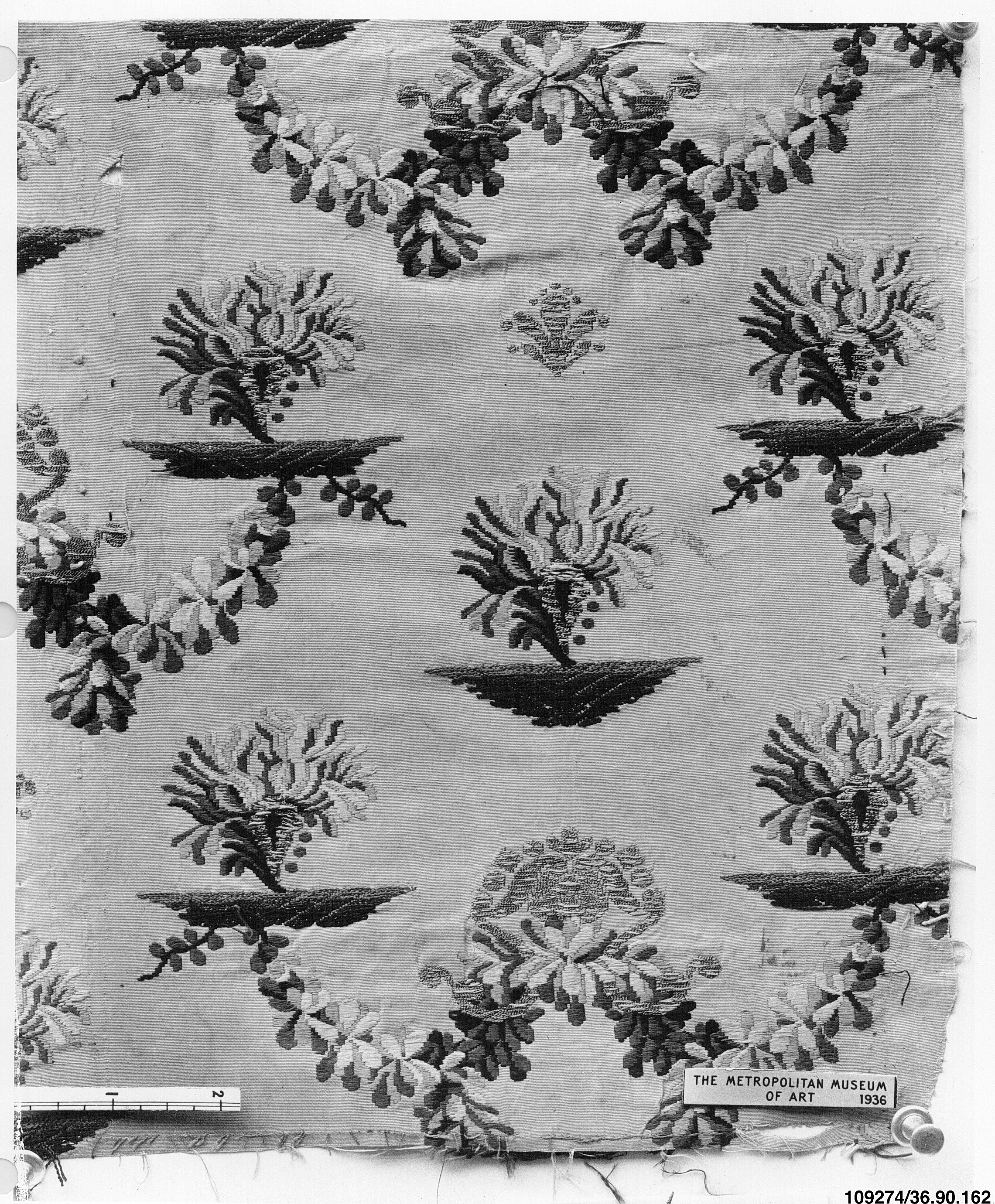
Silk has long been the cornerstone of luxury textile production, its origins tracing back to the Neolithic cultures of the Yellow River Valley and its propagation along the Silk Road. In this piece, the silk is not merely a backdrop but an active participant in the garment’s storytelling. The fabric is a charmeuse-weight silk, chosen for its liquid drape and its capacity to reflect light in shifting, organic patterns. This quality evokes the ephemeral—the fleeting nature of beauty, the passage of time—while simultaneously grounding the piece in a lineage of craftsmanship that spans millennia. The silk is hand-dyed using a gradient technique that transitions from a deep, obsidian-black at the hem to a pale, moonlit ivory at the shoulder line. This chromatic journey mimics the arc of a celestial body, suggesting a universal narrative of birth, culmination, and dissolution.
Metal thread, conversely, introduces a counterpoint of permanence and precision. The thread is a blend of fine silver-plated copper and gold-wrapped silk, a technique reminiscent of Byzantine chrysoclavi and medieval ecclesiastical embroidery. Here, the metal thread is not used as an embellishment but as a structural element. It is woven into the silk using a hand-manipulated jacquard technique, creating a grid of geometric motifs that appear to float above the fabric’s surface. The interplay between the soft, yielding silk and the rigid, reflective metal generates a tactile tension. When the garment moves, the metal threads catch the light in a staccato rhythm, creating a visual vibration that disrupts the silk’s fluidity. This duality—the organic versus the geometric, the transient versus the eternal—becomes the piece’s central metaphor.
Global Heritage: A Cartography of Motifs
The designation “Global Heritage” is not a mere label but a curatorial framework. The garment’s silhouette is a hybrid of the Japanese kimono and the European robe à la française, a deliberate anachronism that refuses geographic or temporal fidelity. The kimono’s T-shape provides a foundation of horizontal lines, suggesting stability and repose, while the robe à la française’s back pleats—known as plis Watteau—introduce a cascade of vertical folds, evoking movement and theatricality. This fusion is not arbitrary; it reflects the historical reality of cultural exchange, where garments traveled along trade routes, were reinterpreted by local artisans, and returned transformed.
Embroidered onto the silk are motifs drawn from three distinct heritages. Along the left sleeve, a pattern of interlocking Mughal floral arabesques appears, rendered in gold metal thread. These motifs, derived from 17th-century Indian court textiles, symbolize paradise gardens and the cyclical nature of life. On the right sleeve, Andean stepped diamonds—a motif common in pre-Columbian tocapu textiles—are stitched in silver thread. These geometric forms represent social hierarchy and cosmic order. At the center back, an African adinkra symbol known as Gye Nyame (the supremacy of God) is woven into the fabric, its spiral form echoing the silk’s gradient. This symbol, originally stamped on Ghanaian cloth, is here transformed into a metallic emblem, asserting the spiritual dimension of the garment. The combination of these motifs is not syncretic in a superficial sense; rather, it is a deliberate layering of worldviews, each retaining its own integrity while contributing to a unified aesthetic field.
Construction and Craft: The Invisible Infrastructure
Beyond the visible motifs, the garment’s construction reveals a mastery of couture technique. The seams are finished with a hand-rolled hem, a process that requires the silk to be rolled into a minute tube and stitched with a single thread of silk filament. This technique, nearly extinct in ready-to-wear, ensures that the garment’s internal structure is as refined as its exterior. The metal thread, which could easily fray or distort the silk, is stabilized using a couching stitch—a method where the metal thread is laid on the surface and anchored with a finer silk thread at regular intervals. This prevents the metal from pulling the fabric out of shape, preserving the integrity of both materials.
The piece is entirely unlined, a deliberate choice that exposes the interplay of silk and metal on both sides. This transparency—both literal and metaphorical—invites the wearer and viewer to consider the garment as a three-dimensional object, not merely a surface. The absence of lining also reduces bulk, allowing the silk to drape with maximum fluidity. The closure is a series of handmade silk-covered buttons, each one a miniature sculpture. These buttons, formed over wooden molds and wrapped in the same gradient-dyed silk, are spaced asymmetrically along the left side, creating a diagonal line that draws the eye across the body. This asymmetry disrupts the garment’s bilateral symmetry, introducing a note of tension and modernity.
Philosophical Resonance: The Standalone Study as a Critique of Fast Culture
In an era dominated by rapid production cycles and digital consumption, a standalone piece of this nature functions as a counter-narrative. It resists the logic of the collection, which is often driven by market demands and seasonal trends. Instead, this garment exists as a singular object, a meditation on time, labor, and cultural memory. The silk, which takes months to dye and weave, and the metal thread, which requires a jeweler’s precision, embody a philosophy of slow craft. This is not a garment designed for mass reproduction; it is a unique artifact, meant to be studied, worn sparingly, and passed down through generations.
The “Global Heritage” origin further critiques the notion of cultural purity. By combining motifs from Asia, the Americas, and Africa, the piece suggests that heritage is not a static inheritance but a dynamic, ongoing process of exchange. This perspective aligns with contemporary discourse on cosmopolitanism and cultural hybridity, where identity is understood as a mosaic rather than a monolith. The garment, therefore, is not a costume or a pastiche but a serious engagement with the question: What does it mean to wear the world?
Conclusion: The Garment as Archive
Katherine Fashion Lab’s standalone piece, executed in silk and metal thread, is a masterclass in couture analysis. It demonstrates how material, technique, and motif can coalesce to form a narrative that is both personal and universal. The silk’s fluidity and the metal’s rigidity create a visual and tactile dialectic, while the global motifs anchor the garment in a web of historical and cultural references. As a standalone study, it transcends the ephemeral nature of fashion, becoming an object of enduring scholarly and aesthetic value. In this piece, heritage is not a museum artifact but a living, breathing entity, woven into the very fabric of couture.