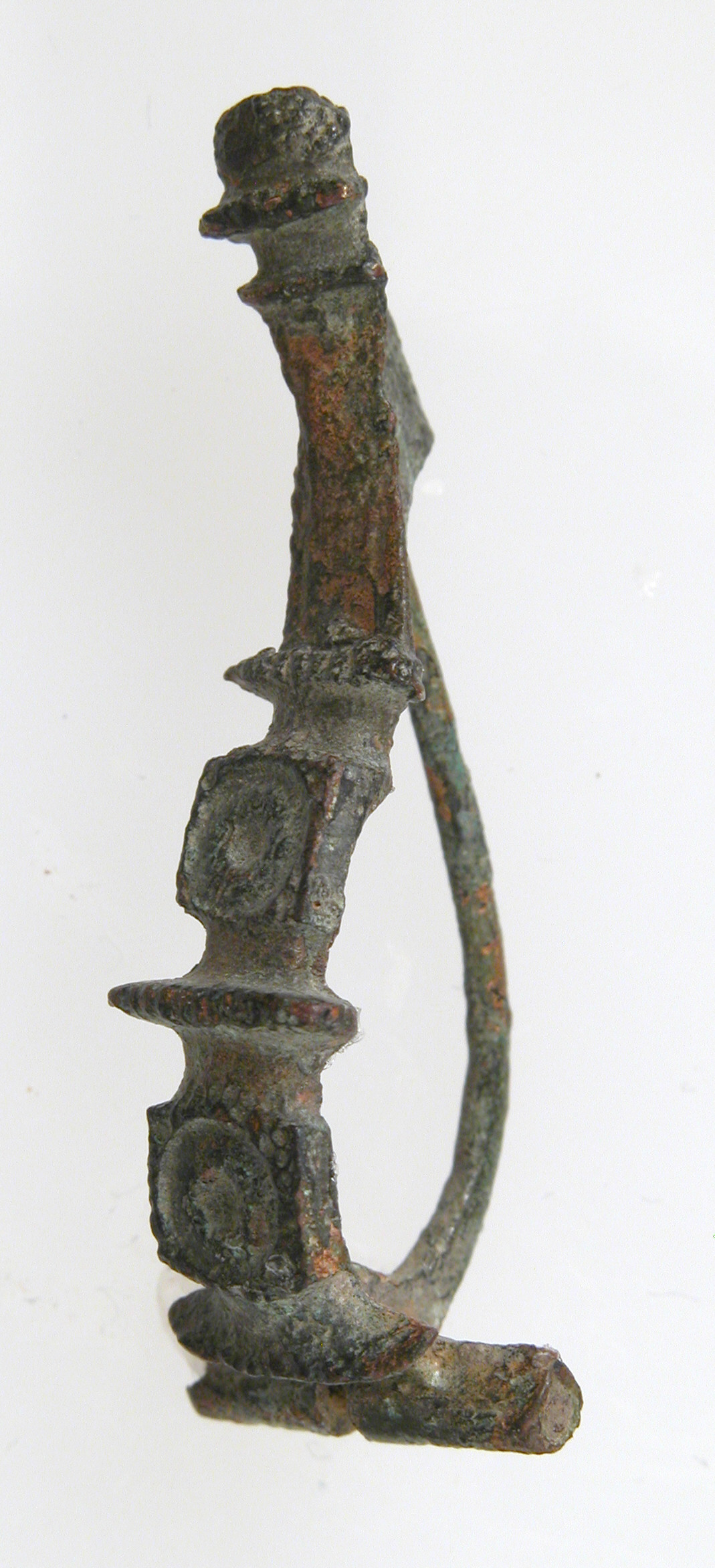
Heritage Analysis: The Late Roman Bow Brooch
Introduction to the Artifact
The subject of this strategic heritage analysis is a Late Roman bow brooch, crafted from copper alloy, dating approximately from the 3rd to 5th centuries CE. This artifact, originating from the fringes of the Roman Empire, represents a pivotal convergence of functional military adornment and evolving symbolic power. For Katherine Fashion Lab, understanding this object’s historical trajectory offers a profound lens through which to conceptualize a 2026 high-end luxury strategy rooted in authenticity, durability, and spiritual resonance.
Symbolic Power and Social Identity
In Late Roman society, the bow brooch was not merely a fastener but a potent emblem of status, allegiance, and authority. Worn primarily by military officers and administrative elites, its design—characterized by a curved, arched body and a hinged pin—signified a wearer’s connection to the imperial apparatus. The copper alloy medium, while less precious than gold or silver, conveyed a deliberate message of practicality and resilience. This aligns with the Roman virtue of virtus, or martial excellence, where material worth was secondary to the symbolic weight of service and duty. For Katherine Fashion Lab, this artifact underscores the enduring power of understated luxury: a single, well-crafted piece can communicate hierarchy and belonging without ostentation. In a 2026 luxury market increasingly skeptical of overt branding, the brooch’s silent authority offers a blueprint for designs that speak through form and function rather than logo.
Historical Adornment and Material Culture
The bow brooch’s role in historical adornment must be understood within the context of Late Roman material culture. Copper alloy, an accessible yet durable metal, allowed for mass production across the empire, yet individual brooches often bore regional stylistic variations—such as incised geometric patterns or zoomorphic motifs—reflecting local craftsmanship. This duality of standardization and personalization is critical for modern luxury strategy. The brooch was worn as a singular statement piece, typically at the shoulder or chest, to secure a cloak or tunic. Its placement drew the eye upward, emphasizing the wearer’s posture and presence. For Katherine Fashion Lab, this principle of strategic adornment—where a single accessory anchors an entire silhouette—resonates with the 2026 trend toward minimalism with intent. The brooch’s historical function as both utility and ornament challenges the contemporary fashion industry’s obsession with excess, suggesting that true luxury lies in the deliberate curation of pieces that serve multiple purposes: practical, aesthetic, and symbolic.
Spiritual Meaning and Ritual Significance
Beyond its social utility, the Late Roman bow brooch carried profound spiritual meaning. In the polytheistic late empire, such objects were often consecrated to household gods (Lares) or protective spirits (Genii). The act of fastening the brooch was a ritualized gesture, believed to secure not only the garment but also the wearer’s spiritual boundaries against malevolent forces. The copper alloy itself held metaphysical associations: in Roman folk belief, copper was linked to Venus, the goddess of love and beauty, but also to Mars, the god of war, symbolizing a balance of passion and protection. For the early Christian communities that emerged in this period, the brooch sometimes bore Chi-Rho symbols, transforming a pagan object into a token of faith and resilience. This spiritual layering offers Katherine Fashion Lab a profound narrative for 2026: a luxury accessory can be a talisman—a tangible connection to inner strength, heritage, and intention. In an era of digital saturation, consumers crave objects with perceived soul and protective qualities. A contemporary bow brooch, inspired by this heritage, could be positioned as a personal artifact of empowerment, marketed not just as jewelry but as a ritual object for modern life.
Strategic Implications for 2026 High-End Luxury
Translating the Late Roman bow brooch into a 2026 luxury strategy requires a meticulous synthesis of heritage authenticity and contemporary relevance. First, the material choice of copper alloy must be reframed. While historically considered a base metal, its patina—developed over centuries—embodies a narrative of age and endurance that gold or platinum cannot replicate. Katherine Fashion Lab can position copper alloy as a patina-rich luxury material, emphasizing its evolving surface as a metaphor for the wearer’s own journey. Limited-edition releases with intentionally induced patinas, or even raw finishes that age naturally, would appeal to collectors seeking unique, living objects.
Second, the brooch’s design language—its clean, arched silhouette—should be preserved but reinterpreted through modularity. A 2026 bow brooch could feature interchangeable components, such as removable gemstones or engraved plaques, allowing the wearer to adapt the piece for different contexts (formal, casual, ritual). This echoes the Roman tradition of personalization while addressing the modern desire for versatility in a capsule wardrobe. The brooch’s historical function as a fastener can be revived through collaborations with technical artisans, ensuring that the piece remains fully functional—a subtle rejection of purely decorative costume jewelry.
Third, the spiritual dimension must be woven into the brand narrative without appearing contrived. Katherine Fashion Lab could develop a “Ritual Collection,” where each brooch is accompanied by a small scroll detailing its historical significance and a suggested intention for the wearer—such as courage, protection, or clarity. This transforms the purchase into an experience of cultural inheritance. Retail environments could incorporate elements of Roman domestic shrines, with soft lighting, natural stone, and incense, to evoke a sense of sacred space. The pricing strategy should reflect the artifact’s dual nature as both an investment piece and a personal totem, positioned at a premium that justifies its heritage-backed value.
Conclusion
The Late Roman bow brooch, in its copper alloy modesty, offers Katherine Fashion Lab a powerful archetype for 2026 luxury. It teaches that true opulence is not in abundance but in significance—a single object can carry the weight of history, spirituality, and identity. By honoring this artifact’s symbolic power, historical adornment practices, and spiritual meanings, Katherine Fashion Lab can craft a strategy that resonates with discerning consumers seeking depth over display. The bow brooch is not merely an accessory; it is a statement of continuity, a bridge between the ancient and the avant-garde. In an industry often driven by ephemeral trends, this heritage analysis affirms that the most enduring luxury is that which tells a story, protects a soul, and endures across millennia.