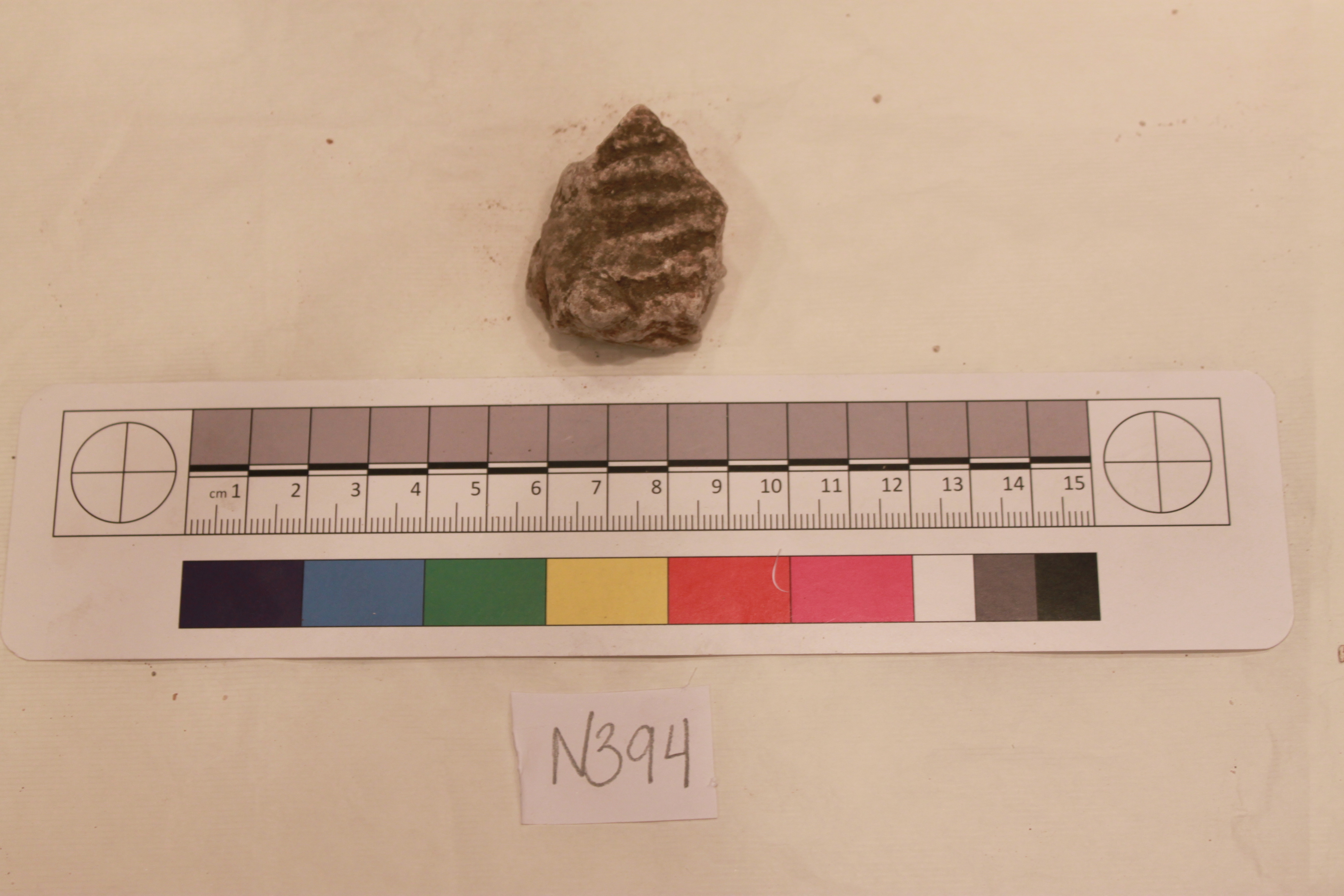
The Stucco Fragment: A Study in Material Memory and Architectural Narrative
In the realm of haute couture, inspiration often emerges from the most unexpected sources. At Katherine Fashion Lab, we have long championed the dialogue between tangible heritage and contemporary design. This season, our analytical gaze turns to a singular artifact: a carved stucco fragment of global heritage origin. This piece, detached from its original architectural context, offers a profound case study in materiality, texture, and the silent stories embedded within ancient surfaces. As a standalone object, it challenges the fashion industry to reconsider the relationship between structure and ornament, permanence and ephemerality, heritage and innovation.
Materiality: The Alchemy of Stucco
Stucco, at its core, is a humble composite—a mixture of lime, sand, and water, often augmented with marble dust or gypsum for refinement. Yet, in the hands of ancient artisans, it transcended its utilitarian origins to become a medium of exquisite expression. The fragment under analysis, likely originating from a monumental façade or interior frieze, exhibits a surface that has aged with grace. The carving is both precise and organic: deep undercuts create dramatic chiaroscuro, while the softened edges speak to centuries of environmental interaction. For the couturier, this materiality is a lexicon. The tactile contrast between the smooth, polished areas and the rough, granular recesses mirrors the interplay between silk and brocade, between matte and sheen, that defines high-fashion construction. The stucco’s ability to hold a sharp line while yielding to atmospheric pressure is a lesson in structural integrity—a reminder that true luxury lies not in fragility, but in resilient beauty.
Architectural Context: The Lost Frame
While the fragment is now a standalone study, its original context is essential to understanding its narrative power. The carving suggests it was part of a larger architectural scheme—perhaps a cornice, a niche surround, or a decorative panel. In its original setting, this stucco would have been one of many, creating a rhythmic pattern that guided the eye across a wall or ceiling. The fragmentation, however, transforms its significance. It becomes a synecdoche, a part that stands for a vanished whole. This concept resonates deeply with contemporary fashion, where deconstruction and reconstruction are central methodologies. Just as a designer might isolate a sleeve or a collar to explore its formal potential, this stucco fragment invites us to consider the power of the isolated detail. It is a reminder that the most compelling designs often emerge from the careful study of a single, resonant element—a fold, a seam, a clasp—extracted from its conventional context and re-presented as a focal point.
Global Heritage: A Cross-Cultural Lexicon
The global heritage origin of this fragment is not a limitation but a liberation. Stucco carving is a technique found across civilizations—from the intricate stucco work of the Umayyad desert palaces to the ornate plaster reliefs of Mughal India, from the Romanesque churches of Europe to the pre-Columbian temples of Mesoamerica. This particular piece bears motifs that suggest a synthesis of influences: geometric interlacing reminiscent of Islamic art, floral volutes echoing Hellenistic traditions, and a dynamic asymmetry that hints at East Asian aesthetics. For Katherine Fashion Lab, this cross-cultural language is a treasure trove. It allows us to transcend geographic and temporal boundaries, weaving a global narrative that speaks to the universality of human creativity. In our collections, we translate these motifs into embroideries, beading patterns, and cutwork that honor their origins while reimagining them for a modern silhouette. The fragment teaches us that heritage is not static; it is a living dialogue that evolves with each new interpretation.
Texture as Narrative: The Role of Surface in Couture
Perhaps the most compelling lesson from this stucco fragment is the primacy of surface. In an age of digital simulation and fast fashion, the physicality of texture is often overlooked. Yet, this carved piece demands touch. Its undulating surface records the hand of the artisan—the pressure of the chisel, the sweep of the smoothing tool—and the passage of time. For the couture designer, this is a call to embrace imperfection as a marker of authenticity. The fragment’s micro-cracks, mineral deposits, and subtle color variations (from warm ochre to cool limestone gray) are not flaws; they are the evidence of a life lived. Similarly, in high-fashion, the deliberate inclusion of hand-stitching, uneven pleats, or irregular dye patterns can elevate a garment from mere clothing to a narrative object. The stucco fragment challenges us to design with a sensitivity to time—to create pieces that will age with dignity, acquiring their own unique patina through wear and care.
Structural Lessons: Carving and Draping
The carving techniques visible on the fragment offer direct analogies to garment construction. The deep relief of the stucco echoes the principles of draping and tailoring: the way volume is created through subtraction (carving away material) rather than addition (adding layers of fabric). This subtractive approach is mirrored in the precision cutting of couture, where fabric is sculpted onto the body through darts, tucks, and seams. The fragment’s negative spaces—the voids between the carved forms—are as important as the positive forms themselves. This interplay of presence and absence is a powerful tool in fashion design, where a strategic cutout, a sheer panel, or an asymmetric hem can define the silhouette. The stucco teaches us that what is left out is as expressive as what is included.
Conclusion: The Fragment as a Catalyst
As a standalone object, the stucco fragment from global heritage is far more than a decorative relic. It is a masterclass in material intelligence, a repository of cross-cultural memory, and a blueprint for structural innovation. At Katherine Fashion Lab, we view such artifacts not as museum pieces to be replicated, but as catalysts for new creative processes. The fragment’s journey—from a wall in a distant civilization to a table in our atelier—mirrors the very essence of couture: the transformation of raw inspiration into wearable art. It reminds us that the most profound designs are those that honor the past while fearlessly forging the future. In the hands of a skilled designer, a fragment of stucco can become a fold of silk, a thread of gold, a story waiting to be worn.