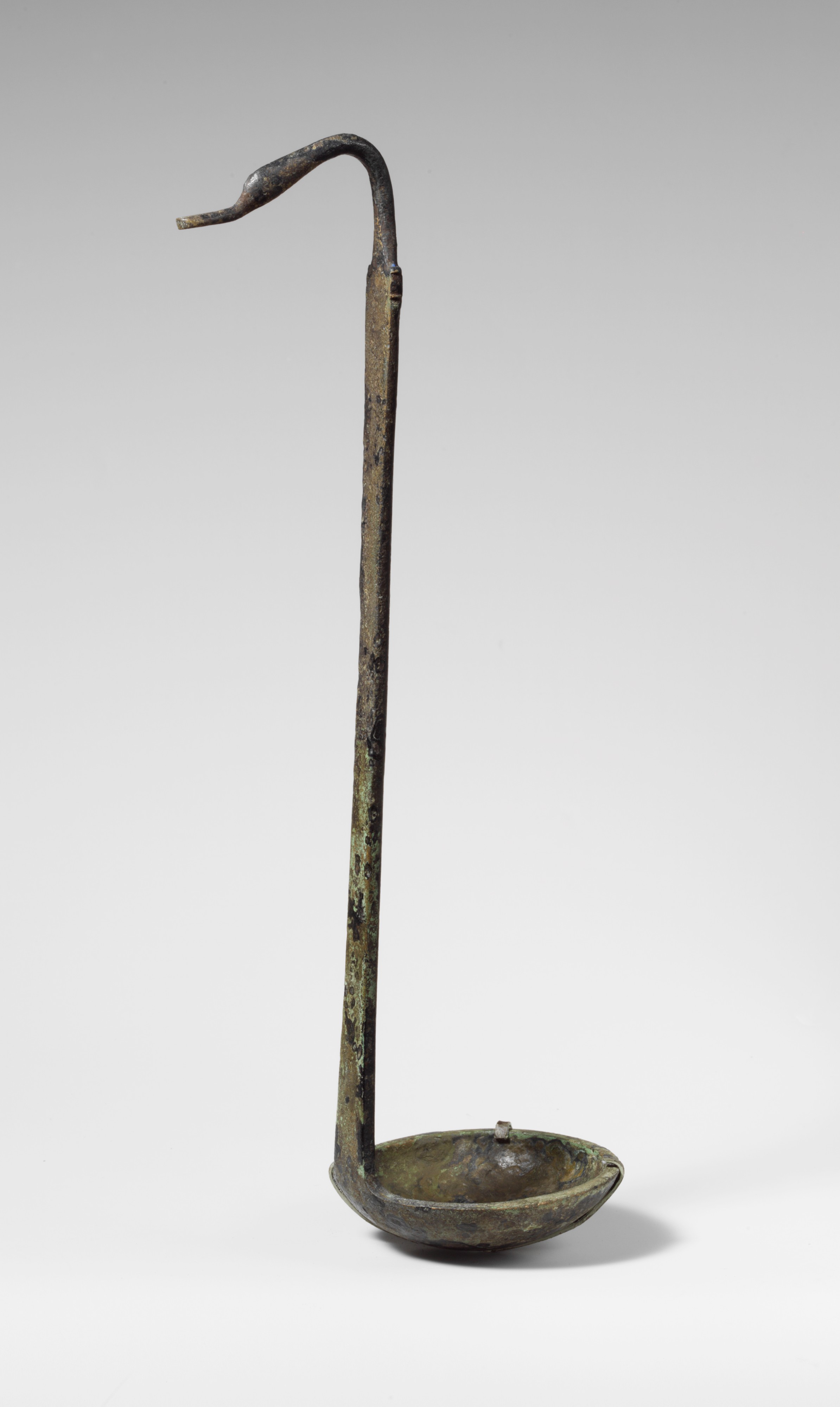
Heritage Analysis: The Etruscan Bronze Duck-Head Ladle
Introduction: A Vessel of Sacred and Secular Power
The Etruscan bronze ladle with a handle ending in a duck's head is not merely a utilitarian implement; it is a profound artifact that bridges the mundane and the divine. Crafted between the 7th and 4th centuries BCE, this object embodies the Etruscan mastery of bronze casting and their deep reverence for symbolic animals. For Katherine Fashion Lab, this ladle offers a unique lens through which to explore historical adornment, spiritual meaning, and the articulation of power—insights critical to our 2026 high-end luxury strategy. This analysis situates the ladle within our ongoing research on the “Rock in the form of a fantastic mountain” and the “Jar in the shape of bronze container (hu)”, revealing a shared DNA of transformative symbolism and cross-cultural resonance.
Historical Resonance: Connecting the Etruscan Ladle with the Fantastic Mountain and Bronze Hu
Our previous studies on the “Rock in the form of a fantastic mountain” and the “Jar in the shape of bronze container (hu)” uncovered a thematic thread: both objects, though from different cultures and materials, served as thresholds between worlds. The mountain rock, likely a Chinese scholar’s stone, was a microcosm of the sacred landscape, a conduit for spiritual contemplation. The bronze hu, a ritual vessel from the Shang or Zhou dynasty, was used for offerings, connecting the living with ancestors. The Etruscan duck-head ladle now emerges as a third node in this network—a utensil for libations, feasting, and funerary rites, where the duck’s head symbolizes transition, water, and the soul’s journey.
This correlation is not coincidental. Across these artifacts, we observe a shared language of transformation: the fantastic mountain reshapes nature into a spiritual tool; the hu transforms bronze into a sacred container; the ladle transforms a simple act of serving into a ritual of power. The duck, in Etruscan belief, was associated with the underworld and the passage of souls—much as the mountain and hu function as portals. For our 2026 luxury strategy, this suggests that heritage objects are never isolated; they form a constellation of meaning that modern luxury can tap into by emphasizing layered symbolism and cross-cultural storytelling.
Symbolic Power: The Duck as a Marker of Status and the Divine
In Etruscan society, the duck was not a trivial waterfowl. It was a creature of liminality, dwelling on water, earth, and air—a mediator between realms. Its presence on a ladle’s handle elevates the object from a mere scoop to a symbol of authority. The duck’s head, often rendered with stylized eyes and beak, would have been a tactile focus for the user, a reminder of the divine protection invoked during libations. This aligns with the Etruscan practice of haruspicy, where animal forms guided ritual interpretation.
For Katherine Fashion Lab, this symbolic power translates into design principles for high-end luxury. The duck-head motif can be reimagined as a signature emblem for limited-edition accessories or jewelry, evoking a sense of ancient prestige. Just as the Etruscan elite used such ladles to display their connection to the gods, modern luxury consumers seek objects that confer cultural capital and a sense of belonging to a timeless narrative. Our 2026 strategy should therefore prioritize iconic, animal-derived motifs that carry deep historical weight—much like the duck, the mountain, or the hu—to create products that are not just beautiful but symbolically resonant.
Historical Adornment: Craftsmanship as a Marker of Identity
The ladle’s bronze medium is itself a statement of power. Bronze was a costly material, requiring specialized metallurgy and trade networks. The Etruscans were renowned for their bronze work, and the duck-head ladle exemplifies their technical virtuosity: the handle is often cast separately and joined with precision, the duck’s head modeled with naturalistic yet stylized detail. This craftsmanship was not merely decorative; it was a marker of Etruscan identity and a tool for diplomacy and trade.
In the context of our research, this echoes the fantastic mountain’s meticulous carving and the hu’s intricate casting. All three objects demonstrate that adornment is a form of storytelling. For luxury brands, this means that materiality and technique must be foregrounded. In 2026, Katherine Fashion Lab should consider limited-run collections that highlight artisanal methods—such as lost-wax casting or hand-chasing—to replicate the ladle’s aura of exclusive mastery. The duck-head ladle teaches us that historical adornment is not about excess but about intentionality: every curve, every join, every surface tells a story of status and belief.
Spiritual Meaning: The Ladle in Etruscan Ritual and Beyond
The Etruscan duck-head ladle was likely used in libation rituals, where wine or water was poured as an offering to gods or ancestors. The duck’s head, with its beak often open as if drinking, reinforces the act of giving and receiving—a spiritual exchange. This aligns with the fantastic mountain’s role in Daoist meditation and the hu’s function in ancestral rites. All three artifacts are instruments of connection, bridging the material and spiritual worlds.
For modern luxury, this spiritual dimension is increasingly valuable. Consumers in 2026 are seeking meaning beyond materialism—they want objects that facilitate personal rituals, whether it is a moment of reflection, a celebration, or a connection to heritage. Katherine Fashion Lab can leverage this by designing ritual-inspired product lines, such as a “Libation Collection” of serving pieces or a “Meditation Set” echoing the mountain’s form. The duck-head ladle’s spiritual meaning reminds us that luxury can be a vehicle for transcendence, not just display.
2026 High-End Luxury Strategy: Synthesizing Heritage and Innovation
Drawing from this analysis, our 2026 strategy must integrate the three pillars revealed by the Etruscan ladle and its correlative artifacts:
1. Symbolic Architecture: Develop a signature motif library inspired by the duck, the fantastic mountain, and the hu. These motifs will be used across categories—from handbags to home decor—creating a cohesive visual language that signals cultural depth. For example, a “Duck-Head” clasp on a clutch or a “Mountain” pattern on silk scarves can evoke the same threshold power as the original artifacts.
2. Artisanal Storytelling: Partner with master metalworkers and carvers to produce limited-edition pieces that celebrate historical techniques. Each piece will include a digital provenance certificate linking it to the Etruscan, Chinese, or other heritage traditions. This not only justifies premium pricing but also builds emotional connection with collectors who value authenticity.
3. Ritual Experience: Launch a “Heritage Rituals” campaign that positions our products as tools for modern ceremonies—whether a daily tea ritual using a hu-inspired vessel or a dinner party featuring duck-head ladles for libations. This taps into the growing wellness and mindfulness market, while differentiating us from competitors focused solely on aesthetics.
Conclusion: The Ladle as a Blueprint for Timeless Luxury
The Etruscan bronze duck-head ladle is far more than an ancient utensil. It is a repository of symbolic power, historical adornment, and spiritual meaning—qualities that resonate deeply with our research on the fantastic mountain and the bronze hu. Together, these artifacts reveal a universal human desire to transform everyday objects into vessels of significance. For Katherine Fashion Lab, this heritage analysis provides a strategic blueprint for 2026: to create luxury that is not just consumed but experienced, understood, and revered. By honoring the duck-head ladle’s legacy, we can forge a future where heritage and innovation coexist, elevating our brand to a curator of timeless narratives.