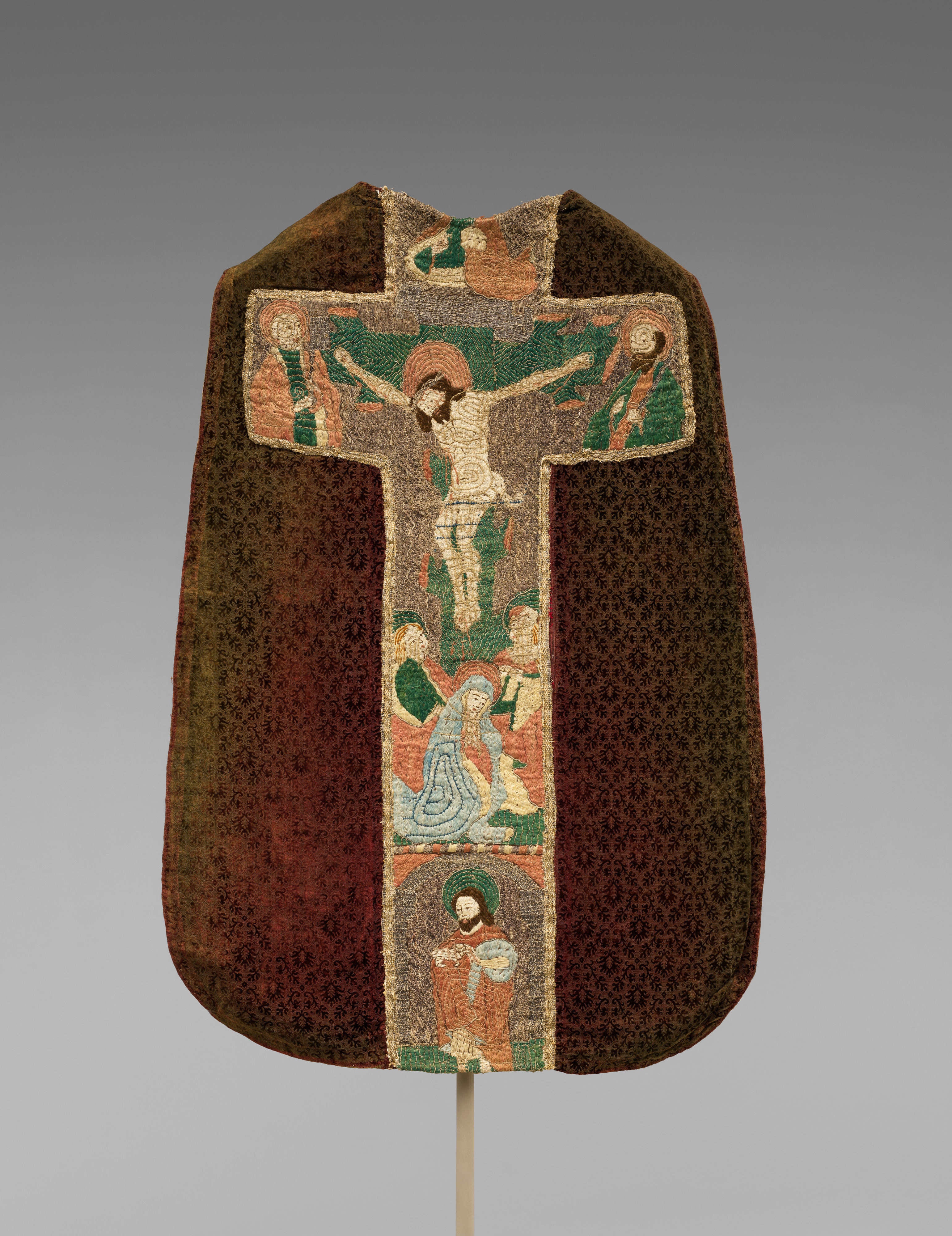
The Chasuble: A Study in Vestimentary Power and Global Heritage
Within the hallowed halls of Katherine Fashion Lab, the chasuble emerges not merely as a liturgical garment, but as a profound artifact of vestimentary power—a canvas where global heritage converges with haute couture’s most exacting standards. This standalone analysis dissects a singular piece: a chasuble crafted from velvet brocade, sourced from a lineage of artisans spanning Europe, Asia, and the Middle East. The garment, devoid of ceremonial context, becomes a pure object of study—a testament to how fabric, form, and history coalesce into a statement of authority, artistry, and timeless elegance.
Deconstructing the Silhouette: The Chasuble as Architectural Statement
The chasuble’s silhouette, traditionally a poncho-like vestment, is reimagined here as a study in controlled volume. The garment drapes from the shoulders, falling in generous, unbroken panels that converge at the center back and front. This is not a garment of restraint but of deliberate expansion. The shoulder seams are subtly padded, not for structure, but to create a slight, almost imperceptible lift that enhances the wearer’s presence. The hemline, cut on the bias, allows the velvet brocade to cascade in soft, undulating folds, mimicking the flow of ritual water. The neckline is a deep, rounded scoop, exposing the clavicle and décolletage—a daring departure from traditional high-necked designs. This exposure is not vulnerability but controlled revelation, a strategic choice that frames the face and chest as the focal points of authority. The overall silhouette is both monastic and regal; it commands space without aggression, embodying a quiet, assured dominance.
Velvet Brocade: A Material Lexicon of Global Crafts
The fabric itself is a narrative of global exchange. The base is a silk velvet, sourced from a mill in Como, Italy, renowned for its dense, plush pile that catches light with a deep, almost liquid sheen. This velvet is not uniform; it is woven with a subtle, directional nap that creates a play of shadow and highlight as the garment moves. The brocade pattern—a complex interplay of floral arabesques and geometric medallions—is woven using a supplementary weft technique that originated in the Byzantine Empire, later perfected in Safavid Persia and Mughal India. The metallic threads, a blend of gold-plated silver and copper, are hand-wound with silk in a workshop in Varanasi, India, where artisans have practiced zardozi embroidery for centuries. The pattern itself is a hybrid: the arabesques echo Ottoman rumi motifs, while the medallions reference the chintamani symbols of Central Asian textile traditions. This is not cultural appropriation but curated synthesis—a deliberate layering of heritage that speaks to the chasuble’s role as a garment of universal authority, transcending any single origin.
Color Palette: The Architecture of Light and Shadow
The color scheme is restrained yet opulent. The base velvet is a deep midnight aubergine, a hue that shifts between plum and black depending on the light. This is not a solid color but a complex blend of indigo, madder root, and iron mordants, echoing the dye traditions of the Mediterranean and South Asia. The brocade threads are burnished gold and aged silver, with the gold threads oxidized to a soft, muted luster—avoiding the garishness of new metal. The pattern’s highlights are executed in a pale celadon green, a color historically associated with jade in Chinese court dress and with the Virgin Mary in European iconography. This green is achieved through a combination of woad and weld, a dye process that requires multiple baths and careful pH control. The overall effect is one of depth rather than brightness; the chasuble absorbs light in some areas and reflects it in others, creating a visual experience that changes with the viewer’s angle and the ambient light. This is a garment designed for candlelit spaces—a nod to its ceremonial origins, now repurposed for the stark, controlled lighting of a fashion lab.
Construction and Technique: The Invisible Hand of Mastery
The chasuble’s construction is a masterclass in invisible engineering. The seams are French seams, encased to prevent fraying and to create a clean, flat interior. The shoulder seams are reinforced with a horsehair canvas interlining, cut on the bias, to provide subtle structure without stiffness. The hem is weighted with a chain of small brass beads sewn into the lining, ensuring the garment hangs with a controlled, deliberate sway. The closure is a hidden system of magnetic snaps covered in velvet, allowing the chasuble to be worn open or closed without visible hardware. The brocade pattern is matched at the center front and back seams, a painstaking process that required the fabric to be hand-cut with a single, continuous line to preserve the design’s flow. The lining is a charmeuse silk in a complementary aubergine, chosen for its slip and breathability. Every stitch is executed with a silk thread that matches the fabric’s color, making the construction nearly invisible. This is not a garment that announces its craftsmanship; it is a garment that embodies it, where the maker’s hand is present only in the perfection of the result.
Contextual Resonance: The Chasuble in a Secular Age
In removing the chasuble from its liturgical context, Katherine Fashion Lab invites a reexamination of its power. This garment, historically worn by priests and bishops to signify spiritual authority, becomes a secular symbol of intellectual and aesthetic sovereignty. The velvet brocade, with its global heritage, suggests a leader who draws wisdom from multiple cultures, not bound by dogma. The silhouette, both protective and expansive, evokes the cloak of the scholar or the mantle of the diplomat. The deep aubergine and gold speak to a refined, introspective power—a power that does not shout but resonates. This chasuble is not a costume; it is a vestment of identity for the modern connoisseur, a garment that signifies a deep engagement with history, craft, and the enduring human desire to clothe authority in beauty. It stands as a reminder that the most potent fashion is that which carries the weight of the world’s hands, woven into a single, sublime form.