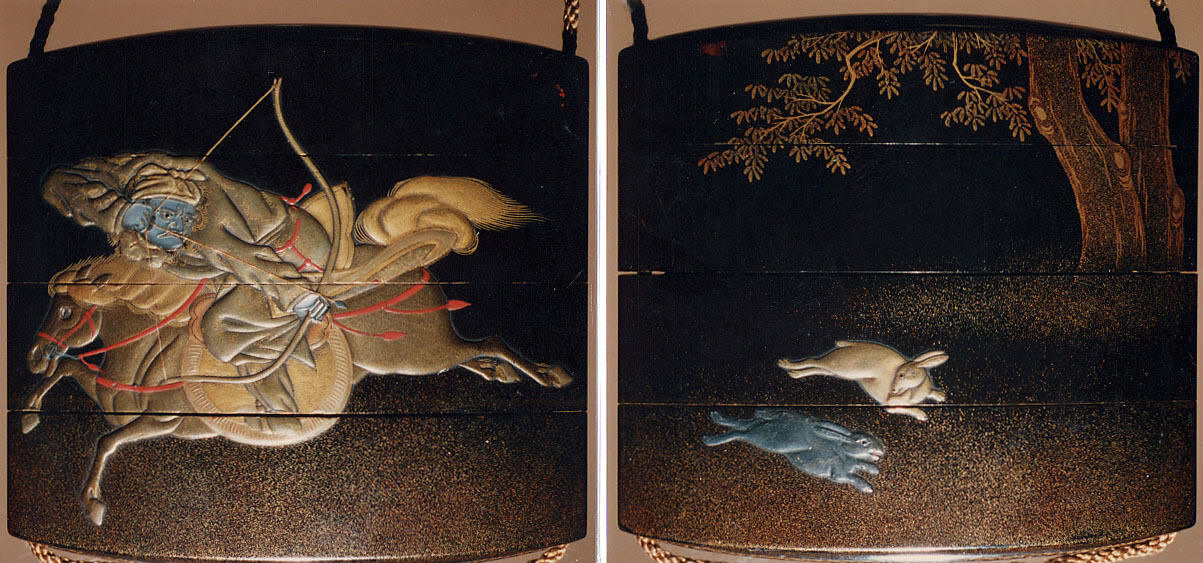
Heritage Analysis: Case (Inrō) with Design of Mounted Hunter Shooting at Hares
Introduction: The Object as Cultural Artifact and Luxury Archetype
The Case (Inrō) with Design of Mounted Hunter Shooting at Hares represents a masterwork of Edo-period Japanese craftsmanship, embodying the confluence of martial symbolism, spiritual cosmology, and aristocratic adornment. Crafted from lacquer with techniques including roiro (polished black), nashiji (sprinkled gold), hiramakie (flat gold and silver relief), togidashi (polished-out lacquer), and raden (mother-of-pearl inlay), this inrō is not merely a portable container but a statement of social rank, philosophical depth, and aesthetic mastery. The interior, finished in red lacquer and fundame (matte gold), further signals the object’s exclusivity and ritualistic value. For Katherine Fashion Lab, this artifact offers a strategic blueprint for integrating symbolic power, historical adornment, and spiritual meaning into a 2026 high-end luxury strategy that transcends transient trends.
Symbolic Power: The Hunter, the Hare, and the Hierarchy of Control
The central motif—a mounted hunter aiming at hares—is laden with layered symbolism. In Japanese visual culture, the hare (usagi) is associated with the moon, fertility, and the cyclical nature of life, while the hunter represents decisive action, mastery over nature, and the assertion of will. The horse, a symbol of nobility and speed, elevates the scene from mere hunting to a metaphor for controlled power. This tableau reflects the samurai class’s ethos: the ability to dominate chaos through discipline and precision. The use of gold and silver hiramakie to render the hunter’s armor and the horse’s tack emphasizes wealth and status, but also the spiritual authority of the warrior—a figure who mediates between the mortal and the divine through his role as protector.
For a 2026 luxury strategy, this symbolism translates into brand narratives of mastery. A high-end fashion house can adopt the “hunter” archetype as a metaphor for curatorial authority—selecting, refining, and presenting beauty with intentionality. The hare, often a trickster in folklore, suggests the elusive nature of desire, which luxury brands must capture without diminishing its mystique. Katherine Fashion Lab can leverage this tension between pursuit and attainment to craft collections that feel both aspirational and unattainable, reinforcing exclusivity through narrative depth.
Historical Adornment: The Inrō as Wearable Status System
The inrō was originally designed as a practical accessory for carrying seals, medicines, or tobacco, suspended from the obi sash via a carved netsuke. However, by the Edo period, it had evolved into a canvas for artistic expression and a marker of social identity. The choice of lacquer techniques—raden for iridescent highlights, nashiji for a textured gold ground—indicates the owner’s wealth and connoisseurship. The red lacquer interior, visible only upon opening, introduces an element of hidden opulence, a signature of aristocratic taste that values discretion over display.
This concept of layered revelation is critical for modern luxury. In 2026, consumers seek products that reward close inspection—details that unfold over time, such as intricate stitching, reversible fabrics, or concealed compartments. The inrō’s design teaches that adornment is not superficial but a system of codes understood by an elite audience. Katherine Fashion Lab can apply this principle by creating garments and accessories that reveal their craftsmanship only upon second glance, using materials like lacquer-finished leather or mother-of-pearl buttons that echo the inrō’s radiance. The fundame interior, a matte gold that catches light softly, suggests that luxury need not shout—it can whisper through texture and subtlety.
Spiritual Meaning: Lacquer as Alchemy and the Transience of Life
Lacquerware in Japan is not merely decorative; it is a spiritual medium. The process of applying urushi (lacquer sap) involves multiple layers, each cured in humid conditions, symbolizing patience, transformation, and the alchemy of turning raw sap into enduring art. The togidashi technique, where gold or silver powder is buried beneath lacquer and polished to reveal a luminous pattern, mirrors the Buddhist concept of impermanence—beauty emerges through effort and time, but remains fragile. The hunter’s pursuit of hares can be read as a memento mori: life is a chase, and death the ultimate hare.
This spiritual dimension resonates with the growing demand for mindful luxury in 2026. High-end consumers are moving away from disposable fashion toward objects that embody ritual, longevity, and ethical craftsmanship. Katherine Fashion Lab can position its collections as modern talismans, integrating symbols of protection (the hunter) and transformation (the lacquer process). The inrō’s red lacquer interior, often associated with life force and auspiciousness in Shinto and Buddhist traditions, can inspire signature linings or accent colors that connote inner vitality. By framing each piece as a spiritual artifact, the brand elevates purchase to pilgrimage.
2026 High-End Luxury Strategy: From Artifact to Archetype
To translate this heritage analysis into actionable strategy, Katherine Fashion Lab must adopt a three-pillar approach:
1. Narrative-Driven Exclusivity: The inrō’s story—a mounted hunter in a lacquer landscape—should be retold through capsule collections that reference Edo-period motifs, but with contemporary silhouettes. Limited-edition runs, each with a certificate detailing the symbolic meaning (e.g., “The Hunter’s Pursuit” for a tailored coat with hare-shaped brooches), create collectible value. Collaborations with lacquer artisans from Kyoto can produce wearable lacquer accents, such as cufflinks or belt buckles, bridging heritage and modern utility.
2. Sensory Craftsmanship: The inrō’s tactile richness—smooth roiro, gritty nashiji, cool raden—should be echoed in fabric and finish. Develop signature textures: a “nashiji silk” with gold-flecked weaving, or “togidashi leather” with polished embossing. The red lacquer interior can inspire a secret lining in all garments, visible only when the wearer turns a cuff or unzips a pocket, rewarding the discerning eye. This hidden opulence aligns with the 2026 trend toward quiet luxury.
3. Spiritual Marketing: Frame the brand as a guardian of impermanent beauty. Campaigns should emphasize the ritual of dressing—each garment as a protective layer against the chaos of modern life. Use imagery of hunters in misty landscapes, not as violent figures but as stewards of balance. Offer bespoke consultations where clients select symbols (hare, horse, moon) to be embroidered or printed, turning the purchase into a personalized talisman. This taps into the 2026 consumer’s desire for meaning over materialism.
Conclusion: The Inrō as Strategic Blueprint
The Case (Inrō) with Design of Mounted Hunter Shooting at Hares is far more than a decorative relic; it is a compressed universe of power, status, and spirituality. For Katherine Fashion Lab, its study reveals that true luxury is not about abundance but about intentionality of symbol, mastery of craft, and depth of meaning. By adopting the inrō’s principles—layered revelation, symbolic narrative, and alchemical transformation—the brand can position itself at the forefront of 2026 high-end luxury, where heritage is not a static past but a living, evolving language of distinction. The hunter’s aim is true; the hare remains elusive. That is the eternal allure of luxury.