The Poetics of Disassembly: Deconstructing Heritage Through Bobbin Lace
In the rarefied air of haute couture, where innovation often masquerades as rupture, Katherine Fashion Lab’s latest standalone study, “Fragment,” offers a profound meditation on the value of absence. At first glance, the collection appears to be an exercise in radical deconstruction—garments that seem incomplete, interrupted, or deliberately eroded. Yet upon closer examination, Fragment reveals itself as a masterclass in the tension between preservation and erasure, using the ancient craft of bobbin lace as its primary lexicon. The result is not a nostalgic retreat into the past, but a rigorous interrogation of how heritage can be reimagined as a forward-facing aesthetic language.
The Material Paradox: Bobbin Lace as Architectural Fragility
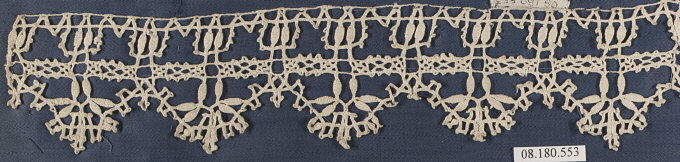
Bobbin lace, a textile technique originating in 16th-century Europe and refined across Flanders, France, and Italy, is defined by its painstaking construction: threads wound on wooden bobbins are twisted, braided, and crossed over a pillow to create intricate, openwork patterns. Historically, it symbolized wealth, patience, and feminine virtue—a craft of invisible labor. Katherine Fashion Lab subverts this narrative entirely. In Fragment, bobbin lace is not a delicate trim or a nostalgic embellishment; it is the structural foundation of the silhouette. The lab’s artisans have engineered lace panels that stand away from the body, forming rigid cages, asymmetrical collars, and skeletal bodices. The fragility of the material is paradoxically weaponized: what should be soft becomes sharp; what should be transparent becomes opaque through density of stitch.
The choice of Global Heritage as the collection’s origin point is deliberate. Rather than anchoring the lace to a single regional tradition—be it Venetian, Bruges, or Milanese—Katherine Fashion Lab synthesizes techniques from multiple cultures. The geometric precision of Maltese lace meets the floral motifs of Chantilly, while the open grids of Torchon lace interlace with the raised textures of Binche. This fusion is not a gesture of appropriation but of recontextualization: the lab treats global lace traditions as a shared vocabulary, stripping them of nationalist or romantic connotations. The fragments are not incomplete; they are deliberate lacunae that invite the viewer to fill the gaps with their own cultural memory.
Structural Semiotics: The Language of the Broken Line
The Fragment study operates on a principle of negative space. Each garment is defined as much by what is missing as by what is present. A floor-length gown might consist of a single, continuous lace panel that dissolves into a frayed edge at the hip, exposing the skin beneath. A jacket is reduced to a single sleeve and a collar, the torso left bare save for a web of thread that traces the ribs. This is not deconstruction in the manner of Rei Kawakubo or Martin Margiela, where seams are deliberately exposed and construction is laid bare. Instead, Katherine Fashion Lab’s approach is closer to archaeological reconstruction: the garments resemble artifacts that have survived a cataclysm, their original forms discernible only through the remaining fragments.
The materiality of bobbin lace becomes a metaphor for cultural memory. Just as lace is built thread by thread, heritage is accumulated through countless small acts of transmission. But Fragment argues that heritage is also inherently incomplete—subject to loss, reinterpretation, and selective preservation. The lab’s designers have deliberately introduced errors into the lace patterns: dropped stitches, asymmetrical motifs, and abrupt transitions between different lace styles. These are not mistakes but signatures of intentional rupture, reminding the wearer that tradition is not a monolith but a mosaic of fragments, each with its own history of survival and decay.
Color and Light: The Monochrome as a Neutral Canvas
In keeping with the study’s conceptual rigor, the color palette of Fragment is deliberately restrained: ivory, ecru, charcoal, and black. This monochrome approach serves two purposes. First, it strips away the distraction of color, forcing the eye to focus on the structure of the lace—the interplay of positive and negative space, the rhythm of threads, the way light passes through openwork. Second, it references the historical reality of bobbin lace, which was traditionally worked in undyed linen or silk. By rejecting contemporary color trends, Katherine Fashion Lab anchors the collection in the material’s original context, even as it reimagines its form.
The interplay of light is central to the garments’ visual impact. In a piece titled “Lacunae”, a bodice constructed from multiple layers of black lace creates a moiré effect, where overlapping patterns generate shifting optical illusions. In another, “Reliquary,” a skirt of ivory lace is lined with a sheer metallic organza that catches the light, making the lace appear to float away from the body. These effects are not merely decorative; they underscore the ephemerality of the fragment. The garments are designed to be seen in motion, their patterns dissolving and reforming with each step, mirroring the instability of cultural memory itself.
Silhouette and Body: The Armor of Absence
The silhouettes in Fragment are architectural yet ethereal. Shoulders are exaggerated with lace that fans out like moth wings, while waists are cinched by corsets made entirely of knotted thread, their rigidity belying the material’s delicacy. The lab has pioneered a technique called “tension weaving,” where the lace is starched and molded over forms, then heat-set to hold its shape. The result is a garment that stands on its own, a self-supporting structure that does not rely on the body for its form. This autonomy is a radical statement: the fragment is not a remnant of a whole but a complete entity in its own right.
Yet the body is never fully absent. The lab’s designs often leave key areas—the back, the décolletage, the arms—exposed, creating a dialogue between the fragile lace and the fragile skin. This juxtaposition elevates the wearer from passive mannequin to active participant. The body becomes the ground against which the fragment is read, its curves and movements completing the visual sentence that the lace begins. In this sense, Fragment is not a collection of garments but a series of incomplete sentences, each requiring a human presence to be fully legible.
Conclusion: Heritage as a Living Fragment
Katherine Fashion Lab’s Fragment is a landmark study in how couture can engage with heritage without falling into nostalgia or pastiche. By centering bobbin lace—a craft often dismissed as obsolete—the lab demonstrates that tradition is not a fixed object to be preserved in a museum, but a dynamic language that can be spoken anew. The fragments are not signs of decay but of potential: each broken line, each missing stitch, each abrupt transition is an invitation to imagine what might have been, and what might yet be. In a fashion landscape increasingly dominated by fast-paced digital consumption, Fragment asks us to slow down, to look closely, and to find beauty in the incomplete. It is a powerful reminder that the most enduring heritage is not the one that remains intact, but the one that dares to be broken and rebuilt.