Fragment as Form: Deconstructing Heritage in Bobbin Lace
In the rarefied air of haute couture, where garments often aspire to monumentality, Katherine Fashion Lab’s latest standalone study, Fragment, offers a deliberate counter-narrative. This is not a collection of complete, polished silhouettes, but an intellectual excavation of the partial—the broken, the remnant, the unfinished. Anchored in the materiality of bobbin lace and drawing from a global heritage of textile traditions, Fragment challenges the very definition of luxury and permanence in fashion. It posits that the most profound narrative is not found in the whole, but in the eloquent silence of the missing piece.
The Material Paradox: Bobbin Lace as Architectural Ruin
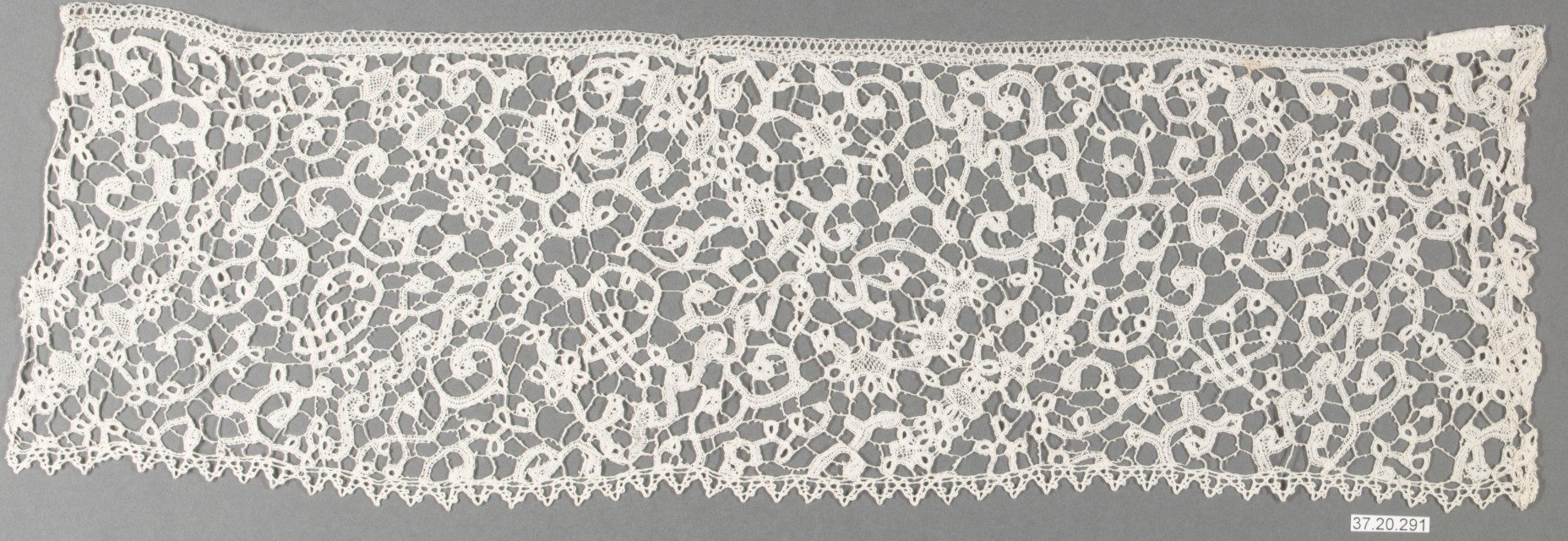
Bobbin lace, historically a pinnacle of European craftsmanship from the 16th century onward, is a fabric of immense precision and fragility. Its creation—a painstaking process of twisting and crossing dozens of threads wound on bobbins over a pillow—produces a net-like structure of intricate patterns, often floral or geometric. In Fragment, Katherine Fashion Lab subverts this delicate tradition. The lace is not presented as a pristine, finished textile. Instead, it is treated as an archaeological artifact. The garments appear as if unearthed from a forgotten archive, their edges frayed, their patterns interrupted by deliberate voids.
This is not a sign of decay, but of curated incompleteness. By breaking the lace’s continuity, the Lab transforms it from a decorative surface into a structural skeleton. The negative space—the gaps where threads have been removed or left untied—becomes a primary design element. The eye is drawn not to the pattern, but to the absence of pattern. This paradox is central to the collection’s intellectual depth: the fragment is more complete than the whole because it demands active interpretation from the viewer.
Global Heritage: A Tapestry of Broken Threads
The title Fragment is a deliberate homage to the concept of global heritage as a mosaic of disparate, often lost, traditions. Katherine Fashion Lab’s research for this study spans from the bobbin lace centers of Flanders and Venice to the needle-lace variants of the Ottoman Empire and the intricate threadwork of Latin American deshilado. However, the piece does not attempt to synthesize these into a harmonious whole. Instead, it presents them as fragments—shards of a global textile memory that can never be fully reconstructed.
Each garment in the study carries a specific historical echo. A bodice might evoke the geometric precision of 17th-century Venetian punto in aria, but its hem is left raw, suggesting a sudden interruption in the weaving process. A sleeve references the floral motifs of 19th-century Belgian lace, yet the flowers are only half-formed, their petals dissolving into loose threads. This is a powerful commentary on the ephemerality of cultural heritage. In an era of fast fashion and digital reproduction, Fragment reminds us that traditional knowledge is itself a fragment—a surviving piece of a once-living practice that is now often relegated to museums or tourist souvenirs.
Constructing the Incomplete: Technique and Texture
From a technical standpoint, Fragment is a masterclass in deconstructive couture. The bobbin lace is not merely cut or distressed; it is re-woven with intentional gaps. The Lab’s artisans have manipulated the tension of the threads to create areas of extreme density next to areas of near-transparency. In some sections, the lace is backed with a fine silk organza in a contrasting hue—pale ivory against deep charcoal—so that the voids read as shadows rather than holes. This creates a chiaroscuro effect, where the garment appears to be in a state of perpetual dissolution and reformation.
The silhouette is equally fragmented. A single shoulder is draped in a cascade of lace that stops abruptly at the collarbone, leaving the opposite side bare. A skirt is composed of overlapping panels of lace that do not align, creating a staggered, asymmetrical hem. The effect is of a garment that is in process—a moment frozen between creation and decay. This aligns with the Lab’s philosophy that couture should not be a static object, but a dynamic exploration of materials and time.
The Standalone Study: A Meditation on Memory
As a standalone study, Fragment exists outside the commercial imperatives of a seasonal collection. It is a research project, a philosophical statement, and a sensory experience. The decision to focus exclusively on bobbin lace—a material that is notoriously slow to produce and difficult to repair—underscores the value of slowness in a hyper-accelerated world. Each piece in the study is a meditation on the labor of hands, the patience of generations, and the violence of forgetting.
There is also a deeply personal layer here. The fragment is a metaphor for memory itself—how we recall the past not as a continuous film, but as a series of vivid, broken images. The missing sections of the lace represent the gaps in our own histories: the stories we never learned, the techniques that died with their makers, the objects that were lost or destroyed. By wearing or viewing these fragments, the audience is invited to fill in the blanks with their own imagination. The garment becomes a collaborative act between the designer, the wearer, and the observer.
Conclusion: The Eloquence of the Broken
Katherine Fashion Lab’s Fragment is a quiet revolution in couture. It rejects the tyranny of perfection and the fetishization of the pristine. Instead, it finds beauty in the vulnerable, the incomplete, and the transient. By elevating bobbin lace—a material often dismissed as old-fashioned or overly ornamental—to the status of conceptual architecture, the Lab proves that heritage is not a relic to be preserved under glass, but a living language that can be spoken in new, fractured dialects.
In Fragment, the missing piece is not a flaw. It is the most important part. It is the space where history breathes, where culture speaks, and where the future of couture might just begin.