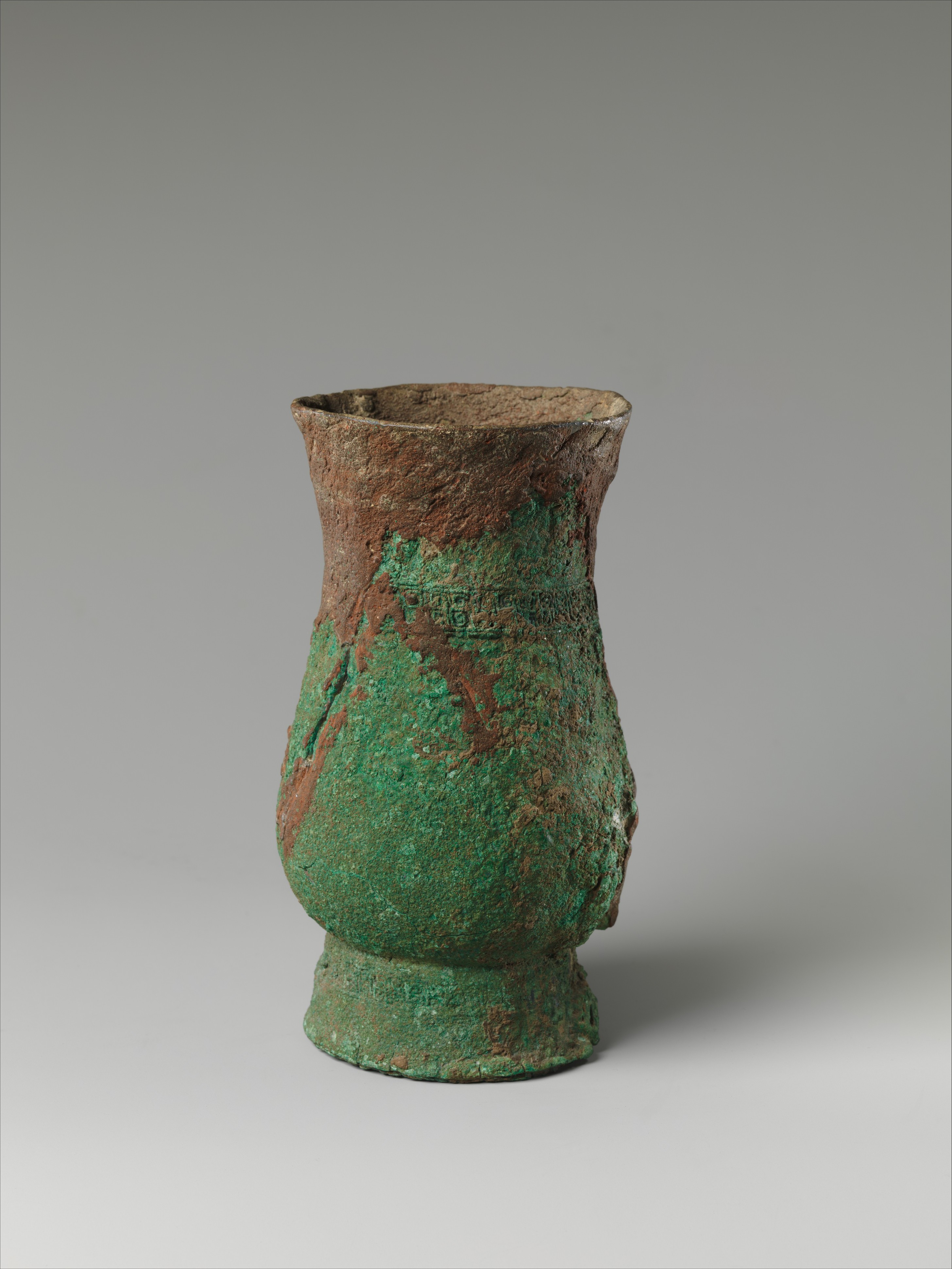
Heritage Analysis: The Ritual Wine Cup (Zhi) – Bronze Vessel of Celestial Mandate
Katherine Fashion Lab is pleased to present this heritage analysis of the Chinese Ritual Wine Cup (Zhi), a bronze vessel from the late Shang to early Zhou dynasties (circa 1200–900 BCE). This object, originally used in sacred ceremonies to offer fermented millet wine to ancestors and deities, holds profound resonance with our ongoing study of the Rock in the form of a fantastic mountain and the Jar in the shape of bronze container (hu). While these three artifacts appear disparate in form and function—a naturalistic mountain, a ritual jar, and a drinking cup—they collectively reveal a core narrative: the transformation of raw material into symbolic power, the encoding of spiritual meaning through adornment, and the strategic use of heritage to command authority in both ancient courts and modern luxury markets. For our 2026 high-end luxury strategy, the Zhi offers a blueprint for ritualized exclusivity, material transcendence, and narrative-driven design.
Symbolic Power: The Vessel as a Conduit of Authority
The Zhi was not merely a functional cup; it was a tool of political and spiritual sovereignty. In Shang and Zhou ritual practice, the act of drinking wine from a bronze Zhi was a performative gesture that aligned the ruler with celestial forces. The vessel’s form—often a slender, trumpet-shaped mouth, a rounded body, and a flared foot—was designed to elevate the liquid within, symbolizing the ascent of prayers to heaven. The bronze medium itself, cast through a complex lost-wax process, required immense resources and technical mastery, making each Zhi a status object reserved for the elite.
This symbolic power is directly analogous to the Rock in the form of a fantastic mountain, which similarly transformed a natural element (stone) into a microcosm of cosmic order. Both objects function as mnemonic devices—the mountain evokes the sacred peaks where gods dwell, while the Zhi evokes the ancestral realm. For Katherine Fashion Lab, this suggests a 2026 strategy of symbolic anchoring: luxury products should not merely be beautiful but must serve as talismans of status, lineage, or spiritual alignment. Our future collections can draw on the Zhi’s principle of functional transcendence—creating items that are at once usable and charged with intangible meaning.
Historical Adornment: The Grammar of Surface Decoration
The Zhi’s surface is a lexicon of power. Common motifs include the taotie (a stylized animal mask), dragons, and geometric spirals—each carrying specific protective and auspicious connotations. The taotie, with its wide eyes and symmetrical jaws, was believed to ward off evil spirits, while dragons symbolized rain, fertility, and imperial authority. These decorations were not arbitrary; they followed a strict visual grammar that communicated the vessel’s ritual function and the owner’s rank.
In comparison, the Jar in the shape of bronze container (hu) exhibits a similar adherence to formal conventions, but with a focus on volume and containment. The hu jar’s broad shoulders and narrow neck mirror the Zhi’s flared mouth in their emphasis on controlled release—of wine, of prayers, of power. The Rock in the form of a fantastic mountain, by contrast, uses irregular, naturalistic textures to evoke spontaneity and chaos, yet its placement in a scholar’s study imposed a human order onto nature. Together, these artifacts demonstrate that historical adornment is a strategic language: every line, curve, and motif is a deliberate signifier.
For our 2026 high-end luxury strategy, this insight is critical. Adornment must be semiotically rich—each decorative element should tell a story of heritage, protection, or aspiration. We can develop a “Bronze Lexicon” design system: using cast-metal finishes, embossed animal motifs, and geometric patterns that reference the Zhi’s grammar, but reinterpreted in contemporary materials such as matte-finished titanium, liquid silver, or resin with bronze patina. This ensures that our products carry the weight of history while remaining forward-facing.
Spiritual Meaning: The Vessel as a Bridge Between Worlds
At its core, the Zhi was a sacred intermediary. In Shang ritual, the wine offered in the Zhi was believed to intoxicate ancestors, making them receptive to petitions for prosperity, victory, or harvest. The act of pouring and drinking was a liminal practice, blurring the boundary between the living and the dead. The vessel’s shape—often with a narrow neck to slow the flow of wine—heightened the sense of ritual tension and anticipation.
This spiritual dimension is echoed in the Rock in the form of a fantastic mountain, which served as a meditative focus for Daoist or Confucian scholars, a portal to the cosmic landscape. The Jar in the shape of bronze container (hu) was similarly used in ancestral offerings, its sealed form suggesting containment of sacred essence. All three objects are threshold artifacts—they exist at the intersection of material and immaterial, human and divine.
For modern luxury consumers, this spiritual meaning translates into a desire for authenticity and transcendence. Our 2026 strategy should position Katherine Fashion Lab products as ritual objects for the secular age—items that facilitate personal transformation, mindfulness, or connection to legacy. Limited-edition Zhi-inspired wine cups, for example, could be sold as part of a “Ceremony of Legacy” set, complete with a narrative card explaining the vessel’s history and the user’s role in continuing its story. This elevates a simple product into a rite of passage.
2026 High-End Luxury Strategy: The Bronze Imperative
Synthesizing the Zhi’s heritage with our broader study, we propose a three-pillar strategy for 2026:
1. Material Alchemy
Bronze was the ultimate luxury material of its era—rare, durable, and imbued with spiritual power. For 2026, we will develop a signature material line called “Patina Noir”: a treated bronze alloy that ages gracefully, developing a unique green or brown patina over time. This aligns with the Zhi’s philosophy of material transformation—just as ancient bronze vessels were buried and reborn through oxidation, our products will gain value and beauty with age. This can be applied to limited-edition jewelry, tableware, and accessories.
2. Narrative Exclusivity
The Zhi was not mass-produced; each was a unique commission for a specific ritual. Our 2026 collections will adopt a “commission-only” model for select pieces, where clients work with our design team to imbue their product with personal symbolism—a family crest, a protective animal, or a geometric pattern derived from their own heritage. This mirrors the Zhi’s role as a personalized conduit of power.
3. Ritualized Commerce
Borrowing from the Zhi’s ceremonial use, we will introduce “The Pouring Ceremony” as a retail experience. When a client purchases a Zhi-inspired piece, they are invited to a private event where they pour a symbolic liquid (such as tea or sake) into the vessel while a curator narrates the object’s history. This transforms the transaction into a rite of connection, reinforcing brand loyalty and emotional attachment.
Conclusion: The DNA of Heritage
The Ritual Wine Cup (Zhi) is not a static relic but a living template for how objects can command symbolic power, encode spiritual meaning, and anchor historical memory. In concert with the Rock in the form of a fantastic mountain and the Jar in the shape of bronze container (hu), it reveals a universal heritage DNA: the drive to transform raw material into a vessel of authority, to adorn it with a grammar of significance, and to use it as a bridge between the mundane and the sacred. For Katherine Fashion Lab, this is the foundation of a 2026 luxury strategy that is not merely fashionable but timeless—a strategy that treats every product as a ritual object, every sale as a ceremony, and every client as a custodian of heritage.