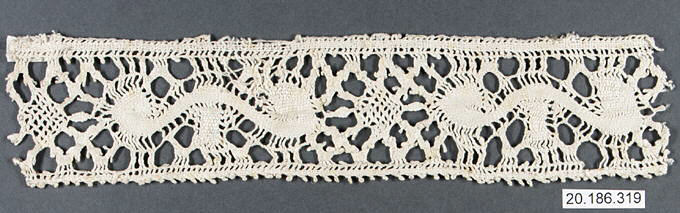
The Art of Insertion: Bobbin Lace as a Couture Narrative of Global Heritage
In the rarefied world of haute couture, where fabric is not merely material but a vessel for cultural memory, Katherine Fashion Lab’s standalone study of Insertion emerges as a masterclass in textile anthropology and design precision. This analysis dissects how bobbin lace—a technique rooted in centuries of European craftsmanship—is recontextualized through a global heritage lens, transforming a delicate, handcrafted element into a structural and conceptual cornerstone of contemporary couture. The subject, Insertion, refers not only to the physical act of embedding lace within garment architecture but also to the philosophical insertion of diverse cultural narratives into a singular, cohesive design language.
Materiality and Technique: Bobbin Lace as a Medium of Precision
Bobbin lace, traditionally associated with regions such as Flanders, Venice, and the English Midlands, is a labor-intensive technique requiring the interlacing of threads wound on bobbins, pinned to a pillow, and manipulated into intricate patterns. Katherine Fashion Lab elevates this craft from decorative trim to a primary structural element. In the standalone study, bobbin lace is not applied as an overlay but inserted into the garment’s foundational construction—seamed between panels of silk organza, molded into three-dimensional silhouettes, or used as a transparent bridge connecting opaque textiles. This approach demands an unprecedented level of engineering: each lace motif must be calibrated to the garment’s drape, tension, and movement, ensuring that the insertion does not disrupt but rather enhances the wearer’s form.
The lab’s choice of bobbin lace is strategic. Its open, lattice-like structure offers a paradoxical combination of fragility and strength. When inserted into a bodice, for instance, the lace creates a visual rhythm of negative space, drawing the eye to the body’s natural contours while maintaining structural integrity through reinforced thread counts. The material’s heritage—rooted in manual dexterity and patience—becomes a silent commentary on the value of slowness in an era of mass production. Each insertion is a deliberate act, a stitch in time that connects the wearer to generations of lacemakers whose hands once worked under candlelight.
Global Heritage: A Tapestry of Cultural Insertions
While bobbin lace is historically European, Katherine Fashion Lab’s study repositions it within a global heritage framework. The term “Insertion” here expands to encompass the incorporation of motifs, techniques, and symbolic languages from diverse cultures. The lab’s designers have meticulously studied lace traditions from across the world—from the needle lace of China (known for its floral symbolism) to the geometric patterns of Mexican tenango—and fused them with European bobbin lace methods. The result is a hybrid textile that speaks to a shared human desire for ornamentation and storytelling.
For example, one garment in the study features a bobbin lace panel that echoes the mudéjar geometric patterns of Islamic Spain, inserted into a silhouette inspired by the Japanese kimono. This cross-cultural insertion is not mere pastiche; it is a scholarly dialogue. The lab’s research notes reveal that the lace’s thread tension was adjusted to mimic the crispness of Japanese sashiko stitching, while the pattern’s symmetry pays homage to Andalusian tilework. Such details underscore the lab’s commitment to authenticity: each insertion is a respectful translation, not a appropriation, of global heritage.
Furthermore, the study acknowledges the role of migration and diaspora in shaping lace traditions. Bobbin lace traveled to the Americas via Spanish and Portuguese colonizers, where it merged with Indigenous weaving techniques. Katherine Fashion Lab’s collection includes a piece where bobbin lace is inserted into a huipil-inspired tunic, using cotton threads sourced from Oaxaca. This deliberate material choice inserts a narrative of resilience—a thread that connects colonial histories to contemporary artisan economies.
Structural Innovation: Insertion as Architectural Principle
In the context of standalone study, Insertion is not merely decorative but architectural. Katherine Fashion Lab treats the garment as a built environment, where bobbin lace functions as a tensile membrane or a load-bearing lattice. The lab’s designers have developed a proprietary method of “negative-space insertion,” where lace is placed within cutouts of heavier fabrics, creating a visual and physical interplay between solid and void. This technique requires precise pattern engineering: the lace must be stabilized with a temporary backing that is later removed, leaving only the threadwork to support the garment’s shape.
A standout example is a corseted evening gown where bobbin lace is inserted along the side seams and across the back, forming a skeletal structure that mimics the human ribcage. The lace’s floral motifs—roses and lilies—are scaled to echo the curvature of the spine, creating a biomorphic effect. The insertion is not hidden; it is celebrated, with the lace acting as a second skin that breathes with the wearer. This approach challenges traditional distinctions between understructure and exterior design, proposing that insertion can be both foundational and expressive.
The lab also experiments with layered insertions, where multiple lace panels are stacked at varying depths to create a moiré effect. This technique, inspired by the optical illusions of op art, requires precise thread tension and color gradation. The result is a garment that shifts in appearance as the wearer moves—a kinetic insertion of light and shadow. Such innovations place Katherine Fashion Lab at the vanguard of textile engineering, where heritage craft meets computational design.
Conceptual Depth: Insertion as Cultural Commentary
Beyond technique, the standalone study uses Insertion as a metaphor for the integration of marginalized histories into mainstream fashion. Bobbin lace, once the domain of rural women and monastic communities, is often dismissed as quaint or obsolete. By inserting it into high-fashion silhouettes, Katherine Fashion Lab reclaims this craft as a site of intellectual and aesthetic rigor. The lab’s design philosophy posits that every insertion is an act of preservation—a way to embed endangered skills into the living fabric of contemporary culture.
This is particularly evident in the study’s “Archive Insertion” series, where vintage bobbin lace fragments from European museums are digitally scanned and reinterpreted into new patterns. The original lace’s imperfections—a dropped stitch, a slight asymmetry—are preserved as markers of human touch. These fragments are then inserted into garments alongside modern materials like laser-cut leather, creating a dialogue between past and present. The insertion becomes a temporal bridge, allowing the wearer to inhabit multiple eras simultaneously.
Moreover, the study addresses the ethical dimensions of insertion. Katherine Fashion Lab collaborates directly with lacemaking cooperatives in Burano, Italy, and Idrija, Slovenia, ensuring that the insertion of their work into global fashion markets is equitable. The lab’s supply chain is transparent, with each lace panel bearing a certification of origin. This ethical insertion respects the labor and lineage of the artisans, transforming the garment into a document of fair trade.
Conclusion: The Future of Insertion in Couture
Katherine Fashion Lab’s standalone study of Insertion reimagines bobbin lace as a dynamic, cross-cultural medium that transcends its historical confines. By treating insertion as both a technical and conceptual act, the lab demonstrates that couture can be a site of cultural synthesis, architectural innovation, and ethical engagement. The bobbin lace, in its delicate strength, becomes a metaphor for the threads that connect us—across borders, eras, and artistic disciplines. As the fashion industry grapples with questions of heritage and sustainability, this study offers a blueprint: insert the past into the present with precision, respect, and daring creativity. The result is not merely clothing, but a woven world of meaning.