Heritage Analysis: Woman's Rank Badge with Crane
Introduction: The Object as Strategic Asset
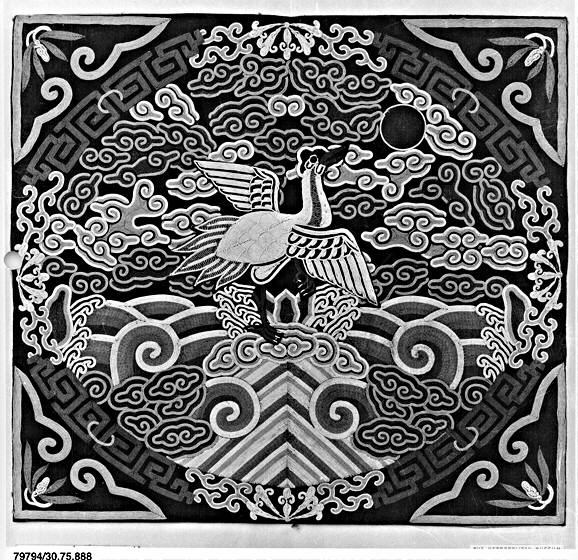
The Woman's Rank Badge with Crane, a Chinese ceremonial textile dating from the late Qing dynasty (1644–1912), represents a pinnacle of symbolic power, historical adornment, and spiritual meaning. Crafted in silk on silk, this badge—known as a bufang or mandarin square—was worn by high-ranking women to signify their husband’s official position within the imperial bureaucracy. For Katherine Fashion Lab, this artifact offers a rich strategic foundation for a 2026 high-end luxury strategy, leveraging its cultural resonance to create narratives of exclusivity, authority, and transcendence. This analysis examines the badge’s heritage through the lenses of symbolism, adornment, spirituality, and commercial application, providing actionable insights for luxury brand positioning.
Symbolic Power: The Crane as Imperial Authority
The crane (he in Chinese) is a central motif in Chinese iconography, representing longevity, wisdom, and celestial transcendence. In the context of the rank badge, the crane specifically denoted the first-rank civil official—the highest attainable status in the imperial hierarchy. For a woman, wearing this badge was not merely ornamental; it was a declaration of her husband’s proximity to the emperor and, by extension, her own elevated social standing. The crane’s symbolism extends beyond earthly power: it is often depicted in flight toward the sun, a metaphor for spiritual ascent and moral purity. This dual significance—earthly authority and spiritual aspiration—creates a layered narrative that Katherine Fashion Lab can harness for a 2026 luxury line. By aligning the crane with themes of timeless leadership and ethical transcendence, the brand can position its products as symbols of both status and inner virtue, appealing to discerning consumers who seek meaning beyond material wealth.
Historical Adornment: The Art of Rank and Identity
The Woman’s Rank Badge with Crane exemplifies the intricate craftsmanship of Chinese silk embroidery, a technique that required months of labor by skilled artisans. The badge was typically sewn onto a surcoat (pufu) worn during formal court ceremonies, with the crane depicted against a backdrop of auspicious clouds, waves, and mountains—elements that reinforced the wearer’s connection to cosmic order. The use of silk on silk (often with gold thread accents) was a deliberate choice: silk was a luxury material reserved for the elite, and its sheen conveyed wealth and refinement. Historically, these badges were regulated by sumptuary laws, ensuring that only those of appropriate rank could display specific motifs. This exclusivity is a powerful precedent for Katherine Fashion Lab’s 2026 strategy. By adopting a limited-edition or bespoke approach—perhaps through a “Rank Collection” where each piece is numbered and tied to a specific virtue or status narrative—the brand can evoke the same sense of scarcity and privilege. The historical practice of adornment as identity also suggests a modern application: customizable elements (e.g., interchangeable crane motifs or color variants) that allow clients to project their own personal or professional achievements.
Spiritual Meaning: Transcendence and Cosmic Harmony
Beyond its political function, the crane badge carries profound spiritual meaning rooted in Daoist and Confucian philosophy. The crane is a symbol of immortality and harmony between heaven and earth. In Daoism, it is the steed of immortals, representing the soul’s journey toward enlightenment. For women in imperial China, wearing this badge was also a form of protective adornment: the crane’s association with longevity was believed to shield the wearer from misfortune and ensure a virtuous legacy. This spiritual dimension aligns with the 2026 luxury consumer’s growing demand for mindfulness and purpose-driven consumption. Katherine Fashion Lab can integrate this by framing the crane as a talisman of inner strength—a motif that connects the wearer to centuries of wisdom and cosmic balance. A 2026 strategy might include ritualized storytelling in marketing materials, such as a short film or digital experience that explores the crane’s journey from earthly rank to celestial flight. Additionally, the brand could partner with contemporary artisans to create heirloom pieces that incorporate traditional embroidery techniques, reinforcing the idea that each garment is a vessel for spiritual meaning.
2026 High-End Luxury Strategy: Heritage as Competitive Advantage
For Katherine Fashion Lab, the Woman’s Rank Badge with Crane is not merely a historical artifact but a strategic blueprint for differentiation in a crowded luxury market. The 2026 high-end luxury landscape will be defined by authenticity, cultural intelligence, and experiential exclusivity. The brand can leverage the crane badge’s heritage in three key areas:
Product Design and Craftsmanship
Adopting the silk-on-silk medium as a signature material for a limited capsule collection. Each piece—whether a tailored jacket, evening gown, or accessory—should feature hand-embroidered crane motifs in gold, silver, or pearl threads. The embroidery can be executed by master artisans trained in Suzhou-style techniques, ensuring authenticity and rarity. The collection could be named “The Celestial Rank” to evoke the badge’s imperial origins while appealing to modern aspirations for leadership and grace.
Brand Narrative and Client Engagement
Developing a heritage-driven marketing campaign that positions the crane as a symbol of quiet power and timeless elegance. This could include a private exhibition of historical Chinese rank badges at flagship stores, accompanied by curator-led talks on symbolism and craftsmanship. For VIP clients, offer a bespoke “Rank” service where they select a crane motif (e.g., a crane in flight for ambition, or a crane perched on a rock for stability) to be embroidered onto their garment, creating a personalized narrative of status and spirituality.
Strategic Partnerships and Cultural Authority
Collaborating with museums, cultural institutions, or Chinese heritage foundations to co-create a limited-edition line that supports the preservation of silk embroidery skills. This partnership would lend academic credibility and ethical resonance to the brand, differentiating it from competitors who merely borrow motifs without context. Additionally, a digital NFT companion could accompany each physical piece, documenting its provenance, craftsmanship, and symbolic meaning—appealing to tech-savvy luxury consumers who value digital ownership and storytelling.
Conclusion: From Historical Adornment to Future Luxury
The Woman’s Rank Badge with Crane is a masterclass in symbolic power, historical adornment, and spiritual meaning. For Katherine Fashion Lab, it offers a clear path to a 2026 high-end luxury strategy that prioritizes cultural depth, artisanal excellence, and emotional resonance. By honoring the badge’s legacy—its crane as a bridge between earthly rank and celestial transcendence—the brand can create products that are not just worn, but cherished as legacies. In an era where luxury consumers seek meaning over materialism, the crane badge reminds us that true status is not declared, but embodied. Katherine Fashion Lab has the opportunity to lead this transformation, one embroidered thread at a time.