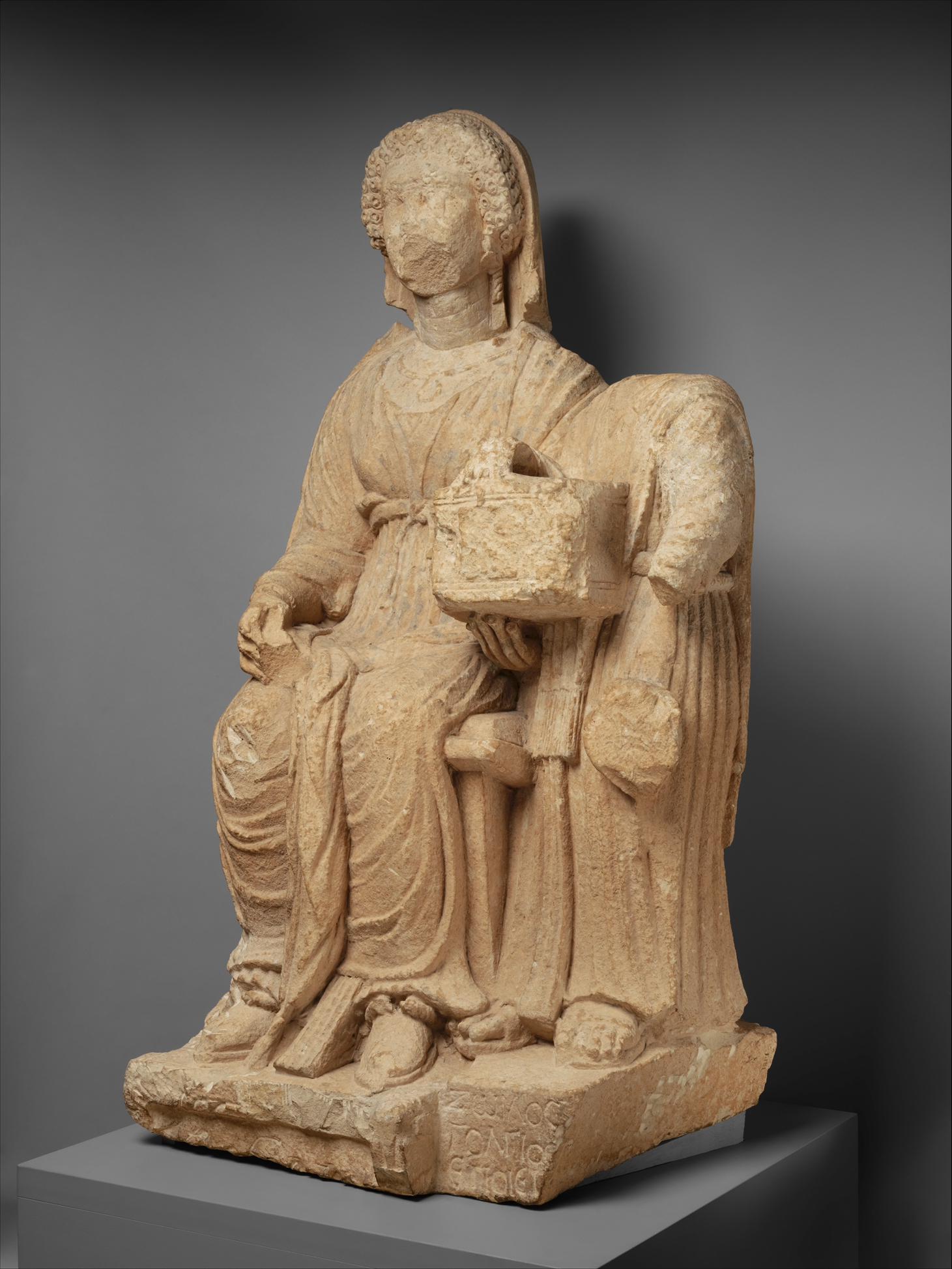
Echoes of Eternity: The Limestone Funerary Monument of a Woman
In the hallowed corridors of ancient Cypriot artistry, few artifacts speak with the quiet eloquence of the limestone funerary monument of a woman. This standalone study, a relic from Roman-era Cyprus, transcends its archaeological context to offer a profound dialogue on identity, memory, and the materiality of mourning. For Katherine Fashion Lab, this piece is not merely a historical object but a masterclass in the semiotics of adornment, the politics of preservation, and the enduring human desire to crystallize presence in the face of absence.
Material as Metaphor: Limestone’s Narrative of Permanence
The choice of limestone as the medium is neither incidental nor merely practical. In the Cypriot landscape, limestone is the very bedrock of the island—a sedimentary, porous stone that bears the imprints of time, water, and wind. For the Romans, who inherited and adapted Hellenistic funerary traditions, limestone offered a paradox: it is both durable and vulnerable. It can withstand centuries yet erodes under the gentlest rain. This duality mirrors the funerary monument’s purpose—to preserve the memory of the deceased while acknowledging the inevitable decay of the physical form.
From a couture perspective, limestone is the ultimate textile of eternity. Unlike marble, which suggests cold, unyielding perfection, limestone retains a tactile warmth, a granular softness that invites touch. The monument’s surface, when viewed under raking light, reveals the subtle striations of its geological birth—a natural jacquard of time. Katherine Fashion Lab interprets this as a lesson in material honesty: the finest garments do not hide their origins but celebrate them. A couture gown in raw silk or hand-loomed linen echoes this ethos, where the fabric’s imperfections become its signature.
The Iconography of Adornment: Hair, Veils, and Social Cartography
The woman’s portrait, carved in high relief, is a sophisticated exercise in visual semiotics. Her hair, meticulously rendered in undulating waves, is not a mere coiffure but a statement of status and cultural allegiance. In Roman Cyprus, hairstyles were as codified as any contemporary fashion house’s signature silhouette. The intricate braids and pinned curls signal a woman of means, likely a member of the Hellenized elite who balanced local Cypriot traditions with Roman imperial aesthetics. The hair is a cartography of identity, mapping her place within a complex social hierarchy.
Notice the absence of a veil. In many Roman funerary portraits, veils denote matronly virtue or piety. Here, the exposed hair suggests a different narrative—perhaps a woman who wielded agency, whose public persona was as important as her private devotion. This deliberate choice in representation mirrors the modern couture designer’s decision to reveal or conceal. A bare shoulder, a daring neckline, or a sculptural headpiece can speak volumes about the wearer’s self-conception. The monument teaches us that adornment is never neutral; it is a language of power, memory, and resistance.
Drapery and the Architecture of the Body
The figure’s garment, a chiton with a himation draped over the left shoulder, is a study in textile geometry. The folds are not random but follow the body’s contours with mathematical precision. The sculptor understood that fabric is an architectural element—it can emphasize, conceal, or transform the human form. The vertical folds of the chiton elongate the torso, lending the figure a solemn, pillar-like stability. The himation, cascading in diagonal pleats, creates a counterpoint of movement, as if caught in a gentle breeze.
For Katherine Fashion Lab, this drapery is a prototype of structured fluidity. The interplay between rigid and flowing lines is the hallmark of haute couture. A gown by a master atelier achieves the same effect: the bodice, boned and structured, supports the body; the skirt, in silk charmeuse or organza, moves with an independent grace. The monument’s sculptor, like a couturier, understood that clothing is a second skeleton—it shapes how we inhabit space and how others perceive us.
The Gaze and the Absence of the Other
The woman’s face is serene, her eyes open but unfocused, gazing into a middle distance that transcends the viewer’s presence. This is not a portrait of interaction but of permanent solitude. She is not looking at us; she is looking through us, into the eternity for which this monument was built. This gaze is a masterclass in the politics of the look. In fashion, the model’s gaze can either invite or repel, create intimacy or distance. Here, the monument’s gaze is one of self-possession—a woman who has achieved a state beyond desire or judgment.
This is a crucial lesson for contemporary fashion. In an age of relentless visibility, where every look is commodified, the monument offers a counter-narrative of stillness. It reminds us that the most powerful presence is often the one that does not seek validation. A garment that commands attention through its quiet authority—a tailored blazer, a column dress, a minimalist coat—echoes this ancient wisdom. The woman in limestone does not perform for us; she simply is.
Context as Couture: The Standalone Study
The monument is described as a “standalone study,” meaning it was likely not part of a larger architectural program but an independent object. This autonomy is significant. Unlike a frieze or a pediment, which exists in dialogue with other elements, this monument stands alone—a singular statement. In couture, this translates to the power of the standalone piece: a coat that requires no accessory, a dress that is its own universe. The monument teaches us that the most memorable designs are those that can exist in isolation, carrying their own narrative weight.
Preservation and the Aesthetics of Decay
Finally, the monument’s condition—its chipped edges, weathered surface, and faint traces of pigment—is not a flaw but a feature. The Romans painted their marble and limestone sculptures in vivid colors, but time has stripped them away, leaving only the bare stone. This aesthetics of decay is a potent inspiration for Katherine Fashion Lab. In an era of fast fashion and disposable trends, the monument celebrates the beauty of wear, of patina, of objects that carry the marks of their journey.
A couture garment, like this monument, should not be preserved in a vacuum. It should be worn, loved, and eventually show the signs of its life—a frayed hem, a faded color, a mended tear. These are not imperfections; they are testimonies to memory. The monument, in its weathered state, is more honest than it was when new. It has become a collaborator with time, not a victim of it.
Conclusion: The Couture of Immortality
The limestone funerary monument of a woman from Roman Cyprus is, at its core, a meditation on immortality through materiality. It is a reminder that fashion is never merely about the present—it is always in conversation with the past and the future. For Katherine Fashion Lab, this artifact is not a relic but a living text, a source of inspiration for designs that honor the body, elevate the spirit, and endure beyond the ephemeral. In the quiet folds of her chiton, the steady gaze of her eyes, and the unyielding stone that cradles her memory, we find the blueprint for a couture that is not just worn but inhabited—a second skin of eternity.