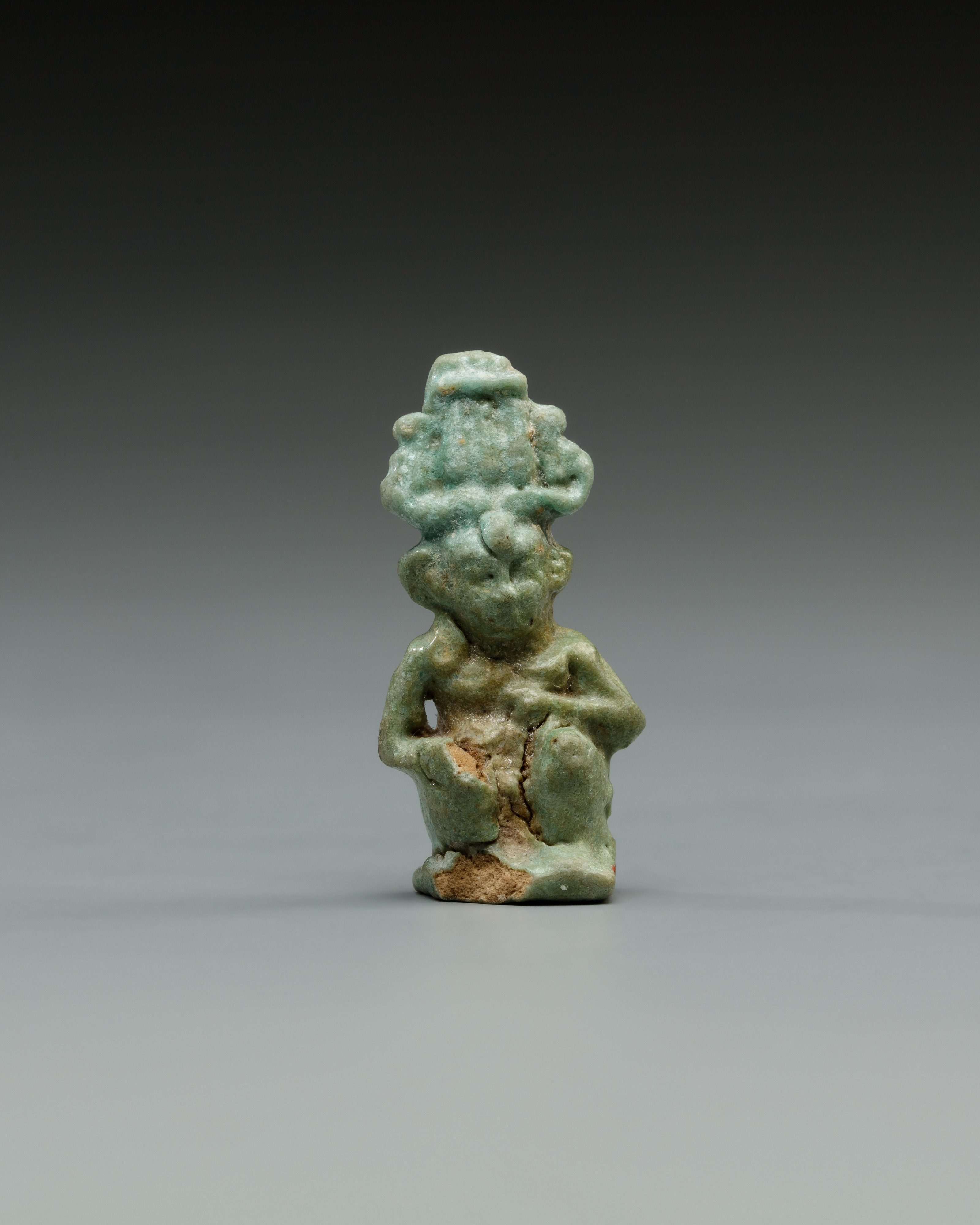
Heritage Analysis: The Squatting Harpokrates with Hemhem and Flail
Introduction: The Artifact as a Nexus of Symbolic Power
The squatting Harpokrates figure, rendered in faience and adorned with the hemhem crown and flail, represents a masterful synthesis of ancient Egyptian theological symbolism, royal authority, and protective magic. For Katherine Fashion Lab, this artifact offers a profound strategic opportunity to embed deep cultural resonance into high-end luxury narratives. As a Lead Heritage Curator, I analyze this object not merely as a historical curiosity but as a blueprint for a 2026 luxury strategy that leverages spiritual authority, material transcendence, and symbolic exclusivity.
The figure depicts Harpokrates—the Greco-Egyptian manifestation of the child Horus—in a posture of stillness and latent power. The squatting pose, with finger to lips, evokes the god’s role as the silent protector, while the hemhem crown (a triple atef crown) and flail (a symbol of royal dominion) elevate this child deity to a sovereign archetype. The faience medium, a glazed non-clay ceramic, imbues the piece with an ethereal, luminous quality, suggesting immortality and divine presence. For luxury branding, this combination of humility (the child) and authority (the regalia) creates a compelling tension that appeals to discerning consumers seeking both heritage and transcendence.
Historical Adornment: The Hemhem Crown and Flail as Status Signals
The hemhem crown, composed of three atef crowns flanked by ostrich feathers, ram horns, and a sun disc, was reserved for deities and deified pharaohs. Its tripartite structure symbolizes dominion over the three realms: the sky, the earth, and the underworld. In artistic representations, the hemhem crown amplifies the wearer’s divine potency, often associated with resurrection and solar power. The flail, a ceremonial implement, reinforces the ruler’s duty to protect and discipline—a visual shorthand for legitimate sovereignty.
For Katherine Fashion Lab, these adornments offer a lexicon of luxury signaling. The hemhem crown’s layered complexity mirrors the high-end consumer’s desire for exclusivity through intricate craftsmanship. The flail, reinterpreted as a sculptural accessory or motif, can convey authority without overt aggression. Historically, such items were not merely decorative but performed apotropaic functions—warding off chaos and ensuring cosmic order. In a 2026 luxury context, this translates to a brand promise: protection of legacy, identity, and cultural authenticity.
Materially, faience’s luminous blue-green glaze evokes the Nile’s fertility and the sky’s eternity. This “artificial turquoise” was a sophisticated technological achievement, symbolizing rebirth. For luxury strategy, the color palette of faience—celestial blues and verdant greens—can anchor a seasonal collection, offering a chromatic signature that communicates timelessness and rarity. The material’s fragility and brilliance also align with the Veblen good paradigm: expensive, delicate, and status-defining.
Spiritual Meaning: The Silent Protector as a Luxury Archetype
Harpokrates, as the “Horus the Child,” embodies the paradox of nascent power. His finger-to-lips gesture, often misinterpreted as a call for silence, actually signifies the secret knowledge of the divine. This esoteric dimension is critical for luxury branding: the most coveted objects are those that imply hidden wisdom, accessible only to initiates. The squatting posture, rooted in the Egyptian pose of rejuvenation, suggests a state of poised readiness—a metaphor for the luxury consumer who possesses power without needing to flaunt it.
The flail, associated with the god Osiris and later with pharaonic authority, carries chthonic overtones. It represents the ruler’s ability to thresh the grain of the underworld, ensuring agricultural and spiritual abundance. In a luxury context, the flail motif can be abstracted into a graphic pattern or hardware detail, signifying the brand’s role in curating abundance—whether material wealth, cultural capital, or aesthetic pleasure.
The hemhem crown’s solar disc and ram horns further connect Harpokrates to the sun god Ra and the creator god Khnum. This solar association is potent for 2026 luxury trends, where sustainability and luminosity converge. The crown’s tripartite structure can inspire a three-tier product line—entry, core, and haute—each tier unlocking deeper symbolic meaning. For example, a “Hemhem Collection” could feature three silhouettes, each representing a realm of influence: the terrestrial (ready-to-wear), celestial (evening wear), and eternal (high jewelry).
Strategic Application: 2026 High-End Luxury Strategy
To operationalize this heritage analysis, Katherine Fashion Lab should adopt a three-pillar strategic framework rooted in the artifact’s symbolic architecture:
Pillar One: The Silent Power Narrative
The squatting Harpokrates teaches that understatement is the ultimate statement. For 2026, luxury consumers increasingly reject ostentation in favor of quiet authority. The brand can develop a “Harpokrates Line” of accessories—clutch bags, cufflinks, or eyewear—that feature minimal silhouettes with hidden symbolic details. The finger-to-lips gesture can be translated into a subtle closure mechanism or a discreet logo embossed in faience-inspired enamel. This narrative positions the brand as a keeper of secrets, appealing to the discerning elite who value privacy and discernment.
Pillar Two: The Hemhem Crown as a Tiered Authority System
The crown’s three-tier structure can inform a pricing and exclusivity strategy. The base tier (accessible luxury) uses faience-glazed ceramics for home decor or small leather goods. The core tier (aspirational luxury) incorporates ram horn motifs in metal hardware or silk scarves. The haute tier (investment luxury) features actual faience inlays or hand-painted hemhem crown motifs on one-of-a-kind gowns. Each tier unlocks a spiritual benefit: protection, abundance, or transcendence. This creates a vertical brand ecosystem where consumers ascend through symbolic mastery.
Pillar Three: Faience as a Material Philosophy
Faience’s luminous, self-glazing process mirrors the luxury industry’s shift toward artisanal, slow production. The brand can partner with heritage ceramicists to produce limited-edition faience objects—perfume bottles, jewelry boxes, or sculptural pendants—that function as wearable talismans. The color palette (Egyptian blue, turquoise, malachite green) should become a seasonal signature, evoking the Nile’s life-giving properties. In 2026, as consumers seek emotional durability, faience’s association with eternity offers a counterpoint to fast fashion’s disposability.
Conclusion: From Artifact to Archetype
The squatting Harpokrates with hemhem and flail is not a static relic but a dynamic template for luxury branding in 2026. Its fusion of childlike vulnerability and royal authority, its material transcendence through faience, and its esoteric protective symbolism provide Katherine Fashion Lab with a rich symbolic vocabulary. By translating these elements into a strategic framework—silent power, tiered authority, and material philosophy—the brand can position itself at the intersection of heritage and innovation, appealing to a clientele that seeks not just products but meaningful artifacts of cultural continuity. In an era of fleeting trends, the immortal child god offers a blueprint for enduring luxury.