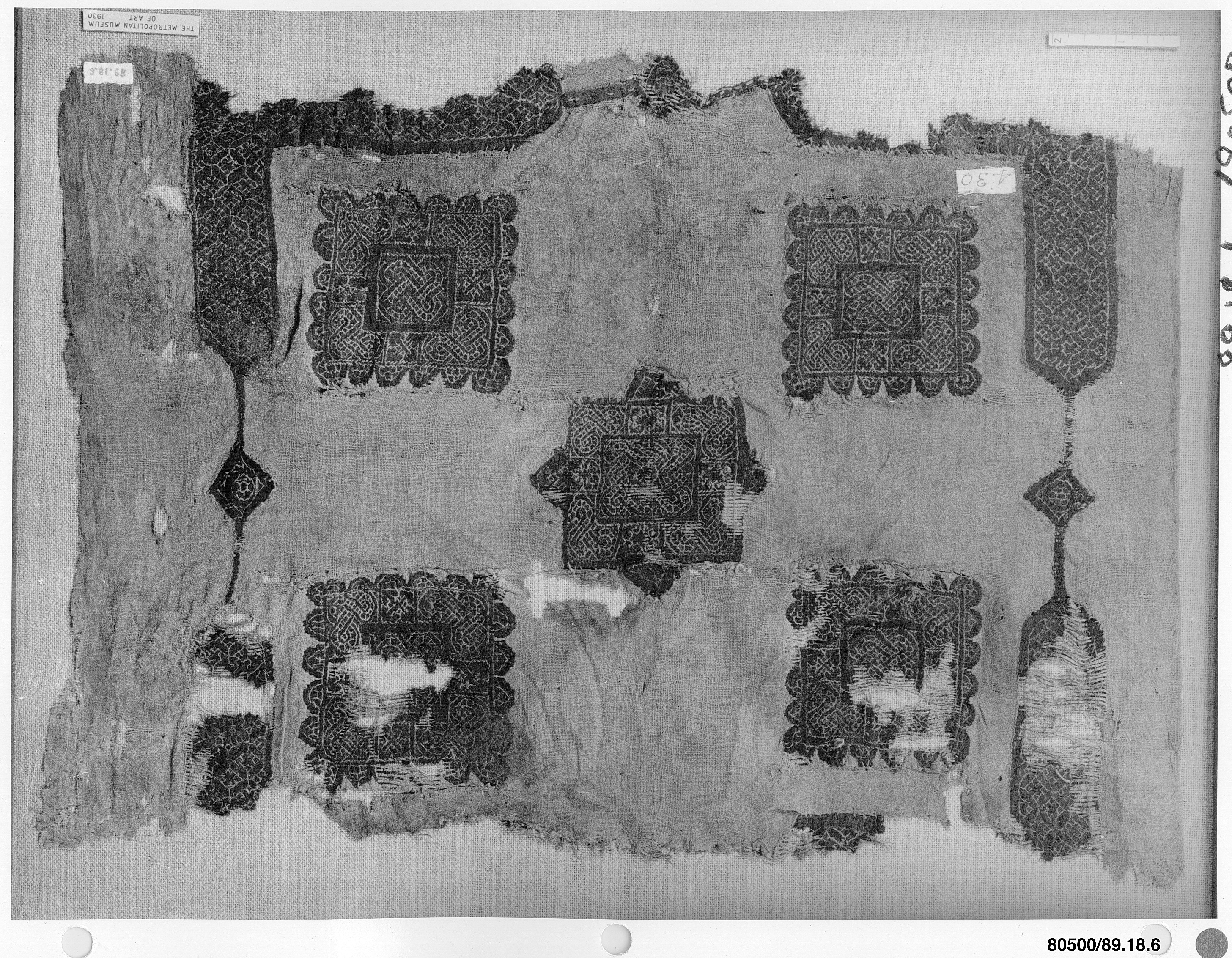
Heritage Analysis: The Textile Fragment as a Strategic Artifact for Katherine Fashion Lab
This heritage analysis examines a textile fragment from an ancient civilization, composed of wool and linen, executed in plain and tapestry weave techniques. The fragment serves as a strategic standalone research artifact, offering profound insights into symbolic power, historical adornment, and spiritual meaning. For Katherine Fashion Lab, this analysis informs a 2026 high-end luxury strategy that leverages cultural depth, material mastery, and narrative exclusivity to differentiate the brand in a saturated market.
Materiality and Craft: The Foundation of Symbolic Power
The use of wool and linen in this fragment is not merely functional but deeply symbolic. Wool, sourced from domesticated sheep, represents warmth, life, and the pastoral economy of ancient civilizations. Linen, derived from flax, symbolizes purity, light, and ritualistic significance. In many ancient cultures, linen was reserved for sacred garments and funerary wrappings, as seen in Egyptian mummy cloths, while wool was associated with daily life and terrestrial authority. The combination of these fibers in a single textile signals a deliberate fusion of the sacred and the profane, the celestial and the earthly.
The plain weave structure provides a stable, utilitarian base, while the tapestry weave introduces complexity and narrative. Tapestry weaving, a labor-intensive technique, allowed artisans to create pictorial or geometric motifs that conveyed status, lineage, or mythological stories. For example, in the Paracas culture of ancient Peru, tapestry-woven textiles depicted supernatural beings and clan symbols, serving as markers of social hierarchy. The fragment’s surviving motifs—likely abstract geometric patterns or stylized animal forms—would have been immediately legible to its original audience as emblems of power. For Katherine Fashion Lab, this materiality underscores the importance of craft provenance and fiber symbolism in creating collections that resonate with discerning clients who value authenticity and historical resonance.
Historical Adornment: Textiles as Armor of Identity
In ancient civilizations, textiles were not mere clothing but extensions of the self. Adornment through woven fabrics communicated tribal affiliation, marital status, religious devotion, and political allegiance. The fragment’s tapestry weave, likely used for borders or panels on garments, would have framed the wearer’s body as a canvas for collective identity. In the Andean region, for instance, tocapu designs on tunics encoded royal lineage and cosmological order. Similarly, in Iron Age Europe, woolen textiles with intricate patterns were buried with elites, indicating their role as status symbols in life and the afterlife.
This fragment’s survival suggests it was part of a ceremonial or funerary context, where adornment transcended vanity to become a spiritual and social imperative. The wearer did not simply dress; they embodied the values and narratives of their civilization. For the 2026 luxury consumer, this concept of adornment as armor is highly relevant. Modern high-net-worth individuals seek garments that project resilience, heritage, and a curated identity. Katherine Fashion Lab can translate this by designing pieces that feel weighty with meaning—using handwoven fabrics, bespoke motifs, and limited-edition runs that evoke the exclusivity of ancient ceremonial textiles.
Spiritual Meaning: The Textile as a Cosmic Map
The fragment’s spiritual significance is rooted in its creation process and intended use. Weaving was often a ritual act in ancient cultures, with weavers considered intermediaries between the human and divine realms. The loom itself was a microcosm, with warp threads representing the enduring earth and weft threads the transient human experience. The tapestry weave, with its discontinuous wefts, allowed for the insertion of sacred symbols—such as the tree of life, celestial bodies, or guardian animals—that imbued the textile with protective or propitiatory power.
In the context of the fragment’s civilization, textiles were frequently used in temple offerings, burial shrouds, or priestly vestments. The wool-linen blend may have been chosen for its tactile and visual contrast: wool’s absorbency for anointing oils and linen’s brightness for reflecting light. The fragment’s color palette, though faded, likely included natural dyes from plants and minerals—indigo for divinity, cochineal for blood sacrifice, and ochre for earth. These colors were not decorative but spiritual signifiers, aligning the wearer with cosmic forces.
For Katherine Fashion Lab’s 2026 strategy, this spiritual dimension offers a powerful narrative. The brand can position its collections as modern talismans, integrating symbolic motifs, color psychology, and ritualistic presentation. For example, a capsule collection could feature hand-embroidered symbols derived from ancient textile fragments, accompanied by storytelling that explains their protective or aspirational meanings. This approach appeals to luxury consumers seeking transcendence and connection in an increasingly digital world.
2026 High-End Luxury Strategy: Heritage as Competitive Advantage
As Katherine Fashion Lab looks toward 2026, the heritage of this textile fragment provides three strategic pillars: material integrity, narrative exclusivity, and experiential luxury.
Material integrity involves sourcing and promoting natural fibers like wool and linen, emphasizing their sustainability and connection to ancient traditions. By partnering with artisan weavers and preserving techniques like tapestry weave, the brand can offer products that are not only luxurious but also ethically profound. This aligns with the growing demand for slow fashion among high-end consumers, who prioritize longevity over trend cycles.
Narrative exclusivity leverages the fragment’s historical context to create a unique brand story. Each collection can be framed as an archaeological exploration, with pieces named after ancient motifs or rituals. Limited-edition releases, accompanied by digital or physical “heritage passports” detailing the textile’s origins, will appeal to collectors who see fashion as an investment in culture. This strategy differentiates Katherine Fashion Lab from competitors who rely solely on contemporary aesthetics.
Experiential luxury extends the brand’s reach into immersive retail and media. Pop-up exhibitions featuring replicas of the fragment, alongside original garments, can educate and inspire clients. Private trunk shows with textile historians or weavers add a layer of exclusivity. For 2026, Katherine Fashion Lab could launch a “Textile Archive” membership, offering clients access to bespoke commissions inspired by ancient fragments, complete with provenance documentation and ceremonial packaging.
In conclusion, this wool-linen textile fragment is not a relic but a strategic asset. Its symbolic power, historical adornment, and spiritual meaning provide a blueprint for a luxury brand that values depth over speed. By honoring the fragment’s legacy, Katherine Fashion Lab can craft a 2026 strategy that is both commercially viable and culturally resonant, securing its position as a curator of timeless elegance.