The Iconography of Sanctity: A Couture Analysis of Saint Adalbert and Saint Procopius
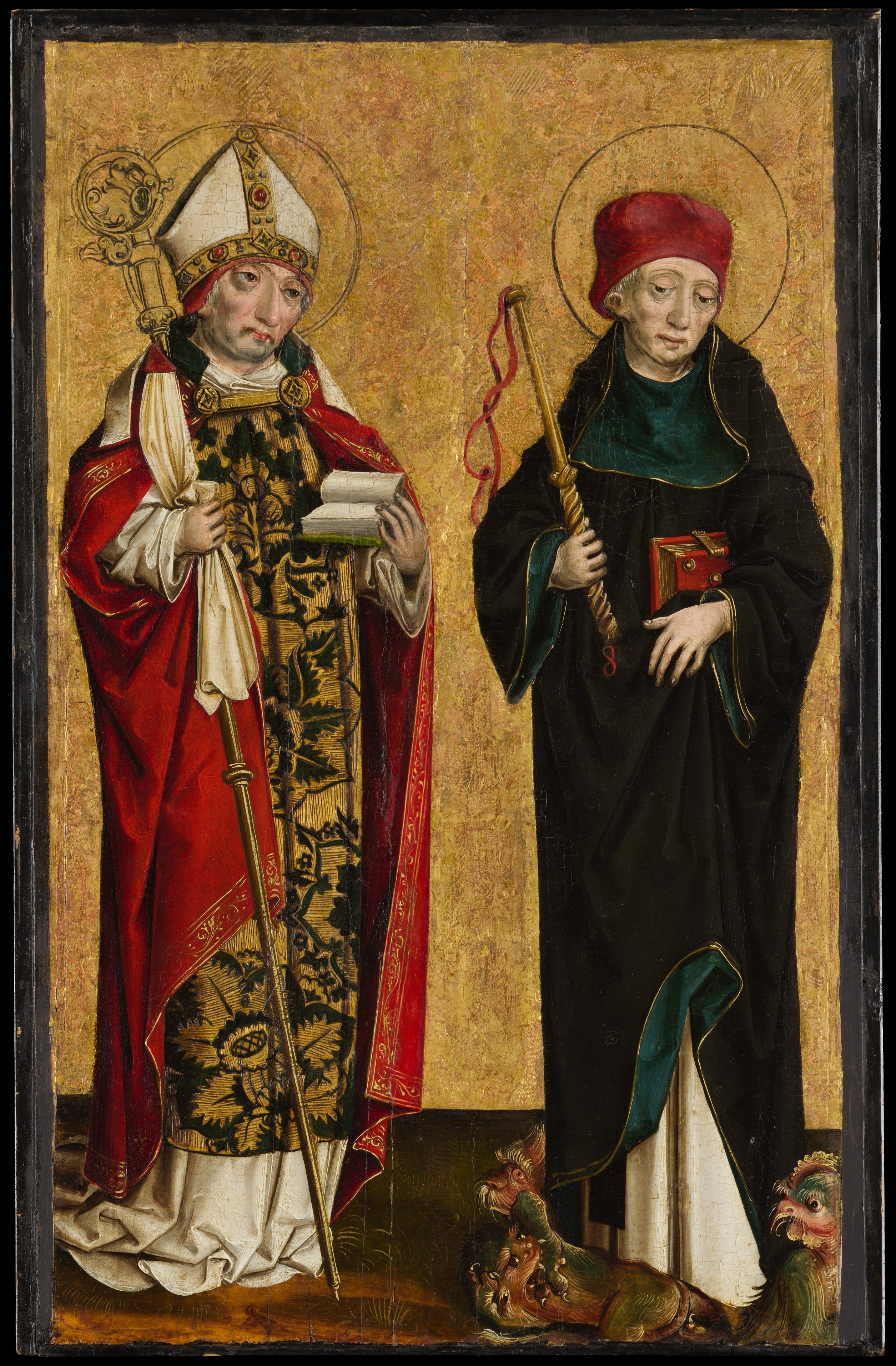
In the rarefied world of haute couture, inspiration often draws from the ethereal, the historical, and the transcendent. At Katherine Fashion Lab, our curatorial lens examines how sacred art—specifically the oil-on-spruce panel depicting Saint Adalbert and Saint Procopius, set against a luminous gold ground—can be deconstructed to inform a new language of luxury. This standalone study, rooted in Global Heritage, is not merely an analysis of pigment and wood; it is a dialogue between medieval devotion and modern sartorial architecture. The work, a testament to Byzantine and Romanesque influences, offers a masterclass in structural restraint, chromatic symbolism, and the interplay of the sacred with the tactile.
The Gold Ground as Foundational Fabric
The most arresting element of this panel is its gold ground, a technique that transcends mere decoration to become a metaphysical statement. In couture, gold is often relegated to embellishment—threads, sequins, or embroidery. Yet here, the gold functions as the substrate, the very atmosphere in which the saints exist. For Katherine Fashion Lab, this suggests a radical rethinking of fabric as a primary narrative material. Imagine a gown where the base fabric is not silk or wool but a hand-beaten gold leaf applied to a structural mesh. The rigidity of the spruce panel translates into a corseted silhouette that is both armor and aura. The gold ground, with its irregular, reflective surface, would catch light in unpredictable patterns, echoing the divine luminosity that medieval artists sought to capture.
This approach demands a meticulous craftsmanship akin to the panel painter’s layering of gesso and bole before applying the gold. In our studio, we would collaborate with metal artisans to create a flexible yet unyielding base, perhaps using micro-perforated gold foil over a silk organza foundation. The result is a garment that asserts its presence before any silhouette is considered—a literal grounding of the sacred in the world of fashion.
Saint Adalbert: The Architecture of Asceticism
Saint Adalbert, the martyred bishop of Prague, is typically rendered with a mitre and crozier, symbols of ecclesiastical authority. In this panel, his posture is vertical, almost architectonic, as if he is a living column supporting the heavens. His vestments—likely a chasuble and pallium—are depicted with minimal ornamentation, allowing the gold ground to do the work of sanctification. For a couture interpretation, Saint Adalbert inspires a monastic minimalism that is anything but simple. The key is structural purity: a long, columnar gown in raw silk or linen, dyed in the deep, earthy hues of umber and ochre that mimic the oil paint’s patina.
The crozier becomes a sculptural accessory—not a staff but a curved, gold-plated spine that attaches to the back of the garment, forcing the wearer into a posture of dignified uprightness. The mitre is abstracted into a towering headpiece of layered felt and gold thread, its points softened to suggest a halo rather than a hat. The palette is restrained: ivory, black, and gold, with no prints or embroidery that would disrupt the verticality of the design. This is a garment that commands reverence, not through volume but through its unyielding line—a direct translation of Adalbert’s martyrdom into wearable architecture.
Saint Procopius: The Fluidity of the Hermit
In contrast, Saint Procopius, the Bohemian hermit and abbot, offers a study in organic movement. His iconography often includes a book and a staff, but his legend is tied to the wilderness—taming wolves and living in a cave. The panel likely renders him with a flowing beard and a simple habit, his form less rigid than Adalbert’s, as if the gold ground itself is yielding to his presence. For Katherine Fashion Lab, Procopius inspires a deconstructed habit that celebrates imperfection and texture. Imagine a layered tunic in unbleached linen, frayed at the edges, with asymmetrical draping that evokes the folds of a hermit’s cloak. The gold ground here is not a backdrop but a subversive underlay—glimpsed through slits in the fabric, as if the divine is always breaking through the mundane.
The book he holds becomes a clutch of bound parchment, its pages gilded and sealed with a wax emblem. The staff is reinterpreted as a walking stick of blackened oak, wrapped in gold wire that spirals upward like a vine. The hermit’s cave inspires a textural contrast: rough, untreated wool juxtaposed with smooth, polished leather. The palette shifts to sage, moss, and charcoal, with the gold appearing only in delicate, calligraphic strokes—a nod to the manuscript illumination that Procopius might have produced. This is a garment that embraces the wild, the unkempt, and the spiritually untamed.
Oil on Spruce: The Tactile Dialogue of Materials
The choice of oil on spruce is not incidental. Spruce, a wood known for its resonance and flexibility, was favored for panel paintings because it could hold fine detail without warping. In couture, this translates to a structural framework that is both rigid and responsive. We propose a bodice constructed from laser-cut spruce veneer, sealed with resin and hand-painted with oil pigments in the same earth tones as the original. This is not a costume but a wearable artifact—a second skin that echoes the panel’s materiality. The oil paint itself, with its slow drying time and rich depth, inspires a dyeing technique using natural pigments: lapis lazuli for the blues, cinnabar for the reds, and lead-tin yellow for the gold highlights. Each garment becomes a painting in motion, its colors shifting with the wearer’s movement.
Global Heritage: A Universal Aesthetic
This panel, though rooted in Central European sainthood, speaks to a Global Heritage that transcends geography. The gold ground is a motif found in Byzantine icons, Indian miniatures, and Japanese screens. The verticality of Adalbert echoes the elongated figures of El Greco, while Procopius’s naturalism prefigures the Romantic landscape. For Katherine Fashion Lab, this is a call to decontextualize and recontextualize. The saints are not Christian symbols but archetypes of human aspiration: the martyr and the hermit, the institutional and the anarchic. A collection inspired by this panel would include kimono-like wraps in gold brocade, structured blazers with ecclesiastical shoulders, and flowing pants that mimic the hermit’s habit. The palette is universal: gold, black, white, and the deep earth tones of the oil paint.
Conclusion: The Standalone Study as a Manifesto
This standalone study is not a reproduction but a translation—a conversion of sacred art into a secular, yet reverent, fashion language. At Katherine Fashion Lab, we see the gold ground as a reminder that luxury is not about excess but about illumination. The oil on spruce teaches us that structure and texture are inseparable. And the saints—Adalbert and Procopius—remind us that the most powerful garments are those that stand for something, whether faith, resilience, or the quiet dignity of the wild. In a world of fast fashion, this analysis is a call to slowness, to craftsmanship, and to the enduring power of the sacred silhouette.