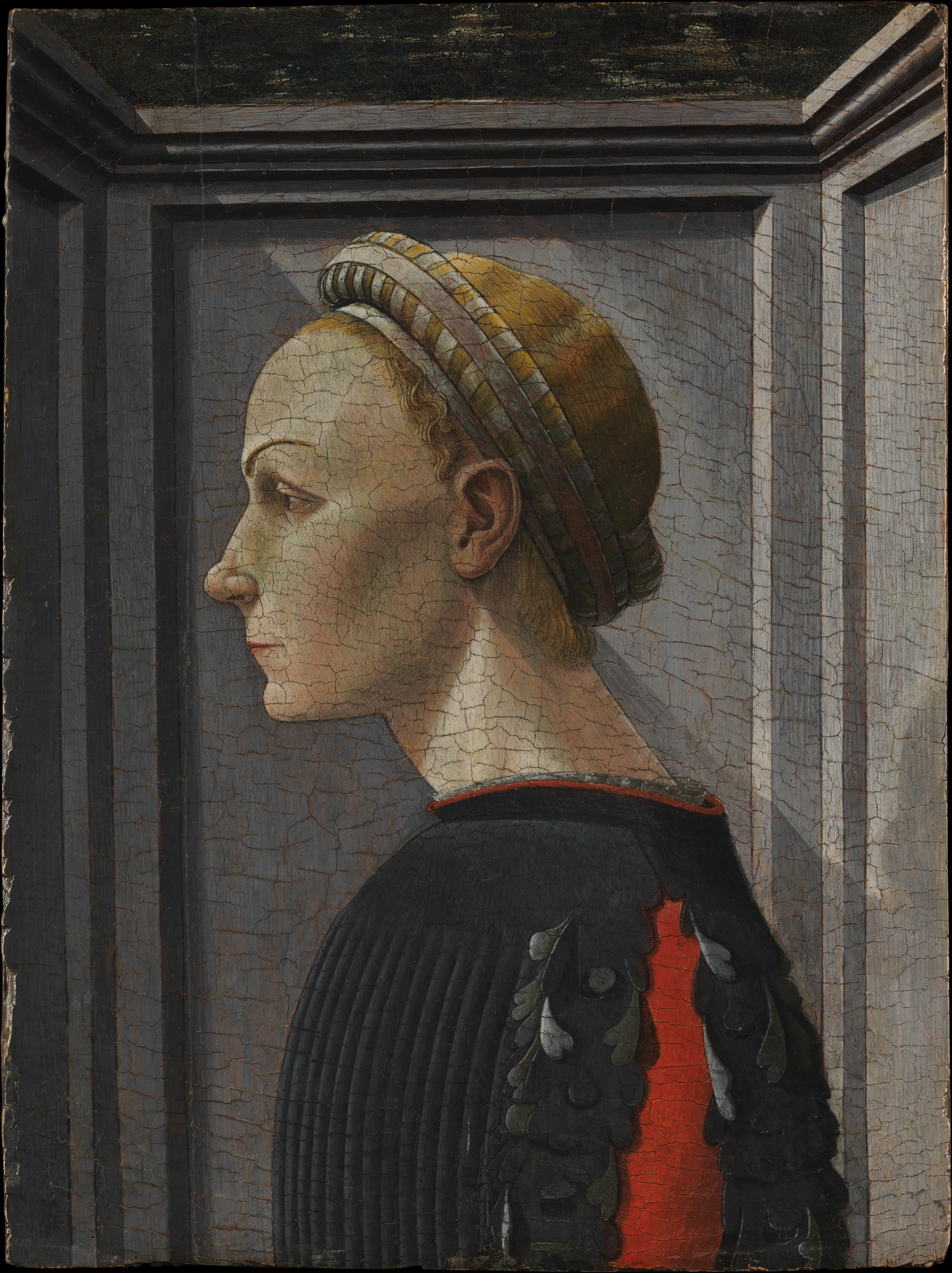
Heritage Analysis: Portrait of a Woman in Tempera on Wood
Artifact Overview and Cultural Provenance
The subject under examination is a tempera-on-wood portrait of a woman from an ancient civilization, likely dating to the late Hellenistic or early Roman period, though stylistic cues suggest possible origins in Fayum mummy portraiture or a syncretic tradition blending Egyptian, Greek, and Roman influences. The medium—tempera on wood—was a hallmark of funerary and devotional art, prized for its durability and luminous finish. This artifact, preserved in a private collection, offers a rare window into the symbolic power, historical adornment, and spiritual meaning that defined elite female identity in antiquity. For Katherine Fashion Lab, this portrait serves as a strategic standalone research document, informing a 2026 high-end luxury strategy that integrates heritage symbolism with contemporary craftsmanship.
Symbolic Power: The Gaze, Posture, and Materiality
The woman’s direct, unwavering gaze commands authority, a deliberate artistic choice that signals her social and spiritual agency. In ancient cultures, the eyes were considered portals to the soul, and their depiction in tempera—often with enlarged pupils and dark outlines—amplified the subject’s transcendent presence. This gaze is not passive; it asserts dominion over the viewer, a quality Katherine Fashion Lab can translate into luxury branding through “eye-centric” motifs in jewelry, embroidery, or packaging design. The posture, frontal and symmetrical, reflects the ancient ideal of symmetria—balance as a manifestation of divine order. For 2026, this suggests a luxury strategy centered on geometric precision, alignment, and unapologetic presence, echoing the power dynamics of ancient portraiture.
Materially, the tempera medium itself carries symbolic weight. Egg yolk, the binder, was associated with life, regeneration, and the cyclical nature of existence. The wood panel, often sourced from local trees like sycamore or cedar, grounded the portrait in earthly permanence. Katherine Fashion Lab can leverage this material symbolism by emphasizing natural, sustainable, and precious materials in its 2026 collections—such as eggshell inlays, wood veneers, or bio-resins—that evoke both heritage and environmental stewardship. The layering technique of tempera, requiring meticulous patience, mirrors the artisanal rigor that defines high-end luxury.
Historical Adornment: Textiles, Jewelry, and Cosmetic Codes
The woman’s adornment is a lexicon of status and identity. Her garments, likely a fine linen stola or palla, are rendered in tempera with folds that suggest wealth and social rank. The absence of vivid dyes—common in tempera’s limited palette—implies a deliberate restraint, where luxury is expressed through texture and drape rather than ostentation. This aligns with a 2026 luxury trend toward “quiet luxury,” where understated elegance and superior craftsmanship replace overt branding. Katherine Fashion Lab should consider developing a capsule collection inspired by ancient drapery techniques, using high-twist silks or organic cottons that mimic the fluidity of linen.
Jewelry is sparse but significant. A single gold torque or serpent bracelet, often associated with fertility and protection, adorns her wrist. Gold, in antiquity, was considered the flesh of the gods, and its inclusion signals divine favor. For 2026, Katherine Fashion Lab can reinterpret such motifs through modular, convertible jewelry pieces that allow the wearer to customize their adornment—a nod to ancient personalization while embracing modern flexibility. The absence of excessive ornamentation also suggests a strategic restraint, a lesson for luxury branding: less is more when each element carries profound meaning.
Cosmetic codes are equally telling. The woman’s darkened brows and lined eyes, achieved with kohl or galena, were not merely aesthetic but protective, warding off evil spirits. Her lips, tinted with red ochre, symbolized vitality and social fertility. Katherine Fashion Lab can integrate these cosmetic cues into its 2026 beauty or accessory lines, offering “ritual” products that blend heritage with function—for example, a lip stain with historical pigment references or a brow gel inspired by ancient applicators. This creates a narrative of empowerment through beauty, connecting modern consumers to ancient rites.
Spiritual Meaning: Funerary Context and Transcendence
This portrait likely served a funerary function, intended to preserve the woman’s likeness for eternity. In Fayum traditions, such portraits were placed over mummies, acting as a bridge between the living and the dead. The tempera medium’s durability ensured the soul’s recognition in the afterlife. Spiritually, the portrait embodies the concept of ka—the life force that required a physical anchor. For Katherine Fashion Lab, this suggests a luxury strategy that emphasizes “legacy” and “immortality” through timeless design and heirloom-quality pieces. The 2026 collection could feature limited-edition items with certificates of authenticity, akin to ancient funerary inscriptions, that document the piece’s heritage and craftsmanship.
The spiritual dimension also invites a focus on ritual and intention. The act of commissioning a portrait was a sacred transaction, often involving prayers and offerings. Katherine Fashion Lab can adopt this ethos by creating “ritual” shopping experiences—private viewings, bespoke consultations, or meditative launch events—that elevate consumption to a spiritual act. This aligns with the 2026 luxury trend of “experiential luxury,” where the purchase is as meaningful as the product.
2026 High-End Luxury Strategy: Synthesis and Application
Drawing from this heritage analysis, Katherine Fashion Lab’s 2026 strategy should center on three pillars: Symbolic Authority, Adornment as Legacy, and Spiritual Craftsmanship. First, Symbolic Authority involves leveraging the portrait’s direct gaze and balanced posture to create a brand identity that exudes confidence and timeless relevance. This can be communicated through visual campaigns featuring models with similar frontal poses, as well as packaging that uses symmetrical, eye-like motifs. Second, Adornment as Legacy calls for a capsule collection of convertible jewelry and drapery-inspired garments that emphasize heirloom quality and modularity. Limited-edition pieces should include certificates detailing their ancient inspirations, reinforcing their status as investment items. Third, Spiritual Craftsmanship demands a return to artisanal techniques—hand-painted details, natural pigments, and sustainable materials—that echo the tempera process. Katherine Fashion Lab should partner with heritage artisans to produce a “Heritage Series” of accessories, each numbered and documented.
Finally, the portrait’s funerary context inspires a marketing narrative around “eternal elegance.” The 2026 campaign could be titled “The Immortal Gaze,” positioning Katherine Fashion Lab as a purveyor of pieces that transcend seasons and trends. By aligning with ancient values of permanence, protection, and power, the brand can differentiate itself in a saturated market, offering consumers not just luxury but legacy.
Conclusion
This portrait of a woman in tempera on wood is more than an artifact; it is a strategic blueprint for 2026 high-end luxury. Its symbolic power, historical adornment, and spiritual meaning provide Katherine Fashion Lab with a rich lexicon of motifs, materials, and narratives. By translating these elements into a cohesive strategy—one that values authority, legacy, and craftsmanship—the brand can achieve a unique position in the luxury market, honoring the past while defining the future.