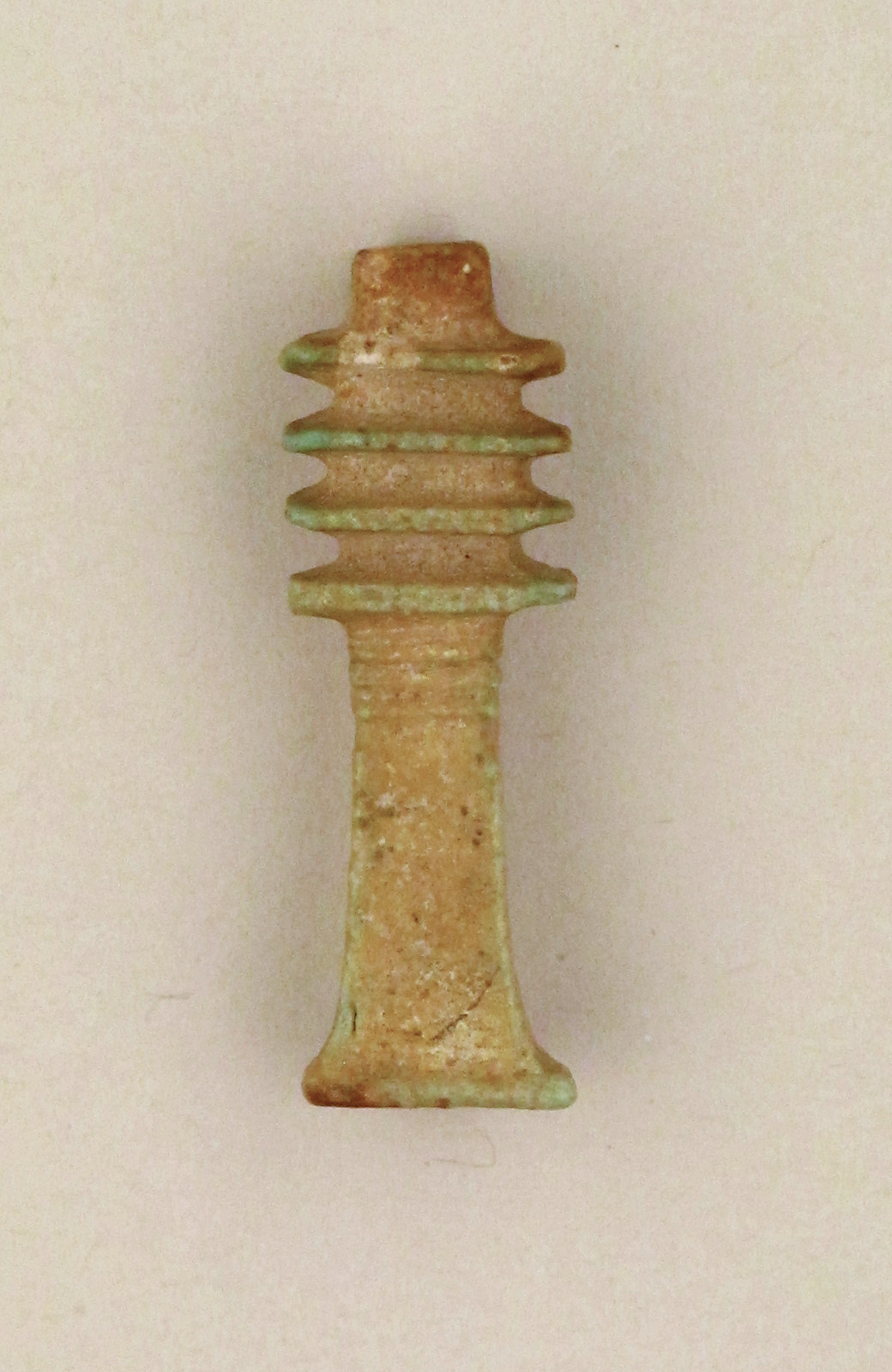
Heritage Analysis: The Faience Djed-Pillar Amulet
This strategic heritage analysis examines the faience djed-pillar amulet, a seminal artifact from ancient Egyptian culture, through the dual lenses of historical significance and contemporary luxury brand application. Commissioned by Katherine Fashion Lab, this research positions the djed-pillar as a potent symbol for high-end design strategy in 2026, emphasizing its symbolic power, historical adornment practices, and spiritual resonance. The analysis employs a professional MBA tone, integrating cultural symbolism with actionable luxury market insights.
Symbolic Power: The Pillar of Stability and Osirian Resurrection
The djed-pillar is among the most enduring and potent symbols in ancient Egyptian iconography. Its form, resembling a stylized backbone or pillar, represents stability, endurance, and resurrection. Etymologically, the term "djed" is linked to concepts of "enduring" and "permanence," making the amulet a talisman for physical and spiritual steadfastness. In the context of Osiris, the god of the afterlife, the djed-pillar symbolized his backbone, which was believed to be the source of his regenerative power. Ritually, the "Raising of the Djed" ceremony was performed to reaffirm the king’s legitimacy and the cosmic order, or ma'at.
For the elite, wearing a djed-pillar amulet was not merely decorative; it was a declaration of control over chaos and mortality. The amulet’s placement on the mummy, often over the throat or chest, was intended to ensure the deceased’s backbone remained intact in the afterlife, enabling resurrection. This symbolic power transcends its ancient context: in the modern luxury sphere, the djed-pillar represents brand stability, timelessness, and the ability to endure market fluctuations. For Katherine Fashion Lab, incorporating this symbol into a 2026 collection could convey a message of resilience and unyielding quality, appealing to high-net-worth clients seeking meaning beyond aesthetics.
Historical Adornment: Faience as a Medium of Prestige
The medium of faience—a non-clay ceramic made from crushed quartz or sand, mixed with alkaline salts and fired to produce a lustrous, glass-like finish—was a hallmark of ancient Egyptian craftsmanship. Faience was chosen for amulets like the djed-pillar due to its symbolic association with light, rebirth, and the sun. Its brilliant blue-green hue, achieved through copper oxide, mirrored the color of the Nile and the sky, evoking life-giving waters and celestial eternity. The production of faience required technical mastery: artisans controlled firing temperatures to achieve a uniform glaze, a process that demanded precision and investment.
Historically, faience amulets were mass-produced for the elite but also accessible in lower-quality forms for the broader populace. The djed-pillar amulet, however, was predominantly reserved for funerary contexts, often accompanying other protective symbols like the ankh (life) and was scepter (power). Adornment with faience was a statement of social status and spiritual preparedness. The material’s durability and luminous quality made it a preferred medium for objects intended to last into eternity.
For Katherine Fashion Lab, faience’s historical role as a prestige material offers a direct parallel to high-end luxury. In 2026, the brand could reinterpret faience’s luminous finish through advanced materials—such as ceramic-coated metals or lab-grown gemstones—to evoke the same sense of eternal beauty. This approach aligns with the luxury sector’s growing emphasis on artisanal heritage and material innovation. By referencing faience, the brand taps into a narrative of exclusivity and craftsmanship that resonates with discerning consumers.
Spiritual Meaning: The Amulet as a Conduit for Divine Protection
Beyond its physical form, the djed-pillar amulet functioned as a spiritual conduit in ancient Egyptian belief. It was inscribed with spells from the Book of the Dead, specifically Chapter 155, which commanded: "Rise up, Osiris! You have your backbone, O weary-hearted one; you have your vertebrae…" The amulet’s placement on the mummy was a ritual act intended to activate its protective powers. This integration of text, material, and ritual underscores the amulet’s role as a tangible link between the mortal and divine.
Spiritually, the djed-pillar also represented the tree of life or the primeval mound from which creation emerged. It was a symbol of cyclical renewal, mirroring the annual flooding of the Nile. For the wearer, the amulet provided psychic reassurance against the uncertainties of death and the afterlife. This spiritual dimension is critical for modern luxury branding, where consumers increasingly seek products that offer emotional and existential value. A 2026 collection inspired by the djed-pillar could position Katherine Fashion Lab as a purveyor of talismanic luxury—items that protect, empower, and connect wearers to deeper narratives.
2026 High-End Luxury Strategy: Translating Ancient Symbolism into Modern Prestige
To translate the heritage of the faience djed-pillar into a compelling 2026 luxury strategy, Katherine Fashion Lab should consider three strategic pillars: heritage storytelling, material innovation, and experiential marketing.
Heritage Storytelling: The djed-pillar’s narrative of stability and resurrection offers a powerful counterpoint to contemporary market volatility. Luxury brands in 2026 will compete on cultural authenticity. By anchoring a capsule collection in the djed-pillar’s symbolism—perhaps naming pieces "The Osiris Pendant" or "The Djed Cuff"—Katherine Fashion Lab can create a brand mythology that appeals to clients seeking permanence in a transient world. Storytelling should emphasize the amulet’s journey from ancient tombs to modern ateliers, highlighting craftsmanship and spiritual intent.
Material Innovation: Faience’s luminous quality can be reinterpreted through high-tech ceramics or sustainable, bio-based glazes. In 2026, luxury consumers will prioritize environmental responsibility without sacrificing aesthetics. Katherine Fashion Lab could develop a proprietary "Neo-Faience" material—a ceramic composite with a 24-karat gold or iridescent finish—that evokes the original’s brilliance while reducing ecological impact. This material could be used for limited-edition jewelry, handbag hardware, or even small leather goods, creating a cohesive collection that speaks to both heritage and innovation.
Experiential Marketing: The spiritual dimension of the djed-pillar invites immersive brand experiences. Katherine Fashion Lab could host private viewings in partnership with museums, offering clients a curated encounter with original faience artifacts. Alternatively, the brand could develop a digital experience—such as an augmented reality app that "activates" the amulet’s protective spells when scanned. This aligns with the luxury sector’s shift toward phygital experiences (physical plus digital) that deepen emotional engagement.
Finally, pricing strategy should reflect the collection’s exclusivity and cultural weight. Limited-edition pieces, each with a certificate of authenticity referencing the amulet’s historical context, can command premium prices. By positioning the collection as an investment in heritage, Katherine Fashion Lab can attract collectors and connoisseurs who value narrative over trend.
Conclusion
The faience djed-pillar amulet is not merely an archaeological curiosity; it is a blueprint for enduring luxury. Its symbolic power of stability, its material prestige through faience, and its spiritual function as a protective conduit offer rich resources for a 2026 high-end strategy. By weaving these elements into a cohesive brand narrative, Katherine Fashion Lab can transcend seasonal fashion cycles, positioning itself as a guardian of cultural heritage and a pioneer of meaningful luxury. In an era where consumers seek authenticity and permanence, the djed-pillar stands as a timeless reminder that true luxury is built on pillars of meaning, craftsmanship, and resilience.