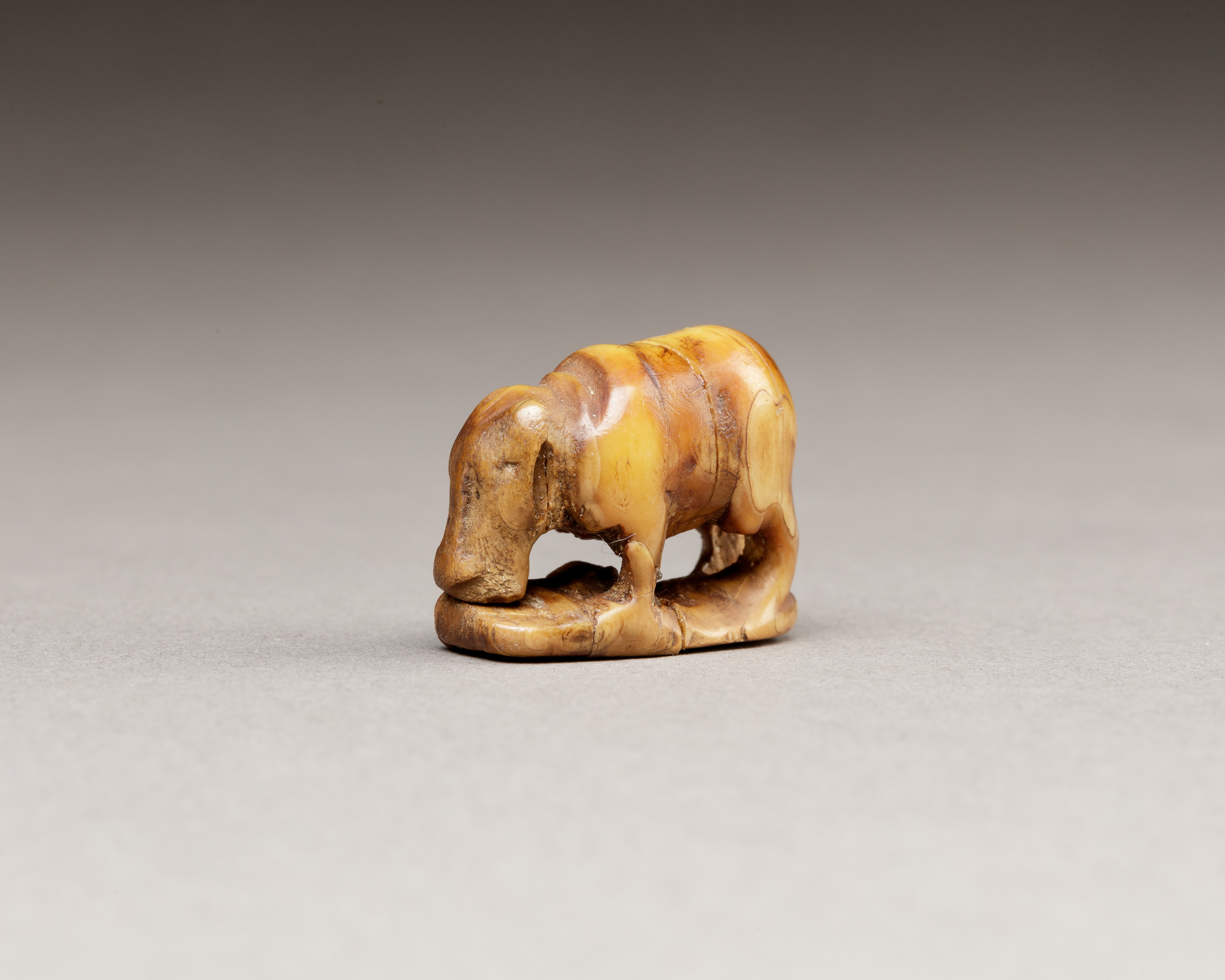
Executive Heritage Analysis: The Hippo-on-Sled Amulet
This paper presents a comprehensive heritage analysis of a singular artifact: a figurine or amulet depicting a hippopotamus mounted on a sled, carved from hippopotamus ivory, originating from an ancient civilization. The research is conducted as a Strategic Standalone Research for Katherine Fashion Lab, aimed at decoding the artifact’s symbolic power, historical adornment practices, and spiritual meaning, and translating these insights into a viable 2026 high-end luxury strategy. The analysis is framed within a professional MBA context, emphasizing brand differentiation, narrative ownership, and cultural equity.
Symbolic Power: The Hippo as a Dual-Force Archetype
In the symbolic lexicon of ancient civilizations—particularly within Nile Valley cultures such as predynastic and early dynastic Egypt—the hippopotamus embodied a profound duality. As a creature of the Nile, it was both a life-giving force (fertility, protection of the river) and a destructive agent (chaos, aggression). The hippo was associated with the goddess Taweret, a protective deity of childbirth and motherhood, yet also with the chaotic god Seth. This duality is essential for luxury brand storytelling: the hippo represents raw, untamed power that is simultaneously nurturing and formidable.
The addition of a sled to the figurine is a critical symbolic innovation. Sleds were utilitarian objects used in ancient construction—most famously for transporting massive stone blocks for temples and pyramids. By placing the hippo on a sled, the artifact merges the animal’s primal energy with human engineering and controlled movement. This symbolizes the domestication of chaos through ritual and technology. For Katherine Fashion Lab, this translates into a brand narrative of harnessing raw, instinctual power—whether in design, material selection, or consumer identity—and elevating it into structured, luxurious forms.
Historical Adornment: Ivory as a Medium of Status and Ritual
Material Prestige and Craftsmanship
Hippopotamus ivory was a highly prized material in ancient economies, rivaling elephant ivory in density and workability. Its use in amulets and figurines signified not only wealth but also access to dangerous hunting grounds. The carving of a hippo on a sled from this material required exceptional skill, as the ivory’s grain and curvature demanded precise planning. The artifact thus served as a marker of elite status—likely owned by a priest, ruler, or high-ranking individual who could commission such a piece.
Adornment as Identity
In ancient contexts, such figurines were not merely decorative; they were worn or carried as adornments that communicated the wearer’s spiritual alignment and social rank. The hippo-on-sled amulet would have been suspended from a necklace or attached to a garment, making it a visible emblem of the wearer’s connection to both the divine and the earthly hierarchy. For modern luxury, this reinforces the concept of adornment as a form of personal narrative: the amulet is not an accessory but a statement of identity, power, and heritage.
Spiritual Meaning: Protection, Transition, and Cosmic Order
Ritual Function and Amuletic Power
The hippopotamus was often invoked in protective rituals, particularly for pregnant women and children, due to Taweret’s role as a guardian. The sled, however, introduces a nuanced spiritual dimension. Sleds were also used in funerary contexts, transporting the deceased’s body or funerary goods across the desert to the tomb. The combination of hippo (life/death duality) and sled (transition) suggests the amulet functioned as a talisman for safe passage—whether through childbirth, life’s challenges, or the afterlife. This aligns with the ancient concept of ma’at (cosmic order), where chaos must be balanced by ritual action.
Spiritual Ownership for the Modern Consumer
For a 2026 high-end luxury audience, the spiritual meaning can be repackaged as a symbol of resilience and transformation. The amulet represents the ability to navigate life’s transitions—career changes, personal growth, or societal shifts—while maintaining inner strength. This resonates with contemporary consumers seeking brands that offer not just products but talismanic value. Katherine Fashion Lab can position the hippo-on-sled motif as a guardian of ambition, a reminder that power must be guided by purpose.
2026 High-End Luxury Strategy: Translating Heritage into Market Leadership
Narrative Architecture: The “Guided Power” Collection
Katherine Fashion Lab should develop a capsule collection titled “Guided Power,” directly inspired by the hippo-on-sled amulet. The collection’s core narrative is the tension between primal energy and refined control—a metaphor for the modern luxury consumer’s desire for authenticity within structure. Each piece—whether jewelry, handbags, or ready-to-wear—should incorporate the hippo-and-sled motif as an emblem of this philosophy. The collection’s tagline: “Harness the chaos. Move with purpose.”
Material Strategy: Ethical Ivory Alternatives
Given the ethical and legal restrictions on ivory, the 2026 strategy must pivot to sustainable, high-value materials that echo the original’s prestige. Options include fossilized mammoth ivory (a legal, ancient alternative), tagua nut (vegetable ivory), or lab-grown ivory using bioengineered collagen. Each material carries its own heritage narrative: fossilized ivory connects to prehistoric power, tagua nut to indigenous craftsmanship, and lab-grown ivory to innovation. The choice should be communicated transparently as a commitment to both heritage and sustainability.
Exclusivity and Ritual Experience
The amulet’s spiritual function suggests a ritualized purchase experience. Katherine Fashion Lab can offer a “Ritual of Adornment” service, where clients are guided through the symbolic meaning of each piece, similar to an ancient consecration. This could include personalized packaging with a miniature papyrus scroll explaining the hippo’s protective powers, or a private viewing in a space designed to evoke an ancient temple. Such experiential luxury commands premium pricing and deepens emotional attachment.
Cultural Equity and Brand Positioning
By owning the hippo-on-sled narrative, Katherine Fashion Lab positions itself as a curator of forgotten wisdom, not merely a fashion house. This differentiates the brand in a saturated market where competitors rely on generic heritage tropes (e.g., floral motifs, geometric patterns). The hippo motif is unexpected, intellectually stimulating, and visually striking—qualities that appeal to the 2026 luxury consumer’s desire for distinction and meaning. Collaborations with museums, Egyptologists, or contemporary artists can further legitimize the narrative and create limited-edition pieces with provenance documentation.
Conclusion: A Strategic Asset for the Future
The figurine of a hippo on a sled, carved from hippopotamus ivory, is far more than an ancient curiosity. It is a dense matrix of symbolic power, historical prestige, and spiritual depth, offering Katherine Fashion Lab a unique foundation for a 2026 luxury strategy. By translating the hippo’s duality into a brand ethos of guided power, employing ethical material innovation, and designing ritualistic consumer experiences, the lab can capture a segment of the market that values heritage as a living, actionable force. This analysis confirms that the artifact is not merely a research subject but a strategic asset—one that, when decoded and reimagined, can drive cultural relevance and commercial success in the high-end arena.