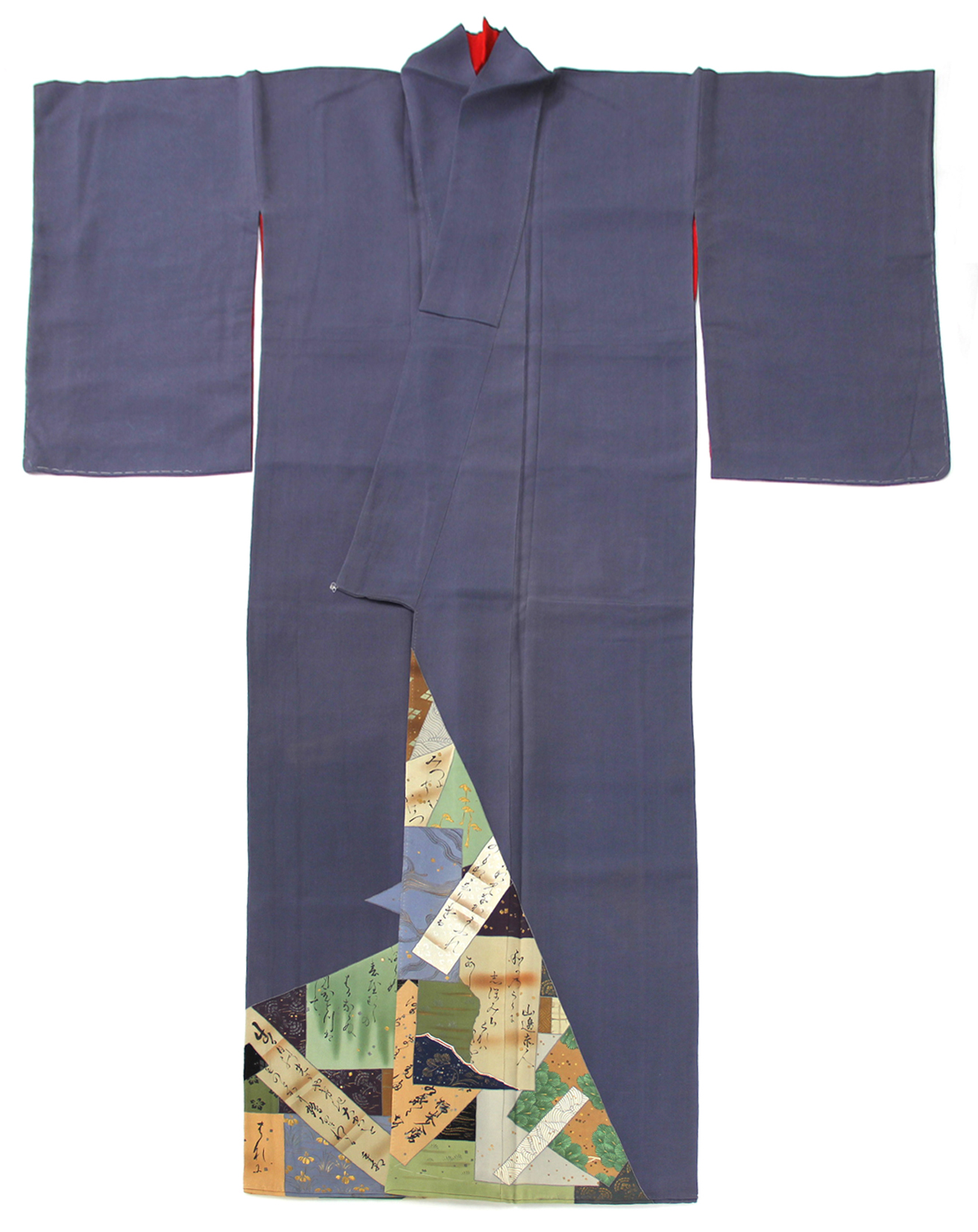
Heritage Analysis: Robe with Tanzaku and Shikishi Poem Cards
This paper presents a strategic heritage analysis of a Japanese robe featuring Tanzaku and Shikishi poem cards, crafted from crepe silk (chirimen) with resist-dyed and hand-painted patterns accented in gold. As a subject of standalone research for Katherine Fashion Lab, this garment embodies a confluence of symbolic power, historical adornment, and spiritual meaning. The analysis concludes with a targeted strategy for positioning such heritage-informed designs within the 2026 high-end luxury market, emphasizing exclusivity, narrative depth, and cultural stewardship.
Symbolic Power of Tanzaku and Shikishi in Japanese Adornment
The robe’s primary motifs—Tanzaku (narrow vertical poem strips) and Shikishi (square poem cards)—are deeply embedded in Japanese literary and aesthetic traditions. Tanzaku, typically made of decorative paper, were used to inscribe waka or haiku poetry during the Heian period (794–1185 CE), often tied to cherry blossoms or willow branches during seasonal festivals. Shikishi, larger and more formal, served as canvases for calligraphy and painting, frequently exchanged as tokens of intellectual and emotional connection among aristocrats.
Symbolic power derives from the act of writing poetry as a spiritual and social practice. In Shinto and Buddhist contexts, written words were believed to carry kotodama (spirit of language), meaning that poems inscribed on Tanzaku and Shikishi were not mere decoration but vessels of intent, blessing, and memory. When transposed onto a robe, these motifs transform the garment into a portable sanctuary of cultural memory. The wearer does not simply don a textile; they embody a lineage of poetic expression, seasonal reverence, and refined communication. For luxury strategy, this imbues the robe with intangible heritage value that transcends material craftsmanship.
Furthermore, the gold accents—applied through techniques such as kinpaku (gold leaf) or surihaku (gold foil imprint)—elevate the poem cards to sacred status. Gold in Japanese art historically signified the divine, the eternal, and the imperial. Its inclusion on this robe suggests that the poetry is not only preserved but consecrated, positioning the garment as an object of veneration rather than mere apparel.
Historical Adornment: The Robe as a Narrative Vessel
The medium of crepe silk (chirimen) is itself a testament to historical luxury. Chirimen, developed during the Edo period (1603–1868 CE), was prized for its soft texture, subtle luster, and ability to hold intricate dye patterns. The resist-dyeing process (shibori or yūzen) required meticulous labor: artisans applied rice-paste resist to silk, hand-painted designs, and then dyed the fabric in multiple stages. The result was a three-dimensional surface where patterns appear to float, echoing the ethereal quality of poetry.
Historically, robes adorned with literary motifs were worn by courtiers, scholars, and high-ranking geisha during cultural ceremonies, such as poetry gatherings (uta-kai) or seasonal viewings of cherry blossoms and autumn leaves. The garment served as a social signal of the wearer’s literacy, aesthetic sensibilities, and social rank. For example, a woman wearing a robe with hand-painted Shikishi would be recognized as a participant in elite intellectual circles, where poetic exchange was a currency of influence.
From a strategic perspective, this historical context offers Katherine Fashion Lab a differentiation lever. In an era where luxury brands often rely on generic Orientalism, this robe’s specific reference to Heian and Edo period practices provides an authentic narrative that appeals to discerning collectors. The garment is not merely “Japanese-inspired”; it is a direct descendant of a cultural artifact, demanding respect and expertise in its presentation.
Spiritual Meaning: The Robe as Mediator Between Worlds
The spiritual dimension of this robe is multifaceted. In Shinto, poetry was a means of communicating with kami (spirits), and Tanzaku were often offered at shrines during Tanabata festival, where wishes were written on strips and hung on bamboo. The robe thus carries ritualistic connotations of aspiration and divine connection. When worn, it transforms the body into a living talisman, bridging the mundane and the sacred.
Buddhist influence further deepens this symbolism. The practice of shakuhachi (meditative calligraphy) and the reverence for impermanence (mujō) found in haiku align with the robe’s transient beauty—hand-painted designs that may fade over time, crepe silk that drapes like a passing cloud. This aesthetic of impermanence is central to Japanese luxury, where objects are valued for their ephemeral grace, not their durability. For the 2026 luxury market, this offers a counter-narrative to the contemporary obsession with sustainability and permanence. Katherine Fashion Lab can position the robe as a meditative investment—an object that invites reflection on time, memory, and the art of letting go.
Additionally, the gold accents may reference Jōdo (Pure Land) Buddhist imagery, where gold signifies the radiance of enlightenment. The robe thus becomes a visual sutra, offering wearers a moment of spiritual elevation. For a high-end clientele seeking meaning beyond status, this spiritual layer provides emotional resonance that cannot be replicated by mass-produced luxury.
2026 High-End Luxury Strategy: Heritage as Competitive Advantage
To leverage this robe’s heritage for a 2026 high-end luxury strategy, Katherine Fashion Lab must adopt a curatorial approach that prioritizes rarity, provenance, and storytelling. The following strategic pillars are recommended:
1. Limited Edition Narrative Collections
Produce a series of robes that each reference a specific historical poem or seasonal festival (e.g., Tanabata, cherry blossom viewing). Each robe should be accompanied by a certificate of authenticity that includes the poem’s original text, translation, and the artisan’s signature. This transforms the garment into a collectible artifact with transparent provenance, appealing to investors and connoisseurs.
2. Experiential Retail and Digital Storytelling
Create immersive retail environments that simulate a Heian-era poetry gathering. Use augmented reality to allow clients to “unfold” the robe’s poetry in digital form, revealing hidden layers of meaning. Partner with contemporary poets to create exclusive Tanzaku that accompany each purchase, bridging tradition and modernity. This phygital strategy (physical + digital) caters to Gen Z and Millennial luxury consumers who value both craftsmanship and digital engagement.
3. Cultural Stewardship and Collaborations
Establish a foundation or partnership with Japanese cultural institutions (e.g., Kyoto National Museum, Ise Shrine) to support the preservation of resist-dyeing and hand-painting techniques. Position the brand as a guardian of intangible heritage, not just a commercial entity. Collaborate with living National Treasure artisans to co-create exclusive pieces, ensuring that each robe is a unique work of art rather than a reproduction.
4. Pricing and Positioning
Adopt a value-based pricing model that reflects the hundreds of hours of labor, the rarity of materials, and the cultural significance. Entry-level pieces (e.g., obi or accessories with Tanzaku motifs) can start at $5,000–$10,000, while full robes with hand-painted Shikishi and extensive gold work should command $50,000–$150,000. This positions the robe within the ultra-high-net-worth segment, competing with haute couture and fine art, not ready-to-wear.
Conclusion
The robe with Tanzaku and Shikishi poem cards represents a masterclass in cultural symbolism, where poetry, spirituality, and craftsmanship converge. For Katherine Fashion Lab, this garment is not a nostalgic relic but a strategic asset for the 2026 luxury market. By honoring its symbolic power, historical context, and spiritual depth, the brand can offer clients an authentic and transformative experience—one that transcends fashion to become a meditation on heritage, identity, and beauty. In an age of digital saturation and cultural appropriation, such a strategy ensures that luxury remains a vessel for meaning, not just a marker of wealth.