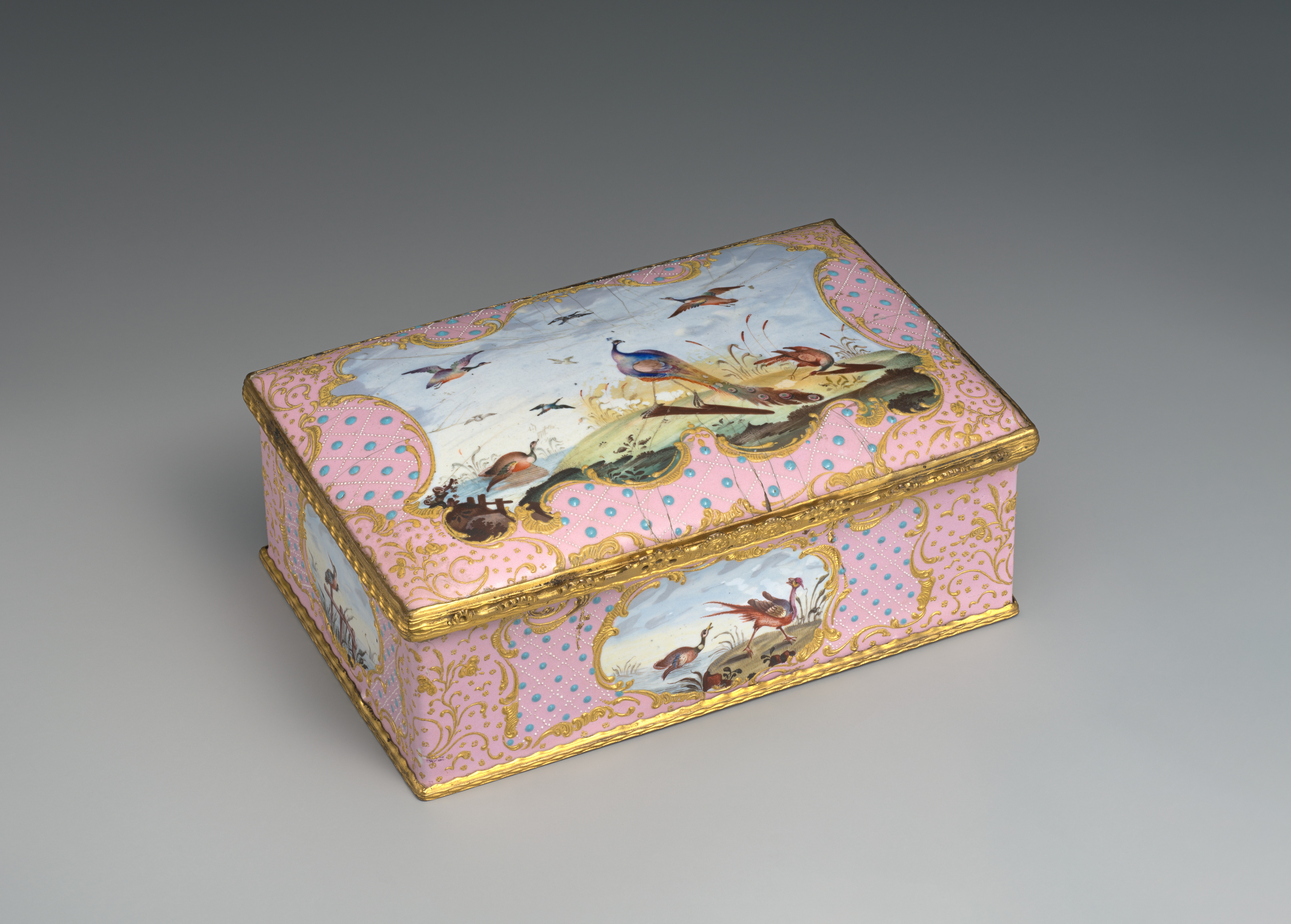
The Vestige of Vanity: A Couture Analysis of the Enameled Toilet Box
In the rarefied domain of couture, where materiality meets narrative, the artifact often transcends its functional origins to become a study in cultural memory. At Katherine Fashion Lab, we are privileged to present a standalone analysis of an object that embodies this very transcendence: the enameled toilet box. This is not merely a container for cosmetics; it is a microcosm of global heritage, a testament to the alchemical marriage of craft and commerce, and a silent narrator of the rituals of beauty that have defined civilizations. In its compact form, we uncover the blueprint of luxury—where utility is subsumed by artistry, and the mundane is elevated to the monumental.
The Material Dialectic: Enamel on Copper as a Couture Substrate
The choice of enamel on copper as the foundational medium for this toilet box is a deliberate act of couture-level sophistication. Enamel, a vitreous substance fused to metal at high temperatures, possesses a luminosity that mimics the translucency of precious gemstones, while copper provides a robust, malleable base that allows for intricate forming. This pairing is not arbitrary; it is a dialectic between fragility and permanence. The enamel’s glass-like surface is susceptible to chipping, yet its chemical bond with copper ensures a longevity that surpasses organic materials like wood or ivory. In couture terms, this is akin to selecting a silk charmeuse with a structural underlay of horsehair—a tension that yields both grace and resilience.
From a global heritage perspective, this technique traces a lineage through the Byzantine Empire, where cloisonné enamel adorned religious icons, to the Limoges workshops of 19th-century France, where enameled boxes became objets de vertu for the European aristocracy. The toilet box, therefore, carries the weight of these traditions, yet its form—a discrete, portable case for powders, pomades, or scents—speaks to a democratization of beauty rituals. It is a global artifact, borrowing the fire of the East and the precision of the West, and fusing them into a singular, covetable object.
Form as Function: The Architecture of Ritual
To analyze the toilet box is to deconstruct its architecture. Typically, these boxes range from 5 to 15 centimeters in diameter, with a hinged lid that opens to reveal a shallow interior. The lid’s surface is the primary canvas for artistic expression, often featuring hand-painted floral motifs, mythological scenes, or geometric patterns rendered in vibrant enamels. The base, while less decorated, must be perfectly weighted to prevent tipping—a detail that underscores the couture principle of ergonomic elegance. The clasp, if present, is often a small brass or silver fitting, a subtle nod to the metalwork’s heritage.
In the context of our standalone study, the toilet box’s compactness is its genius. It is a theater of intimacy, designed to be held in the palm, opened with a whisper, and used in private moments of self-adornment. This scale aligns with the couture philosophy of bespoke intimacy: the garment or accessory that fits the body perfectly, yet reveals its artistry only upon close inspection. The enamel’s glossy finish catches light, creating a halo effect around the box, transforming it into a jewel-like companion to the dressing table. Here, the object is not passive; it is an active participant in the ritual of becoming—the application of rouge or powder as an act of self-creation.
Global Heritage: A Cartography of Influence
The toilet box’s global heritage is a cartography of exchange. The enamel technique itself is a traveler: originating in ancient Mesopotamia, perfected in China’s Ming dynasty, and later adopted by Russian and European artisans. The motifs on this particular box draw from multiple geographies. A central medallion might feature a Persian-inspired arabesque, while the border echoes the millefiori patterns of Venetian glass. This syncretism is not accidental; it reflects the historical movement of luxury goods along the Silk Road and through colonial trade routes. The toilet box, therefore, is a portable museum, encapsulating the aesthetic dialogues between East and West.
For Katherine Fashion Lab, this global heritage informs our curatorial lens. We view the toilet box not as a static relic but as a dynamic node in a network of cultural production. Its enamel surface records the hand of the artisan, the palette of the region, and the tastes of the patron. In the European context, these boxes were often commissioned as gifts for royal courts, their imagery coded with political allegory or romantic symbolism. In the East, they were part of a larger cosmetic culture that included delicate porcelain jars and lacquered compacts. The toilet box, thus, bridges these worlds, offering a material history of beauty as a universal—yet distinctly localized—practice.
The Couture Parallel: From Atelier to Dressing Table
The parallels between the enameled toilet box and high couture are profound. Both are predicated on artisanal mastery, where hours of labor are invisible in the final product. The enamelist, like the couturier, must control heat, timing, and pigment with exacting precision. A single bubble or crack in the enamel can render the piece worthless, just as a misaligned seam can ruin a gown. This risk imbues the object with an aura of preciousness, elevating it from commodity to art.
Furthermore, the toilet box’s role in the rituals of presentation mirrors the couture show. Just as a gown is unveiled on a runway, the toilet box is revealed in a boudoir, its lid opening to disclose the precious contents within. The act of opening is itself a performance—a twist of the wrist, a click of the clasp—that echoes the slow reveal of a couture garment’s hidden details. The box’s interior, often lined with velvet or silk, adds a tactile layer of luxury, reminiscent of the inner lining of a haute couture jacket, where the label is stitched with the same care as the outer fabric.
Conclusion: The Enduring Allure of the Miniature
In concluding this analysis, we affirm that the enameled toilet box is far more than a historical curiosity. It is a couture object in its own right, embodying the principles of material integrity, global narrative, and intimate ritual. At Katherine Fashion Lab, we champion such artifacts as essential to understanding the evolution of luxury. They remind us that beauty is not merely skin-deep but is enshrined in the objects we create to contain and facilitate it. The toilet box, with its enameled glow and copper soul, stands as a testament to the enduring human desire to adorn, to preserve, and to present the self with artistry. In its quiet, portable form, it holds the history of global craftsmanship—and the future of couture’s dialogue with the past.