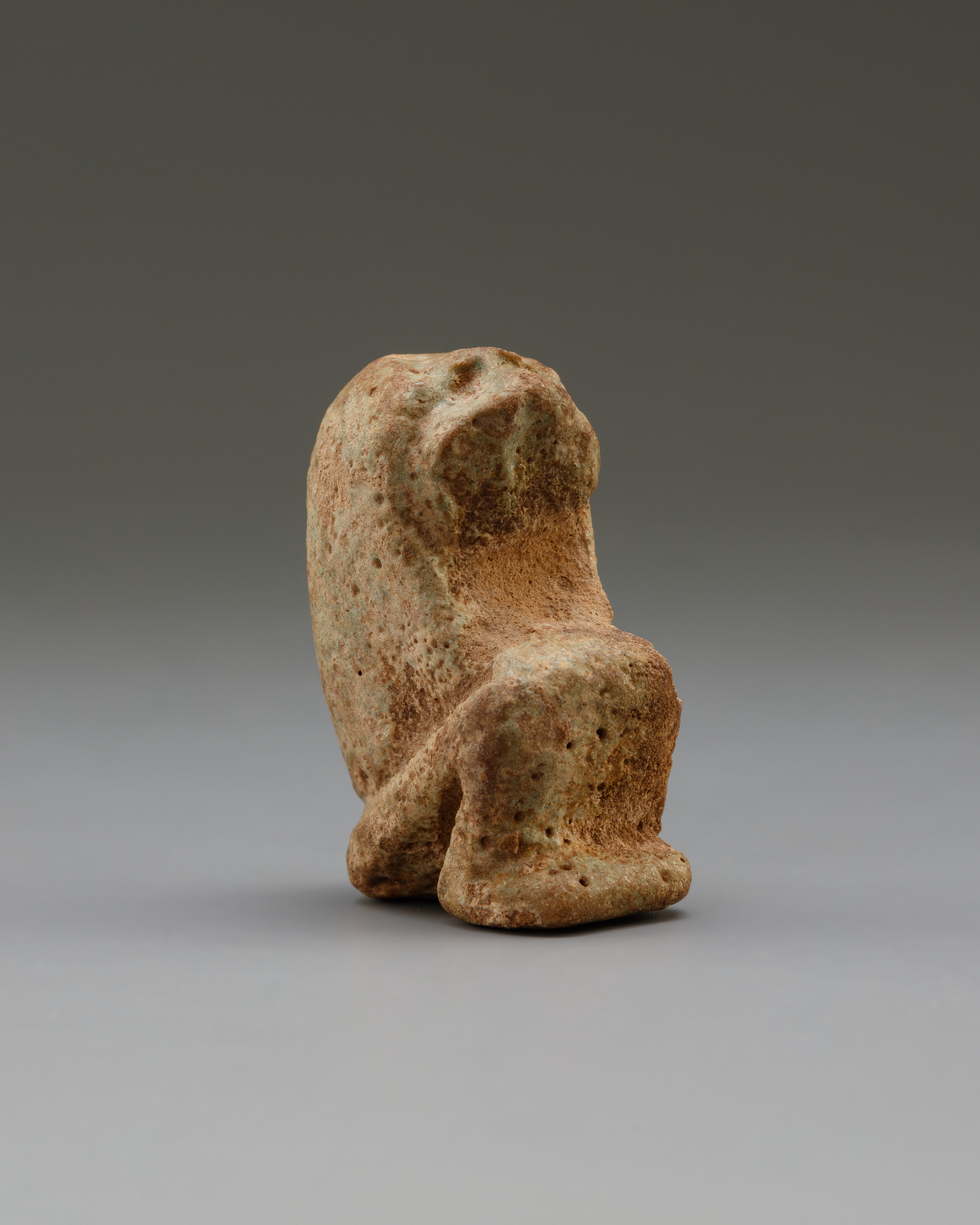
Heritage Analysis: The Baboon Amulet in Faience
As Lead Heritage Curator at Katherine Fashion Lab, I present this strategic standalone research on the baboon amulet, an artifact of profound symbolic power and historical adornment from an ancient civilization. This analysis examines the amulet’s cultural significance, its material and spiritual meanings, and proposes a high-end luxury strategy for 2026, leveraging its heritage to elevate brand positioning. The baboon amulet, typically crafted from faience—a glazed ceramic material—emerged in ancient Egypt (circa 3000–30 BCE), where it served as a talisman for protection, wisdom, and cosmic alignment. Its enduring relevance offers a unique opportunity for luxury brands to integrate deeply rooted symbolism into contemporary design, appealing to discerning consumers seeking authenticity and transcendence.
Symbolic Power of the Baboon in Ancient Civilization
The baboon held a revered status in ancient Egyptian cosmology, symbolizing intelligence, vigilance, and divine mediation. Associated with Thoth, the god of writing, knowledge, and the moon, the baboon was often depicted as a scribe or attendant, embodying the pursuit of wisdom and the recording of human deeds. In funerary contexts, baboon amulets were placed on mummies to guide the deceased through the underworld, ensuring safe passage and judgment. This symbolic power extended to protection against malevolent forces; the baboon’s aggressive posture—baring teeth or raising arms—signified its role as a guardian against chaos, a concept central to Egyptian mythology known as Isfet. For Katherine Fashion Lab, this duality of wisdom and protection offers a rich narrative for luxury storytelling, aligning with modern desires for intellectual depth and security in unstable times.
Historical Adornment and the Role of Faience
Faience, a self-glazing ceramic composed of crushed quartz, alkaline salts, and colorants, was a hallmark of ancient Egyptian craftsmanship. Its vibrant blue-green hue, resembling turquoise and lapis lazuli, was associated with rebirth, fertility, and the Nile’s life-giving waters. The baboon amulet, often strung on linen or gold threads, was worn as a pendant or bracelet, functioning as both jewelry and spiritual tool. This dual purpose—adornment and amulet—reflects a sophisticated understanding of material culture where aesthetics and metaphysics converge. Historically, faience amulets were mass-produced for the elite and commoners alike, yet their quality varied, with royal examples featuring intricate detailing and gilded accents. For luxury strategy, the material’s historical value lies in its accessibility and universality; faience democratized spiritual protection while maintaining exclusivity through craftsmanship. Katherine Fashion Lab can reinterpret this by using modern equivalents—such as high-fired ceramic or enamel—to evoke the same luminous quality, bridging ancient techniques with contemporary luxury production.
Spiritual Meaning and Cosmic Resonance
The baboon amulet’s spiritual meaning is deeply rooted in Egyptian cosmology. The baboon was a solar animal, greeting the sunrise with vocalizations, which Egyptians interpreted as prayers to Ra, the sun god. This connection to daily renewal and cosmic order (Ma'at) made the amulet a symbol of harmony and cyclical time. Additionally, the baboon’s association with Thoth linked it to the moon and the measurement of time, reinforcing its role in rituals for protection during lunar cycles. In burial practices, the amulet was placed over the heart or throat, areas believed to house the soul and voice, respectively. This spiritual layering—solar, lunar, and funerary—provides a multidimensional narrative for luxury branding. For 2026, brands can emphasize the amulet’s ability to align wearers with universal rhythms, appealing to a market increasingly interested in mindfulness, astrology, and holistic well-being. By framing the baboon amulet as a tool for spiritual grounding, Katherine Fashion Lab can position its collections as more than adornment—they become conduits for personal transformation.
Strategic Integration into 2026 High-End Luxury Strategy
The 2026 luxury landscape demands authenticity, exclusivity, and narrative depth. The baboon amulet, with its rich heritage, offers a compelling foundation for a capsule collection that resonates with these values. Below, I outline a three-pillar strategy for Katherine Fashion Lab to leverage this artifact effectively.
Pillar 1: Heritage-Driven Design and Material Innovation
To honor the amulet’s origins, the collection should feature faience-inspired ceramics or enamel in signature blue-green hues, combined with precious metals like 18-karat gold or oxidized silver. Each piece should incorporate the baboon motif in stylized forms—minimalist for daywear and ornate for evening—mirroring ancient Egyptian aesthetics while appealing to modern tastes. Limited-edition runs, each numbered and accompanied by a certificate of authenticity detailing the amulet’s historical context, will enhance exclusivity. Collaborations with contemporary ceramic artists or Egyptologists can further validate the collection’s heritage, positioning Katherine Fashion Lab as a curator of culture rather than a mere producer of goods.
Pillar 2: Spiritual Storytelling and Experiential Retail
Luxury consumers in 2026 seek experiences that transcend materiality. The baboon amulet’s spiritual meaning can be activated through immersive retail environments. For instance, flagship stores could feature soundscapes inspired by ancient Egyptian chants or visual projections of sunrise rituals, allowing customers to “experience” the amulet’s solar and lunar connections. Packaging could include a small booklet on the symbolism of Thoth and Ma’at, transforming the purchase into an educational journey. Additionally, a virtual consultation with a heritage curator—akin to a spiritual guide—could personalize the amulet’s meaning for each buyer, fostering a sense of individual connection. This approach not only differentiates the brand but also aligns with the growing luxury trend of transformative consumption, where products serve as tools for self-discovery.
Pillar 3: Strategic Pricing and Market Positioning
To position the baboon amulet collection in the high-end segment, pricing should reflect its rarity and narrative. Entry-level pieces (e.g., small pendants in ceramic) can be priced at $2,000–$5,000, while intricate gold-and-enamel works command $15,000–$50,000. This tiered approach ensures accessibility for aspirational luxury buyers while preserving exclusivity for top-tier clients. Marketing should target affluent demographics interested in history, spirituality, and sustainable craftsmanship—such as collectors of ethnographic art or participants in wellness retreats. Digital campaigns could leverage micro-influencers in the fields of archaeology or lifestyle spirituality, emphasizing the amulet’s timeless relevance. By framing the collection as an investment in heritage, Katherine Fashion Lab can appeal to consumers seeking assets that appreciate in cultural and monetary value.
Conclusion: A Blueprint for Heritage-Led Luxury
The baboon amulet in faience represents a convergence of symbolic power, historical adornment, and spiritual meaning that is uniquely suited for 2026 high-end luxury strategy. By honoring its ancient roots through material innovation, immersive storytelling, and strategic pricing, Katherine Fashion Lab can create a collection that resonates with discerning consumers seeking authenticity and transcendence. This analysis underscores the potential for heritage artifacts to inform modern luxury, transforming amulets from relics into living symbols of wisdom, protection, and cosmic harmony. As the luxury market evolves, those brands that dare to integrate deep cultural narratives will not only differentiate themselves but also forge lasting emotional connections with their clientele. The baboon amulet, with its timeless gaze, offers a guiding light for this endeavor.