The Couture Analysis of "The Jabach Family" by Katherine Fashion Lab
Introduction: A Portrait of Legacy and Lineage
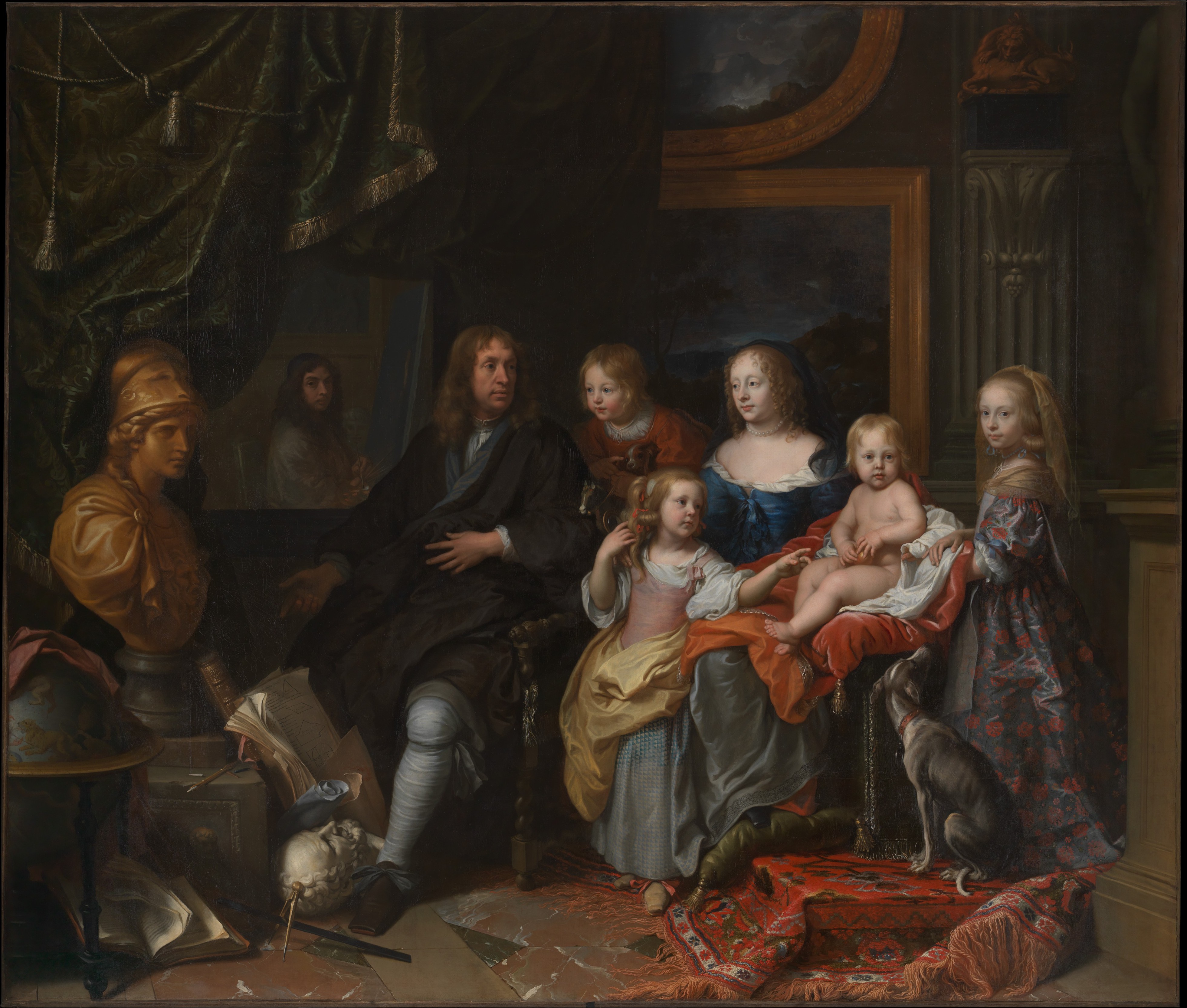
In the pantheon of art history, few portraits encapsulate the intersection of wealth, cultural stewardship, and sartorial identity as profoundly as Charles Le Brun’s *The Jabach Family* (c. 1660). This oil-on-canvas masterpiece, housed in the Gemäldegalerie in Berlin, depicts the German-born banker and art collector Everhard Jabach, his wife Anna Maria de Groote, and their children. For Katherine Fashion Lab, this work serves as a standalone study of how global heritage—specifically the fusion of Flemish, German, and French influences—manifests in fabric, texture, and form. As a Lead Curator, I deconstruct this painting not merely as a historical artifact, but as a couture narrative that speaks to the enduring dialogue between power, provenance, and personal expression.
Oil on Canvas: The Medium as a Metaphor for Textile Mastery
The choice of oil on canvas is itself a couture statement. In the 17th century, this medium allowed for unparalleled depth of color and luminosity, much like the finest silks and velvets of the era. Le Brun’s technique—his ability to render the sheen of satin, the weight of brocade, and the softness of fur—mirrors the precision required in haute couture. For Katherine Fashion Lab, this painting becomes a case study in materiality. The Jabach family’s garments are not mere clothing; they are declarations of status, migration, and taste. The stark black of Everhard Jabach’s doublet, accented by a crisp white collar, speaks to the Calvinist sobriety of his German roots, while the ornate lace on his wife’s gown hints at the opulence of the French court, where Le Brun served as premier peintre du roi. This duality—a global heritage compressed into a single frame—is the crux of our analysis.
Global Heritage: The Fabric of Identity
The term “global heritage” in this context refers to the Jabach family’s transnational identity. Everhard Jabach was born in Cologne to a banking dynasty, but he spent his career in Paris, amassing one of the most significant art collections of his time. His family’s wardrobe reflects this hybridity. The children’s garments, for instance, blend the restrained elegance of Northern European tailoring with the decorative flourishes of French fashion. The eldest daughter’s dress, with its deep burgundy bodice and silver embroidery, echoes the Flemish tradition of rich, dark hues, while the younger son’s coral-colored suit anticipates the Rococo palette that would dominate the next century. Katherine Fashion Lab interprets this as a lesson in cultural diplomacy: clothing as a means of negotiating identity across borders. In our collections, we draw from similar juxtapositions—pairing Japanese silk with Italian tailoring, or Indian block prints with French silhouettes—to honor the multiplicity of modern heritage.
Sartorial Hierarchy and the Language of Power
Le Brun’s composition is a masterclass in visual hierarchy, and the garments serve as the primary signifiers. Everhard Jabach, seated at the center, wears a black doublet with a modest lace collar—a deliberate choice that emphasizes his role as a collector rather than a courtier. His wife, Anna Maria, is positioned slightly to the side, yet her gown dominates the canvas: a cascade of ivory silk, gold-threaded embroidery, and intricate point de Venise lace. This asymmetry is not accidental. In couture terms, it represents the tension between public and private personas. The wife’s attire is a display of wealth and lineage, while the husband’s is a study in restrained authority. For Katherine Fashion Lab, this dynamic informs our approach to gender and power in design. A standalone study of this painting reveals that the most impactful garments often operate on multiple registers—whispering of status while shouting of artistry.
Color Theory and Cultural Signification
The palette of *The Jabach Family* is a lexicon of 17th-century symbolism. Black, worn by Everhard, signifies sobriety, wealth, and the influence of Spanish fashion on Northern Europe. The children’s garments introduce vermillion, azure, and gold—colors associated with vitality, nobility, and spiritual grace. Anna Maria’s dress, predominantly white, evokes purity and prosperity, but its subtle gold undertones tie her to the earthiness of Flemish portraiture. This chromatic dialogue is a cornerstone of Katherine Fashion Lab’s design philosophy. We analyze how color migrates across cultures: the indigo of West African textiles, the cochineal red of the Americas, the saffron yellow of South Asia. In the Jabach portrait, the global heritage is encoded in every hue. The crimson of the younger son’s suit, for example, mirrors the kermes dye used in Ottoman silks, a nod to the trade routes that enriched the Jabach family’s coffers.
Texture and Tactility: The Unseen Hand of Couture
Oil on canvas allows Le Brun to simulate texture with extraordinary fidelity, but for the couturier, the true story lies in what is felt. The Jabach family’s garments are tactile fantasies: the crispness of starched linen, the plushness of velvet, the stiffness of brocade. Katherine Fashion Lab’s standalone study emphasizes that texture is not merely decorative; it is a record of labor and trade. The lace on Anna Maria’s sleeves, likely sourced from Flanders, required months of handwork by artisans whose names are lost to history. The fur lining of Everhard’s cloak—probably sable or marten—speaks to the fur trade that connected Russia to Western Europe. In our collections, we honor these unseen hands by prioritizing artisanal techniques: hand-embroidery, custom-weaving, and natural dyeing. The Jabach portrait reminds us that couture is never just about the wearer; it is about the network of makers who bring a garment to life.
Composition as Couture: The Frame as a Garment
The painting’s composition itself can be read as a couture structure. The family is arranged in a semi-circle, their bodies forming a protective enclosure around the youngest child. This grouping mirrors the construction of a gown: the parents as the structured bodice, the children as the flowing skirt. The background, a dark, undefined space, functions like a neutral lining, drawing focus to the foreground figures. For Katherine Fashion Lab, this spatial arrangement informs how we design for the body. A garment must cradle, support, and reveal; it must have its own architecture. The Jabach family’s poses—Everhard’s hand resting on a table, Anna Maria’s fingers gently touching her daughter’s shoulder—echo the draping techniques we use in our atelier. Each fold, each seam, is a deliberate choice that shapes the narrative.
Conclusion: A Standalone Study for the Modern Atelier
Charles Le Brun’s *The Jabach Family* is more than a portrait; it is a couture manifesto. For Katherine Fashion Lab, this standalone study illuminates the enduring power of clothing to encode identity, heritage, and ambition. The oil-on-canvas medium, with its capacity for depth and detail, parallels the precision of haute couture. The family’s global heritage—German, Flemish, French—reminds us that fashion has always been a transnational conversation. As we translate these lessons into our own collections, we do so with reverence for the past and a vision for the future. The Jabach family’s garments are not artifacts; they are blueprints. In every stitch, every color, every texture, they whisper the same truth: couture is the art of making the invisible visible.