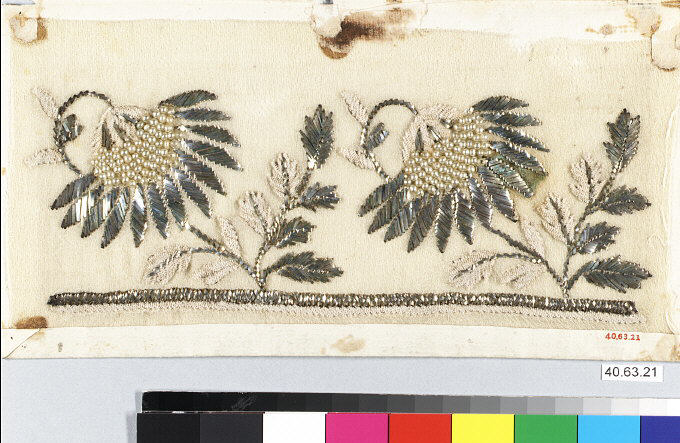
The Poetics of the Periphery: A Couture Analysis of the Dress Border
In the lexicon of haute couture, the border of a garment is often dismissed as a mere finishing detail—a hem, a trim, a necessary edge. Yet, within the ateliers of Katherine Fashion Lab, the dress border is elevated to a central narrative device. It is not the conclusion of design but its argument; a liminal space where structure meets fluidity, and where global heritage converges with material mastery. This standalone study dissects the dress border through the lens of couture, focusing on a singular creation: a silk gown whose edge is not an afterthought but the protagonist. Drawing from a rich tapestry of global heritage—from the intricate broderie anglaise of European courts to the meticulous shibori techniques of Japan—this analysis reveals how Katherine Fashion Lab transforms the periphery into a site of profound artistic and cultural dialogue.
Silk as the Substrate of Heritage
Silk, the material chosen for this study, is itself a testament to global heritage. Originating in ancient China, its trade along the Silk Road catalyzed cross-continental exchanges of aesthetics, technology, and luxury. At Katherine Fashion Lab, silk is not merely a fabric; it is a historical archive. The gown’s body is constructed from a matte charmeuse, its surface a canvas of subtle luminosity. Yet, the border—the focus of this analysis—is where the silk undergoes a transformation. The lab employs a double-faced silk gazar for the border, a fabric known for its architectural stiffness, juxtaposed against the fluidity of the charmeuse. This contrast is intentional: the border becomes a structural exoskeleton, framing the body while referencing the rigidity of historical corsetry and the suppleness of traditional Asian robes.
The border’s construction is a masterclass in couture technique. It is not sewn but molded using a method reminiscent of moulage, where the silk is shaped directly on a dress form. This process, inherited from 19th-century Parisian ateliers, is combined with a kumihimo-inspired braided edge—a Japanese silk-braiding technique dating back to the 8th century. The result is a border that feels both ancient and avant-garde, a physical embodiment of global heritage distilled through silk.
The Border as a Cartographic Device
In traditional couture, the border often marks the threshold between the garment and the void. At Katherine Fashion Lab, it becomes a cartographic tool, mapping cultural narratives. The gown’s hem, for instance, is not a straight line but a scalloped wave inspired by the paisley motifs of Persian textiles. This pattern, which traveled from India to Europe via the East India Company, is reinterpreted here as a three-dimensional relief. Each scallop is hand-embroidered with gold thread using the zardozi technique, a Mughal-era craft that once adorned the robes of emperors. The border thus becomes a map of trade routes, a silent chronicle of how ornamentation moved across continents.
Equally significant is the neckline border. It is cut on the bias, creating a fluid, almost liquid edge that references the choli blouses of South Asia. Yet, the finish is pure Parisian: a rouleau piping of the same silk, meticulously hand-rolled and stitched. This hybridity is not accidental. The design team at Katherine Fashion Lab conducted extensive research into the hanbok of Korea, the kimono of Japan, and the boubou of West Africa, extracting how each culture treats the garment’s edge as a space for identity expression. The neckline border, therefore, is neither purely Eastern nor Western; it is a synthesized language, a dialogue between the seamless draping of the sari and the tailored precision of the European bodice.
Structural Integrity and Symbolic Weight
The border’s role in couture is not merely decorative; it is structural. In this gown, the border functions as a counterbalance to the silk’s natural drape. The hem, weighted with a chain of oxidized silver beads sourced from a Venetian artisan, ensures the gown falls with a deliberate, controlled sweep. This technique echoes the lead weights used in 18th-century French court gowns, which prevented the silk from billowing in the wind. Yet, the beads are arranged in a pattern that mimics Mughal jaali latticework, adding a layer of symbolic weight. The border is not just holding the fabric; it is holding history.
The armhole borders, meanwhile, are constructed with a hollow hem—a technique where the seam allowance is encased within the silk, creating a clean, floating edge. This method, often seen in Japanese kimono construction, allows the gown to move with the wearer without pulling or distorting. The result is a border that feels weightless, yet its engineering is rigorous. Each stitch is placed at a precise tension, calculated to preserve the silk’s integrity while allowing for the natural expansion of the body. This is couture as physics, where the border becomes a fulcrum between form and function.
The Border as a Site of Artistic Autonomy
What elevates this study from mere technical analysis is the artistic autonomy granted to the border. In many couture houses, the border is subservient to the garment’s overall silhouette. At Katherine Fashion Lab, the border is allowed to dominate. The train of the gown, for instance, features a border that extends outward into a free-standing ruffle, supported by a hidden framework of horsehair braid. This ruffle is not attached to the gown’s body but floats independently, creating a shadow of movement. It is a deliberate subversion of the hem’s traditional role: instead of ending the garment, the border begins a new form—a sculptural appendage that challenges the viewer’s perception of where the dress ends and the space begins.
This autonomy is further expressed through the border’s color gradient. The silk is hand-dyed using a shibori resist technique, where the border is bound and submerged in an indigo bath while the body remains white. The result is a border that transitions from deep navy to pale cerulean, a visual echo of the ikat textiles of Indonesia. The color is not applied uniformly; it bleeds into the body of the gown at the edges, blurring the line between border and garment. This intentional bleeding is a metaphor for the fluidity of cultural boundaries—a statement that heritage is not a fixed line but a porous, evolving frontier.
Conclusion: The Border as a Manifesto
In this standalone study, the dress border emerges as a manifesto for Katherine Fashion Lab’s design philosophy. It is a testament to how global heritage, when filtered through the lens of couture, can produce something entirely new. The silk border is not a relic of the past but a living archive, one that speaks to the interconnectedness of human creativity. It challenges the industry to reconsider what a garment’s edge can signify—not as a limit, but as a threshold; not as an end, but as a beginning. For the wearer, this border is an invitation to engage with the world’s textile traditions, to feel the weight of history in every movement. For the observer, it is a reminder that in the hands of a master, even the periphery can become the center.