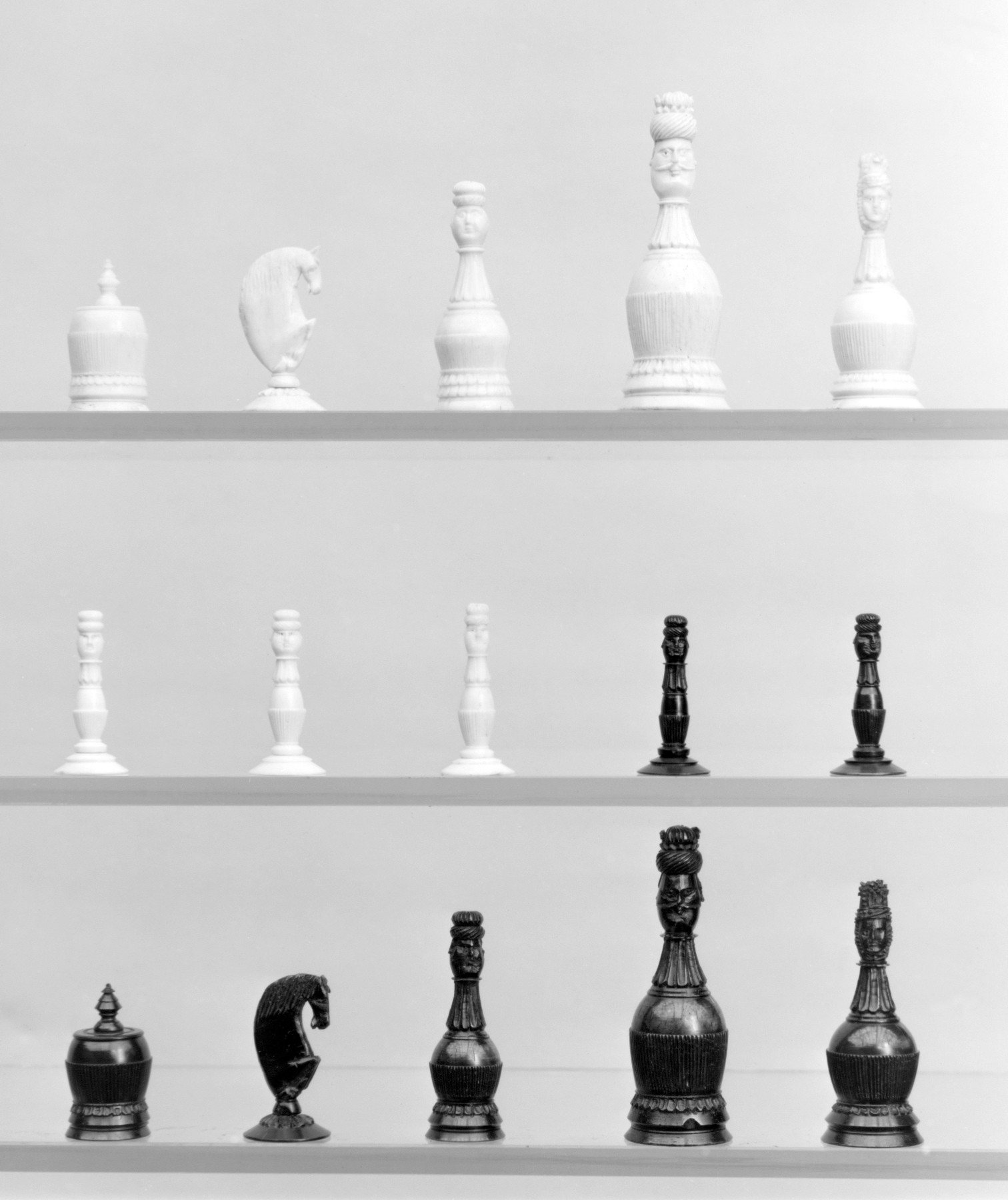
Strategic Heritage Analysis: The Chessmen (32) as a Luxury Archetype for Katherine Fashion Lab
In the pursuit of defining a new vernacular for high-end luxury in 2026, Katherine Fashion Lab must look beyond transient trends and toward artifacts of enduring symbolic power. The 32-piece chess set, carved from ivory and brown horn within an ancient civilization, presents a profound strategic opportunity. This analysis examines the chessmen not merely as a game but as a repository of historical adornment, spiritual meaning, and hierarchical symbolism. The findings are intended to inform a standalone luxury strategy that leverages heritage as a competitive differentiator.
Symbolic Power: The Architecture of Authority
Hierarchy as Design Language
The chess set is a distilled model of societal order. Each piece—from the pawn to the king—embodies a distinct rank, function, and narrative of power. In ancient civilizations, such as those in Persia or India where chess originated, the game served as a metaphor for military strategy and governance. The king, with its limited mobility yet supreme value, symbolizes the apex of authority, while the queen (or vizier, in earlier forms) represents strategic influence and protection. The rook, knight, and bishop each denote specific domains of power: fortification, chivalry, and spiritual counsel, respectively. For Katherine Fashion Lab, this hierarchical structure offers a ready-made lexicon for luxury branding. Each piece can be reimagined as a totemic emblem of status, allowing the brand to create a collection where every item carries a distinct, codified meaning. The 32 pieces together form a complete ecosystem of power, mirroring the ideal luxury portfolio—a curated set of assets that collectively command respect and exclusivity.
Duality and Conflict in Luxury Narrative
The chessmen are inherently dyadic: two opposing forces, identical in structure but opposite in color. The use of ivory (white) and brown horn (dark) creates a visual and philosophical dichotomy. This duality is central to the symbolic power of the set. It speaks to the tension between light and shadow, order and chaos, tradition and innovation—themes that resonate deeply in high-end luxury. For the 2026 market, where consumers seek authenticity and narrative depth, this binary system can be leveraged to tell stories of balance, conflict, and resolution. A luxury collection built on this principle could feature contrasting materials, textures, or colorways, inviting the wearer to engage with the dialectic of power. The symbolic power of the chessmen is thus not static; it is dynamic, interactive, and ripe for reinterpretation as a brand’s core narrative.
Historical Adornment: Craftsmanship as Cultural Capital
Ivory and Horn: Materials of Prestige
The choice of ivory and brown horn is historically significant. In ancient civilizations, ivory—often sourced from elephant tusks or walrus teeth—was a material reserved for royalty, priesthood, and the highest echelons of society. Its creamy, luminous surface and durability made it a canvas for intricate carving. Brown horn, typically from buffalo or ox, was also valued for its organic warmth and resilience. The pairing of these two materials in a single set represents a deliberate juxtaposition of the precious and the utilitarian, the sacred and the profane. For Katherine Fashion Lab, these materials serve as a case study in material storytelling. The brand can adopt similar principles by sourcing rare, ethically obtained materials that convey a narrative of exclusivity and historical continuity. In 2026, the luxury consumer will be drawn to materials that are not only beautiful but also imbued with a sense of provenance and cultural resonance.
Carving Techniques as Artistic Heritage
The adornment of each chess piece is a testament to the artisan’s skill. Ancient carvers would spend weeks or months on a single set, using hand tools to create delicate detailing—the king’s crown, the knight’s mane, the rook’s battlements. Each piece is a miniature sculpture, a work of art that transcends its functional purpose. This level of craftsmanship is the antithesis of mass production. For a luxury brand, this historical precedent underscores the value of artisanal labor and bespoke production. Katherine Fashion Lab can position itself as a guardian of such techniques, collaborating with master craftspeople to create limited-edition pieces that celebrate the intersection of tradition and modernity. The historical adornment of chessmen is not merely decorative; it is a signal of cultural capital, a marker of the owner’s appreciation for time, skill, and heritage.
Spiritual Meaning: The Game as a Sacred Mirror
Chess as a Cosmological Model
Beyond its strategic and decorative roles, the chess set has deep spiritual roots. In many ancient traditions, the 8x8 board and the 32 pieces were seen as a microcosm of the universe. The game’s progression—from opening to endgame—mirrored the cycles of life, death, and rebirth. The pieces themselves were often imbued with talismanic properties, believed to attract wisdom, foresight, and protection. The king and queen were sometimes associated with celestial bodies, while the pawns represented the souls of the common people, each with the potential for transformation. This spiritual dimension adds a layer of depth that is highly relevant for luxury branding in 2026, where consumers increasingly seek meaning and mindfulness in their purchases. A collection inspired by the chessmen can be positioned as a tool for personal reflection, a wearable meditation on strategy, fate, and self-mastery.
Ritual and Transcendence
The act of playing chess was often ritualistic, performed in quiet, contemplative spaces. The pieces were handled with reverence, their ivory and horn surfaces absorbing the energy of countless games. For Katherine Fashion Lab, this suggests a new approach to luxury retail: creating environments and experiences that mimic the sacred nature of the game. Pop-up installations, private viewings, or interactive digital platforms could invite clients to “play” with the collection, engaging with the spiritual symbolism of each piece. By framing the chessmen as objects of transcendence, the brand can elevate its offerings from mere commodities to artifacts of personal and collective significance.
2026 High-End Luxury Strategy: From Artifact to Asset
Curated Exclusivity and the Limited Edition Model
The 32-piece chess set naturally lends itself to a limited-edition strategy. Each set is unique, with variations in carving, material, and patina. For Katherine Fashion Lab, this translates into a drop model for the luxury market. The brand could release a series of 32 highly exclusive items—perhaps one for each piece—over the course of a season. Each item would be numbered, authenticated, and accompanied by a narrative dossier detailing its symbolic meaning, historical provenance, and craft process. This approach creates scarcity, narrative depth, and collector’s value, all of which are critical drivers in the 2026 luxury landscape. The chessmen are not just products; they are investment-grade assets.
Strategic Partnerships and Cultural Capital
To fully leverage the heritage of the chessmen, Katherine Fashion Lab should pursue partnerships with institutions that hold ancient chess sets in their collections—museums, private collectors, or cultural foundations. Co-branded exhibitions, scholarly publications, or exclusive access events would position the brand as a thought leader in heritage luxury. Additionally, collaborations with contemporary artists who reinterpret chess symbolism could generate buzz and attract a younger, culturally literate audience. The goal is to embed the brand within the broader cultural conversation, using the chessmen as a bridge between past and future, tradition and innovation.
Material Innovation and Ethical Luxury
Given the ethical concerns surrounding ivory, the 2026 strategy must pivot to alternative materials that evoke the same prestige without environmental cost. Katherine Fashion Lab can pioneer the use of sustainable, high-performance materials—such as lab-grown ivory, fossilized palm nut, or bio-resin—that mimic the luster and tactility of traditional ivory and horn. This positions the brand as both a guardian of heritage and a champion of sustainability, a duality that resonates powerfully with modern luxury consumers. The chessmen’s legacy of material prestige can thus be honored and evolved.
Experiential Retail and the Game of Life
Finally, the spiritual and strategic dimensions of chess offer a blueprint for experiential retail. Katherine Fashion Lab could design flagship stores as “game boards,” where clients navigate through different zones representing the pieces’ powers. Private consultations could be framed as “strategic sessions,” with stylists acting as grandmasters guiding clients toward their ideal collection. The chessmen become a metaphor for the luxury journey itself: a game of calculated moves, personal expression, and ultimate victory.
Conclusion: The Chessmen as a Strategic Archetype
The 32 chessmen, carved from ivory and brown horn in an ancient civilization, are far more than a game. They are a repository of symbolic power, historical adornment, and spiritual meaning. For Katherine Fashion Lab, they offer a complete strategic framework for 2026 high-end luxury: a narrative of hierarchy and duality, a celebration of artisanal craftsmanship, a mirror for personal transcendence, and a model for curated exclusivity. By embracing the chessmen as a heritage archetype, the brand can differentiate itself in a crowded market, speaking to consumers who seek not just beauty, but depth, meaning, and timeless authority. The game is set. The move is yours.