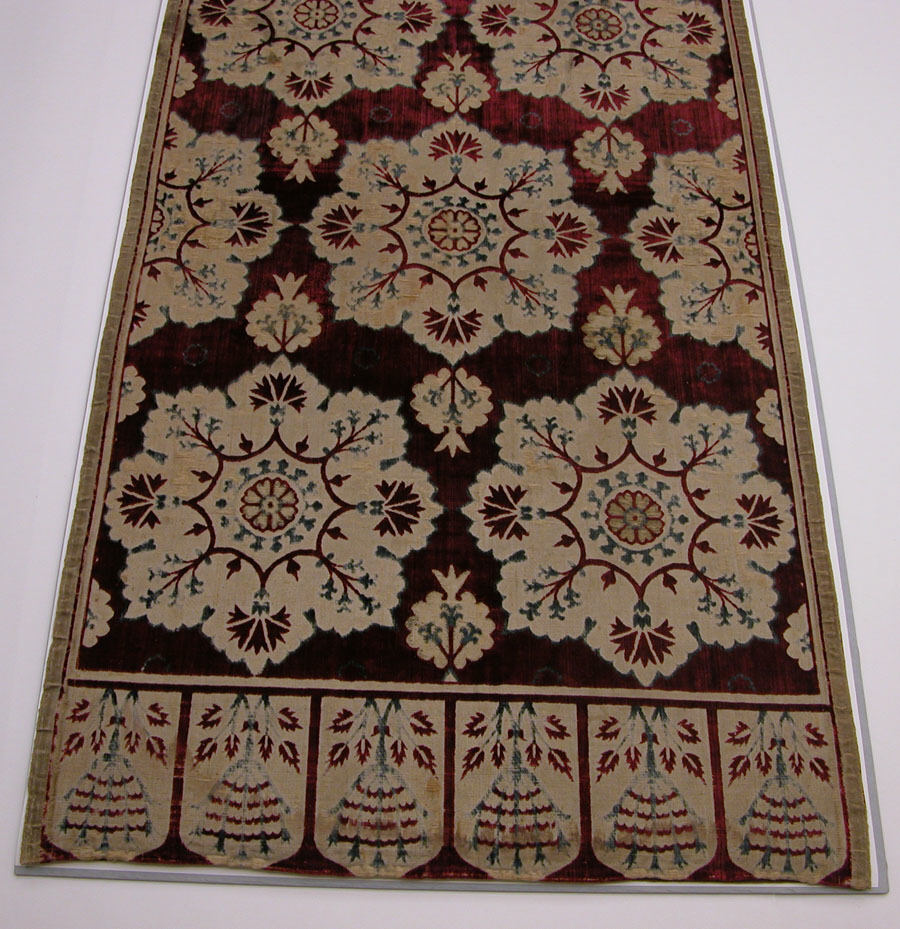
Deconstructing the Cushion Cover: A Microcosm of Global Textile Heritage
Within the curated archives of Katherine Fashion Lab, the humble cushion cover, or yastik, is elevated from domestic accessory to a seminal text of material culture. This standalone study focuses on a singular artifact: a cushion cover of probable Ottoman lineage, executed in the sophisticated interplay of cut and voided velvet with brocaded detailing, suspected to be of silk and linen. Such an object is not merely decorative; it is a dense, tactile archive. It encapsulates centuries of cross-continental trade, technological innovation in loom engineering, and the silent language of symbolic ornamentation. To analyze this piece is to engage in a forensic unpacking of global heritage, where every thread converges narratives from the Silk Roads to European courts, from monastic scriptoria to nomadic tent complexes.
Material Semantics: Silk, Linen, and the Hierarchy of Touch
The proposed material matrix—silk combined with linen—is itself a statement of intentional contrast and function. Silk, the ultimate luxury fiber, traversed the ancient world from China, embodying wealth, status, and sensuality. Its use in this context immediately signals an object of significance, destined for a space of reception and demonstration, likely within a wealthy Ottoman household or a diplomatic gift. The linen, however, introduces a narrative of practicality and structural integrity. Often used as the warp in complex velvets, linen provides a sturdy, less-elastic foundation upon which the lavish silk pile is built. This material duality mirrors the object's purpose: it is both a symbol of opulence and a functional item designed for durability. The very presence of linen within the weave whispers of a deep understanding of textile engineering, where material properties are leveraged to create enduring beauty.
The Alchemy of Weave: Cut Velvet, Voided Velvet, and Brocade
The technical description—cut and voided velvet, brocaded—reveals a masterpiece of loom technology and artistic ambition. These are not simple techniques but the pinnacle of pre-industrial textile artistry, often requiring multiple weavers and drawloom mechanisms.
Cut Velvet involves creating a dense pile by weaving supplementary warp threads over rods, which are later cut to release the plush, luminous surface. This technique produces a tactile, light-absorbing-and-reflecting quality that is uniquely sumptuous. Voided Velvet is a more complex subset, where the pile is deliberately omitted in certain areas during weaving, creating a smooth, satin or plain-weave ground that contrasts dramatically with the raised pattern. This creates a play of texture and shadow, a chiaroscuro effect in textile form.
When brocaded onto this already complex ground, the design ascends to another level. Brocading involves weaving additional, often metallic or differently colored, weft threads into specific areas to create a raised, decorative pattern. On a voided velvet, this could mean intricate floral sprays or calligraphic motifs shimmering atop both the plush pile and the smooth voids. The labor intensity is staggering, positioning this cushion cover as a direct descendant of the most exclusive courtly and ecclesiastical textiles of the Renaissance and Ottoman Golden Age.
Ornament as Language: Decoding the Global Motif Library
The motifs rendered through these lavish techniques are where global heritage visibly coalesces. Ottoman textile design was famously syncretic, a refined amalgam of influences absorbed through empire and trade.
One might expect to encounter the çintamani (the triple-dot and wavy tiger-stripe motif of Central Asian origin), the hatayi (stylized, scrolling Chinese-inspired florals), or the precise, geometric rumi (inspired by Seljuk art). Each motif carries a legacy: the hatayi speaks of the deep cultural exchange along the Silk Road, while the rumi reflects an Islamic artistic preference for infinite, repeating pattern as an expression of divine unity. The specific arrangement—whether a centralized medallion, an all-over repeating lattice, or a directional bouquet—further communicates its intended viewing context and symbolic meaning, from talismanic protection to expressions of paradisiacal abundance.
From Yastik to Object d'Art: The Standalone Study in Context
Treating this cushion cover as a standalone study is a deliberate methodological choice at Katherine Fashion Lab. It allows us to divorce the object from its presumed utilitarian context and examine it as a self-contained canvas of artistic and technical expression. In this frame, its dimensions become a defined field, its seams a deliberate border, and its wear patterns a map of use and value. This perspective reveals that such pieces were often the most mobile and influential vectors of design language. A cushion cover could travel more easily than a carpet or a wall hanging, entering foreign interiors—from Venetian palazzi to Polish manor houses—where its aesthetics were avidly copied and adapted, fueling the phenomenon of "Turquerie" and shaping global taste.
Furthermore, its status as a cushion cover places it at the intimate intersection of the body and architecture. It is an object meant to be touched, to provide comfort, yet its exquisite craftsmanship commands visual reverence. This duality encapsulates the very essence of couture: an unparalleled commitment to craftsmanship applied to an item of personal adornment or environment.
Conclusion: The Archive in the Palm of One's Hand
The analyzed yastik, in its material sophistication and symbolic density, stands as a potent microcosm. It is a physical testament to the interconnectedness of the pre-modern world, where techniques from East and West merged in urban weaving centers like Bursa, Istanbul, Venice, and Genoa. The silk routes, the transfer of loom technology, the shared repertoire of floral and geometric motifs—all are encoded in its structure. For Katherine Fashion Lab, this object is not an endpoint but a generative source. It challenges contemporary design to consider depth of material intelligence, the narrative power of ornament, and the notion of luxury as a product of profound skill and cultural dialogue. In holding this cushion cover, we hold a compacted world; in analyzing it, we release a heritage that continues to inform the very foundations of textile art and haute couture today.