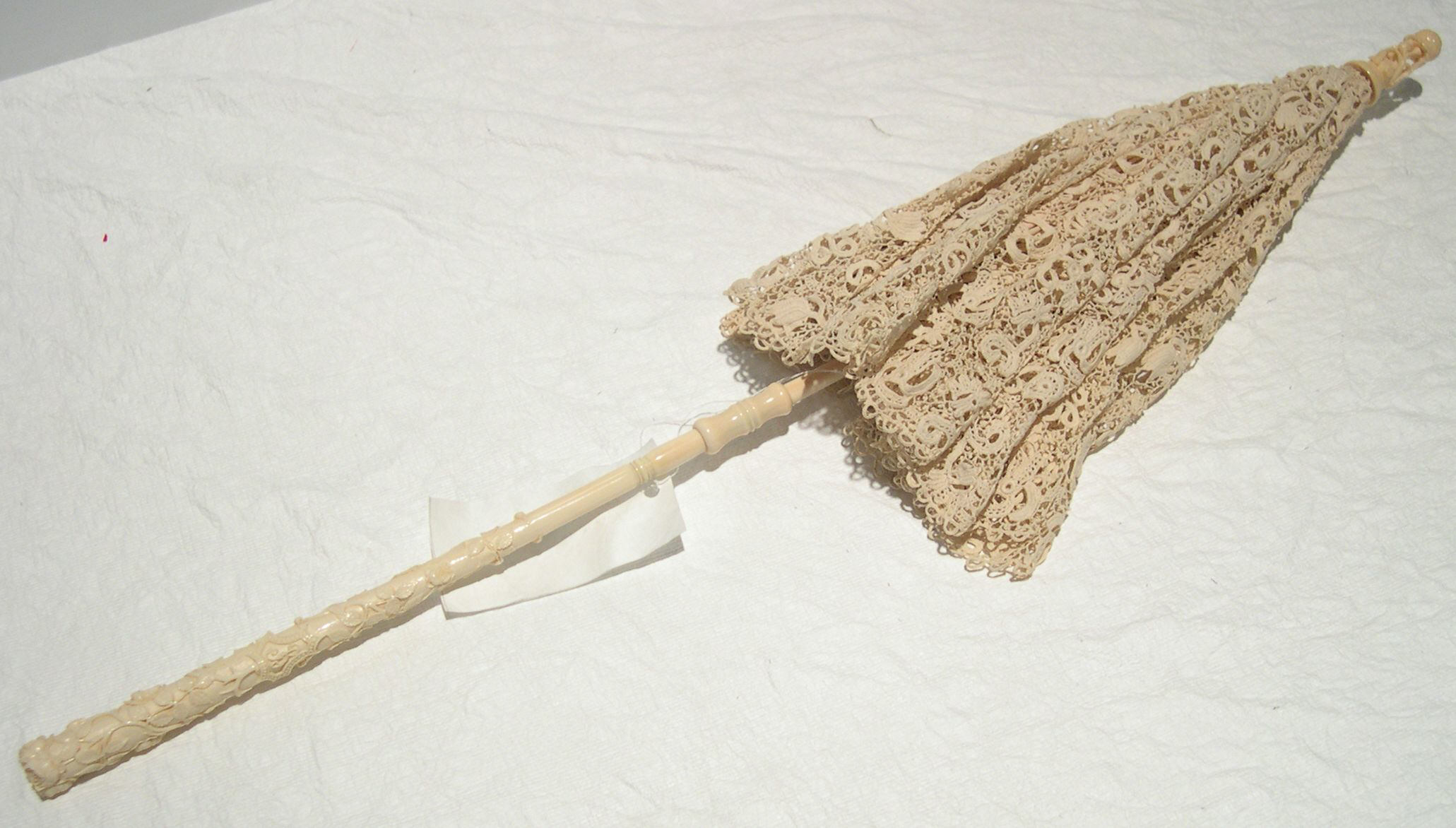
Heritage Analysis: The Parasol as a Symbol of Power and Adornment
Introduction: The Parasol as a Strategic Artifact
The parasol, as a material object, transcends its utilitarian function of providing shade. In the context of Katherine Fashion Lab’s strategic standalone research, this artifact—originating from French culture and composed of ivory, cotton, and silk—represents a confluence of symbolic power, historical adornment, and spiritual meaning. For a luxury house positioning itself for the 2026 high-end market, the parasol offers a potent narrative of exclusivity, status, and ethereal elegance. This analysis deconstructs the parasol’s layered significance and proposes a strategic framework for its reintroduction as a defining emblem of modern luxury.
Symbolic Power: The Parasol as a Marker of Social Hierarchy
In eighteenth- and nineteenth-century France, the parasol was not merely a practical accessory but a profound symbol of social stratification. Its use was restricted to the elite—aristocrats and wealthy bourgeoisie—who could afford the luxury of leisure and protection from the sun. The material composition of ivory, cotton, and silk further reinforced this exclusivity. Ivory handles, often intricately carved, signified wealth and global trade connections, while silk canopies demonstrated access to expensive, imported textiles. The parasol thus functioned as a portable emblem of authority, visually distinguishing the upper echelons from the laboring classes, who worked under the sun. For Katherine Fashion Lab, this historical power dynamic offers a blueprint for contemporary luxury: the parasol can be reimagined as a statement of curated privilege, where ownership implies not just financial capital but cultural and social capital. The 2026 luxury consumer seeks artifacts that communicate discernment and heritage, not mere opulence.
Historical Adornment: Craftsmanship and Materiality
The parasol’s construction—a fusion of ivory, cotton, and silk—exemplifies the pinnacle of historical artisanal craftsmanship. Ivory handles were often sculpted into floral motifs or mythological figures, requiring master carvers who trained for decades. The silk canopy, dyed in rich hues like sapphire, emerald, or rose, was hand-painted or embroidered with scenes from nature or classical mythology. Cotton linings provided structural integrity while remaining breathable. This meticulous attention to materiality and technique aligns with the slow luxury movement, which prioritizes heritage craftsmanship over mass production. For Katherine Fashion Lab, the parasol serves as a case study in how adornment can be both functional and artistic. A 2026 luxury strategy should emphasize limited-edition, handcrafted parasols that celebrate these historical techniques, perhaps collaborating with living artisans in France or Italy. The narrative should focus on the object’s tactile and visual poetry—the weight of the ivory, the rustle of the silk—as a counterpoint to digital saturation.
Spiritual Meaning: The Parasol as a Protective Veil
Beyond its secular status, the parasol carries deep spiritual connotations. In many cultures, including French aristocratic circles, the parasol was considered a protective talisman. The canopy’s shade was metaphorically linked to divine shelter, shielding the bearer from both physical sun and metaphysical harm. Ivory, derived from elephants, was believed to possess purifying properties in some traditions, while silk was associated with the ethereal and the sacred. The parasol thus occupied a liminal space between the earthly and the celestial, serving as a portable sanctuary. For the 2026 luxury consumer—increasingly drawn to wellness, mindfulness, and spirituality—this dimension offers a rich emotional resonance. Katherine Fashion Lab can position the parasol as a ritual object for the modern age: a tool for creating personal space, a symbol of inner retreat, and a reminder of the sacred in daily life. Marketing campaigns could evoke themes of protection, serenity, and transcendence, aligning the parasol with contemporary desires for balance and meaning.
2026 High-End Luxury Strategy: Reclaiming the Parasol
The parasol’s decline in the early twentieth century, due to changing fashion and the rise of automobiles, does not negate its relevance for a 2026 luxury strategy. On the contrary, its obsolescence makes it a unique differentiator in a market saturated with handbags, watches, and shoes. Katherine Fashion Lab should approach the parasol as a signature accessory that embodies the house’s core values: heritage, craftsmanship, and symbolic depth. The following strategic pillars are recommended:
1. Heritage Reissue Collection: Launch a limited series of parasols that faithfully reproduce historical designs from French archives, using ivory alternatives (e.g., sustainably sourced tagua nut or fossilized ivory) and hand-dyed silk. Each parasol should be numbered and accompanied by a certificate of authenticity detailing its provenance and craft techniques. This taps into the collector’s market and reinforces the brand’s authority in heritage luxury.
2. Contemporary Interpretation for the Modern Muse: Develop a capsule collection that reimagines the parasol for urban life. Use lightweight, innovative materials like carbon-fiber frames and UV-protective silk blends, while retaining the iconic silhouette. The design should be modular, allowing the canopy to be swapped or folded into a compact form. This addresses practical needs without sacrificing aesthetic integrity, appealing to the discerning, mobile elite of 2026.
3. Experiential Storytelling: The parasol’s spiritual and symbolic dimensions should be woven into the brand’s narrative. Host exclusive “parasol ceremonies” at flagship stores, where clients can learn about the artifact’s history and participate in a styling ritual. Collaborate with perfumers to create a signature scent for the parasol’s silk, evoking lavender fields or gardenia gardens. This transforms the product into an immersive experience, fostering emotional loyalty.
4. Strategic Pricing and Positioning: Position the parasol at the highest price tier, above handbags and ready-to-wear, to signal its status as a collectible art object. Price points should reflect the rarity of materials and labor, starting at $5,000 for standard editions and exceeding $50,000 for bespoke, commissioned pieces. This pricing strategy aligns with the Veblen effect, where high price enhances perceived value and desirability among ultra-high-net-worth individuals.
5. Cultural Partnerships: Align with museums, such as the Musée des Arts Décoratifs in Paris, to co-curate exhibitions on the parasol’s history. This builds intellectual credibility and positions Katherine Fashion Lab as a cultural steward rather than a mere commercial entity. Such partnerships also generate editorial coverage and attract the attention of tastemakers.
Conclusion: The Parasol as a Future Icon
The parasol, with its rich heritage of symbolic power, historical adornment, and spiritual meaning, is not a relic but a strategic asset for Katherine Fashion Lab’s 2026 luxury vision. By honoring its past while innovating for the future, the brand can reclaim this object as a modern talisman of elegance, protection, and status. In an era where luxury consumers seek authenticity and depth, the parasol offers a tangible connection to history and a canvas for contemporary creativity. Katherine Fashion Lab has the opportunity to lead the market by redefining what a luxury accessory can be—not just an item of adornment, but a symbolic artifact that enriches the wearer’s life and identity. The parasol, once a marker of aristocratic power, is poised to become a beacon of sophisticated luxury for the next generation.