Heritage Analysis: The Constantinian Medal as a Blueprint for Transcendent Luxury
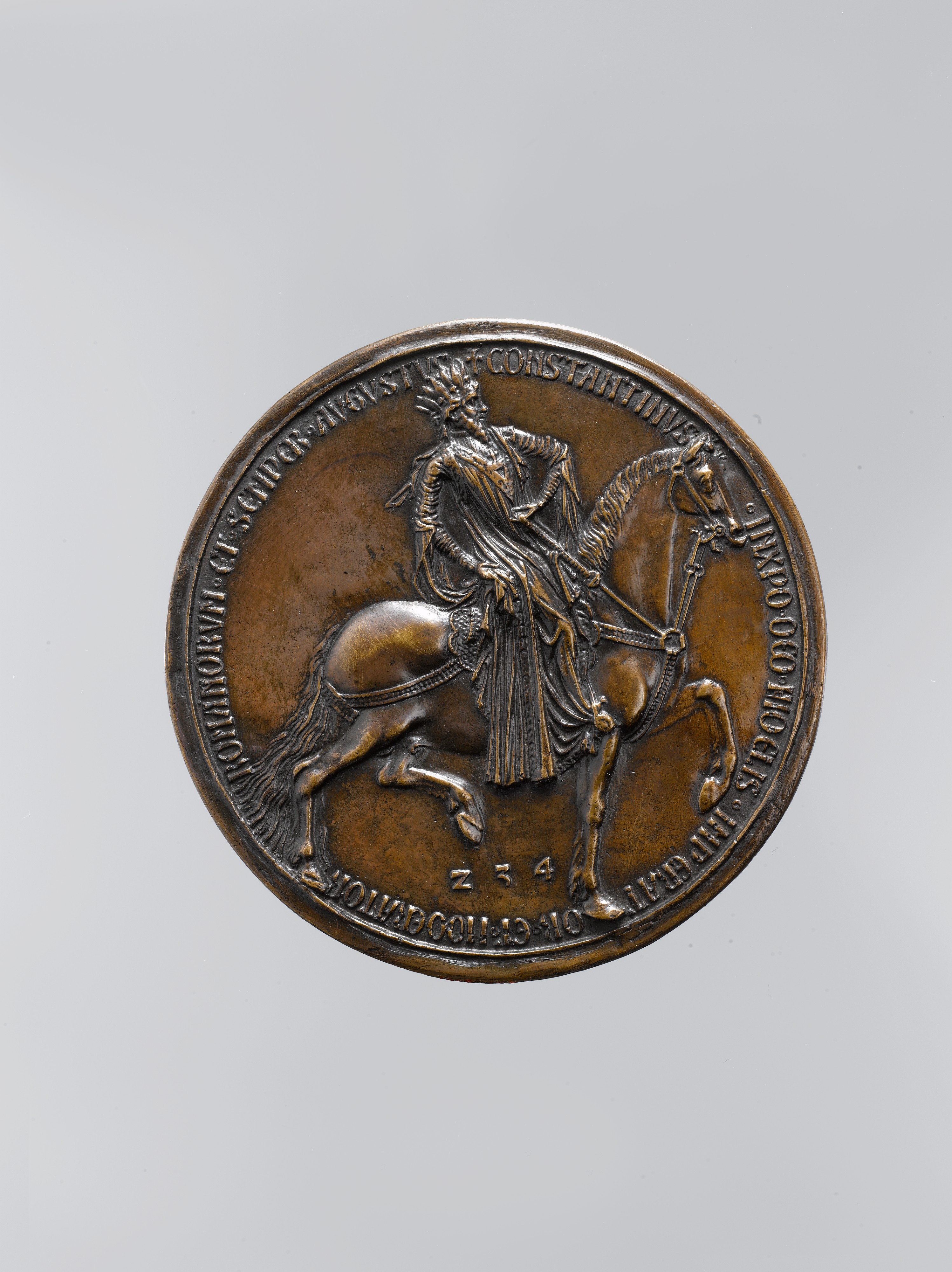
This heritage analysis examines a French copper alloy medal from the reign of Emperor Constantine (r. 307–337 CE), featuring an equestrian portrait on the obverse and an allegory of salvation on the reverse. For Katherine Fashion Lab, this object transcends its numismatic function to become a strategic artifact of symbolic power, historical adornment, and spiritual meaning. In the context of 2026 high-end luxury strategy, the medal offers a profound case study in how material culture can encode authority, transcendence, and redemption—qualities essential for brands seeking to elevate from premium to perennial.
Symbolic Power: The Equestrian Portrait as Sovereign Authority
Imperial Iconography and the Horse as Emblem of Dominion
The obverse of the medal depicts Constantine on horseback, a motif deeply rooted in Roman imperial propaganda. The equestrian portrait signals dominance, mobility, and martial virtue. For Constantine, the horse was not merely a mode of transport but a symbol of the emperor’s ability to govern both the terrestrial and celestial realms. In the 2026 luxury landscape, this imagery translates into a brand narrative of unassailable leadership. A high-end house must project the same commanding presence: not through literal horses, but through the visual language of strength, control, and effortless superiority. Katherine Fashion Lab can draw from this by incorporating equestrian motifs—stirrup-inspired hardware, saddle-stitch detailing, or horse-bit closures—as subtle signifiers of power that resonate with connoisseurs familiar with imperial iconography.
Copper Alloy as a Material of Enduring Prestige
The choice of copper alloy is strategic. Unlike gold, which can be ostentatious, or silver, which may tarnish, copper alloy offers durability, warmth, and a patina that improves with age. This aligns with the 2026 luxury trend toward patina-as-provenance. Consumers increasingly value objects that tell a story through wear. Katherine Fashion Lab can leverage this by using oxidized metals, raw edges, or unpolished finishes in accessories and hardware, signaling that true luxury is not pristine but lived-in and powerful.
Historical Adornment: The Medal as Wearable Authority
From Coin to Amulet: The Transformation of Currency into Adornment
In late antiquity, medallions like this one were often mounted and worn as pendants or sewn onto ceremonial garments. This transition from currency to adornment is pivotal. The medal ceased to be a mere medium of exchange and became a portable talisman of imperial favor. For Katherine Fashion Lab, this represents the ultimate luxury strategy: transforming functional objects into symbols of belonging. A 2026 collection could reinterpret the medal as a signature clasp, belt buckle, or brooch—each piece carrying the weight of Constantine’s authority while serving as a modern statement of personal sovereignty.
Adornment as Armor: The Psychological Function of Luxury
Historical adornment was never purely decorative. The medal, worn on the chest, served as psychic armor, projecting the wearer’s connection to divine and temporal power. In the 2026 context, high-end consumers seek similar psychological protection. Katherine Fashion Lab can design pieces that function as contemporary talismans: structured blazers with concealed medal-like fastenings, or statement necklaces that echo the obverse-reverse duality. The goal is to create objects that don’t just accessorize but armor the wearer against uncertainty, conferring the confidence of Constantine’s reign.
Spiritual Meaning: The Allegory of Salvation as Brand Theology
Reverse Iconography and the Promise of Redemption
The reverse allegory of salvation is the medal’s spiritual anchor. For Constantine, whose conversion to Christianity reshaped the Roman world, salvation was both a personal and political concept. The allegory likely depicts a victory over chaos—perhaps a chi-rho, a labarum, or a figure of Victory holding a wreath. This iconography communicates that power is transient, but salvation is eternal. For a luxury brand, this translates into a narrative of redemptive craftsmanship. Each piece from Katherine Fashion Lab should be positioned not just as a product, but as a redemption of time—a hand-finished object that rescues the wearer from the disposable culture of fast fashion.
Sacred Geometry and Hidden Symbolism
The medal’s dual faces—one worldly, one spiritual—create a dialectic between the temporal and the eternal. This is a powerful model for 2026 luxury branding. Katherine Fashion Lab can embed hidden symbols within garments and accessories: a lining printed with a salvation allegory, a cuff engraved with a Constantinian motto, or a label that reveals a sacred motif only when turned. Such details reward the initiated and create a community of understanding, elevating the brand from commodity to cult.
2026 High-End Luxury Strategy: The Constantinian Blueprint
Strategic Standalone Research: From Artifact to Archetype
The medal is not merely a historical object but a strategic standalone archetype. For Katherine Fashion Lab, this means treating each collection as a medal of its own era. The 2026 strategy should focus on limited-edition pieces that function as “wearable medals”—each with a unique obverse (the visible design) and reverse (the hidden meaning or provenance story). This creates a collector’s mentality among consumers, who will seek to acquire the entire set.
Material as Message: Copper Alloy and the New Luxury
In 2026, sustainability and authenticity will dominate. Copper alloy, with its low environmental impact and historical resonance, aligns perfectly. Katherine Fashion Lab can launch a “Patina Collection” of accessories that deliberately age, with each piece’s wear pattern becoming a unique fingerprint. This counters the throwaway culture and positions the brand as a steward of time, much like the Constantinian medal has survived for millennia.
Power Dressing for the New Constantine
The equestrian portrait speaks to a consumer who sees themselves as a ruler of their own domain. Katherine Fashion Lab’s 2026 ready-to-wear should emphasize structured silhouettes, epaulettes, and harness-inspired details that evoke imperial command. The color palette should draw from the medal’s patina—deep bronze, verdigris green, and oxidized copper—creating a chromatic identity that is immediately recognizable.
Salvation as Brand Promise
Finally, the allegory of salvation offers a brand promise of transcendence. In a world of anxiety, luxury must offer more than status; it must offer meaning. Katherine Fashion Lab can position its 2026 campaign around the concept of “The Modern Salvation”—where each purchase is an act of self-redemption, a step toward a more curated, intentional life. This is not mere marketing but a philosophical stance, rooted in the medal’s spiritual gravity.
Conclusion: The Medal as Eternal Strategy
The Constantinian medal is far more than a relic. It is a masterclass in symbolic power, historical adornment, and spiritual meaning. For Katherine Fashion Lab, it offers a clear strategic path for 2026: create objects that are both armor and amulet, that speak to the wearer’s authority and their search for transcendence. By embracing the duality of obverse and reverse—the visible and the hidden, the temporal and the eternal—the brand can achieve a luxury that is not just consumed but inherited. This is the legacy of Constantine, and the future of fashion.