Exquisite Emblems of Eternity: A Couture Analysis of the Woman's Robe with “Longevity” Medallions
Introduction: The Intersection of Artistry and Symbolism
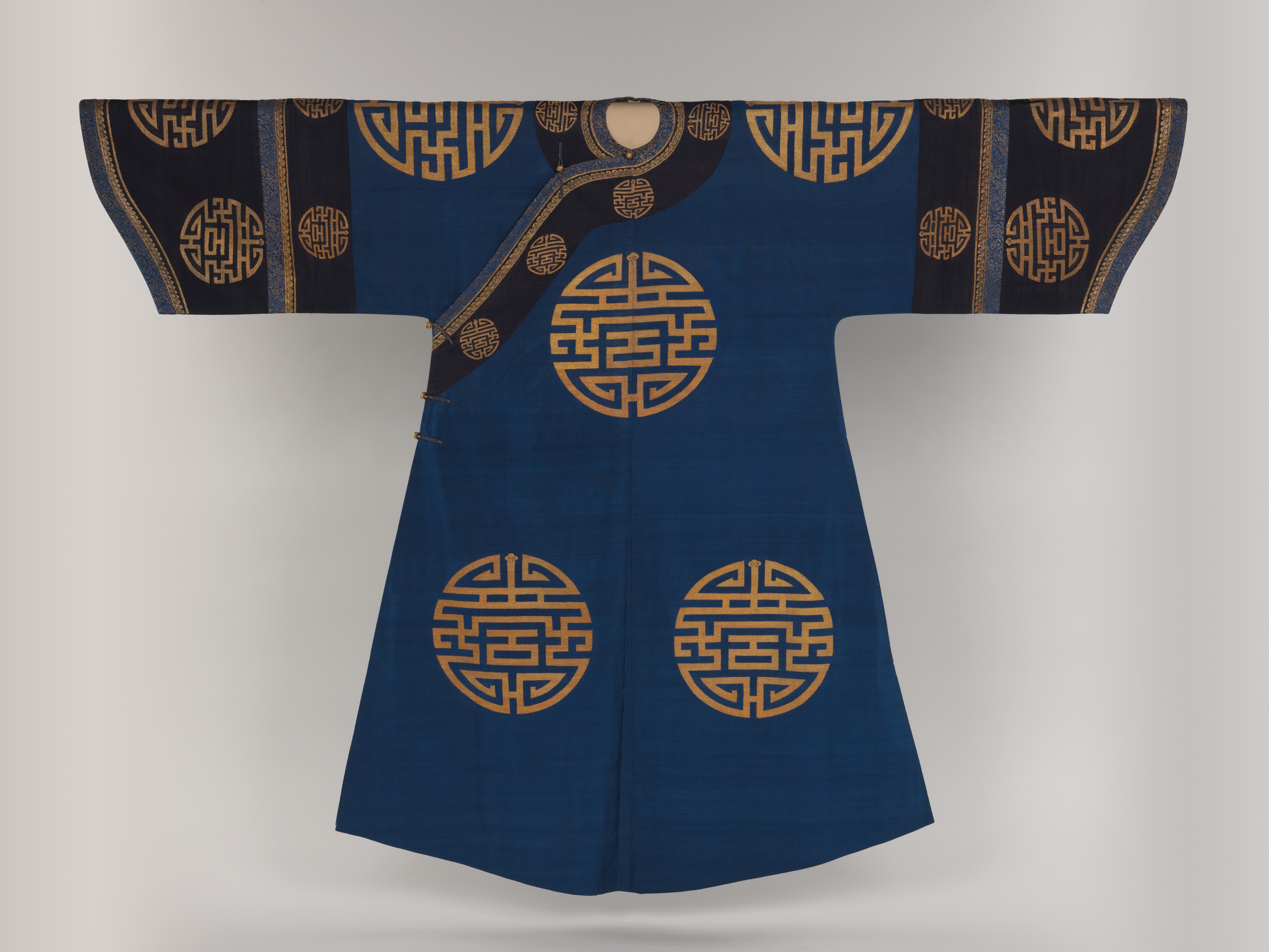
In the pantheon of haute couture, few artifacts embody the confluence of technical mastery, cultural profundity, and timeless elegance as powerfully as the Woman's Robe with “Longevity” Medallions, a masterpiece of Chinese silk tapestry (kesi) from the Katherine Fashion Lab collection. This garment, executed in silk and metallic thread, transcends the boundaries of mere apparel to become a standalone study in textile engineering, iconographic sophistication, and the enduring human desire to weave immortality into fabric. For the discerning fashion scholar, this robe represents not only a pinnacle of pre-modern craftsmanship but also a lexicon of visual metaphors that speak to status, spirituality, and the cyclical nature of life. Its analysis reveals how a single object can encapsulate an entire civilization's worldview, rendered in threads of unparalleled luminosity and precision.
Technical Virtuosity: The Kesi Tapestry Method
At the heart of this robe's allure lies the kesi technique, a “cut silk” tapestry method that originated in the Tang dynasty and reached its zenith during the Ming and Qing periods. Unlike conventional brocades or embroideries, kesi involves weaving the weft threads—here, lustrous silk and gilded metallic filaments—directly into the warp to create discontinuous color blocks. The result is a fabric that is both structurally robust and visually ethereal, with a reversible quality that speaks to the artisan's absolute command of tension and hue. In this robe, the kesi process allows for the precise delineation of intricate medallions, each containing the character shou (寿), meaning “longevity,” rendered in stylized seal script. The metallic threads, woven with fine gold or silver leaf wrapped around silk cores, catch ambient light with a subtle flicker, animating the robe as the wearer moves. This is not merely decoration; it is a deliberate dialogue between material and meaning, where the shimmer of metal evokes the permanence of celestial bodies, while the silk's softness recalls the impermanence of human life—a dialectic central to Chinese philosophical thought.
Iconography of Immortality: The “Longevity” Medallions
The medallions themselves are the robe's primary narrative device. Each roundel, approximately twelve centimeters in diameter, is a microcosm of cosmological symbolism. The shou character is not isolated but integrated into a rich tapestry of auspicious motifs: the peach of immortality, the lingzhi fungus (a symbol of spiritual longevity), and the endless knot (panchang), which signifies the interconnectedness of all existence. The repetition of these medallions across the robe's surface—typically in a grid or staggered layout—creates a rhythmic visual pulse that mirrors the cycles of nature: seasons, harvests, and human generations. For the wearer, this was more than aesthetic; it was a talismanic garment, believed to attract blessings and ward off malevolent forces. In the context of court life during the Qing dynasty, such robes were often presented as imperial gifts or worn during celebratory ceremonies like the emperor's birthday or the New Year, where the shou motif reinforced the sovereign's divine mandate to bring prosperity and long life to the realm. The strategic placement of these medallions—on the chest, back, and shoulders—ensures that the message of longevity is broadcast with every gesture, turning the robe into a mobile manifesto of power and virtue.
Color Palette and Material Semiotics
The chromatic choices in this robe are far from arbitrary. The dominant ground color—a deep, resonant azure blue—is itself a signifier of heaven, eternity, and the vastness of the cosmos, a hue historically reserved for the highest echelons of society due to the cost of indigo extraction and mordant fixation. Contrasting with this celestial backdrop are the medallions' warm golds, crimson reds, and soft ivories. Red, in Chinese culture, is the color of joy, vitality, and fire—the very forces that sustain life—while gold represents imperishability and the sun's life-giving energy. The interplay of these colors creates a visual hierarchy: the blue ground recedes into the background, allowing the medallions to advance as luminous focal points. This is a masterclass in color theory, anticipating modern principles of figure-ground relationships by centuries. Furthermore, the metallic threads are not uniformly applied; they are used selectively to highlight the calligraphic strokes of the shou character and the contours of symbolic flora, adding a three-dimensional texture that invites tactile exploration. In a couture context, this robe challenges the contemporary emphasis on silhouette, reminding us that surface ornamentation can be as structurally significant as cut and drape.
Sociocultural Context: The Robe as Status and Self-Cultivation
To fully appreciate this garment, one must understand its role within the Confucian and Daoist frameworks that governed elite Chinese society. The robe was not merely a covering but a materialization of the wearer's moral and social standing. The kesi technique was labor-intensive, often requiring months or even years to complete a single garment, and thus was accessible only to the imperial family and high-ranking officials. Owning such a robe signaled not only wealth but also cultural literacy—the ability to decode the intricate symbolism woven into the fabric. Moreover, the emphasis on longevity reflects the Daoist pursuit of yang sheng (nourishing life), a philosophy that valued harmony with nature, moderation, and the cultivation of inner vitality. The robe, therefore, functioned as a visual affirmation of the wearer's commitment to these ideals. In a standalone study, it becomes a lens through which we can examine how material culture reinforces ideological systems. For the modern fashion analyst, this robe offers a profound lesson: that couture can be a vehicle for philosophical discourse, not just aesthetic display.
Preservation and Contemporary Relevance
The survival of this robe in pristine condition is a testament to the durability of kesi and the reverence with which such objects were treated. Today, it serves as a benchmark for sustainable luxury—a concept the fashion industry is only now beginning to embrace. The meticulous hand-weaving, the use of biodegradable natural fibers, and the garment's intended longevity (both symbolic and physical) stand in stark contrast to the ephemeral, mass-produced fast fashion of the 21st century. For Katherine Fashion Lab, this robe is not a relic but a source of inspiration for contemporary designs that seek to merge heritage craftsmanship with modern silhouettes. The medallion motif, for instance, could be reinterpreted as embroidered patches on a structured blazer, or the kesi technique adapted for a limited-edition evening gown. More importantly, the robe challenges us to reconsider what we value in fashion: not just novelty, but meaning; not just surface, but story. As the industry grapples with questions of authenticity and cultural appropriation, this garment stands as a model of respectful, informed integration—a dialogue between past and present that enriches both.
Conclusion: A Tapestry of Timelessness
The Woman's Robe with “Longevity” Medallions is far more than a historical curiosity; it is a masterwork of wearable art that encapsulates the highest aspirations of Chinese civilization. Through its kesi construction, it demonstrates technical brilliance; through its iconography, it communicates a worldview centered on harmony, virtue, and the quest for transcendence; and through its materiality, it asserts the enduring power of silk and gold to convey status and spirituality. For the couture analyst, this robe offers a rare opportunity to study how a single garment can synthesize aesthetics, ethics, and engineering into a cohesive statement that remains relevant across centuries. In the halls of Katherine Fashion Lab, it is not merely preserved but studied, celebrated, and reimagined—a luminous reminder that true luxury is not about what we wear, but what we choose to weave into the fabric of our lives. This is the essence of timeless fashion: the art of making the eternal tangible, one thread at a time.